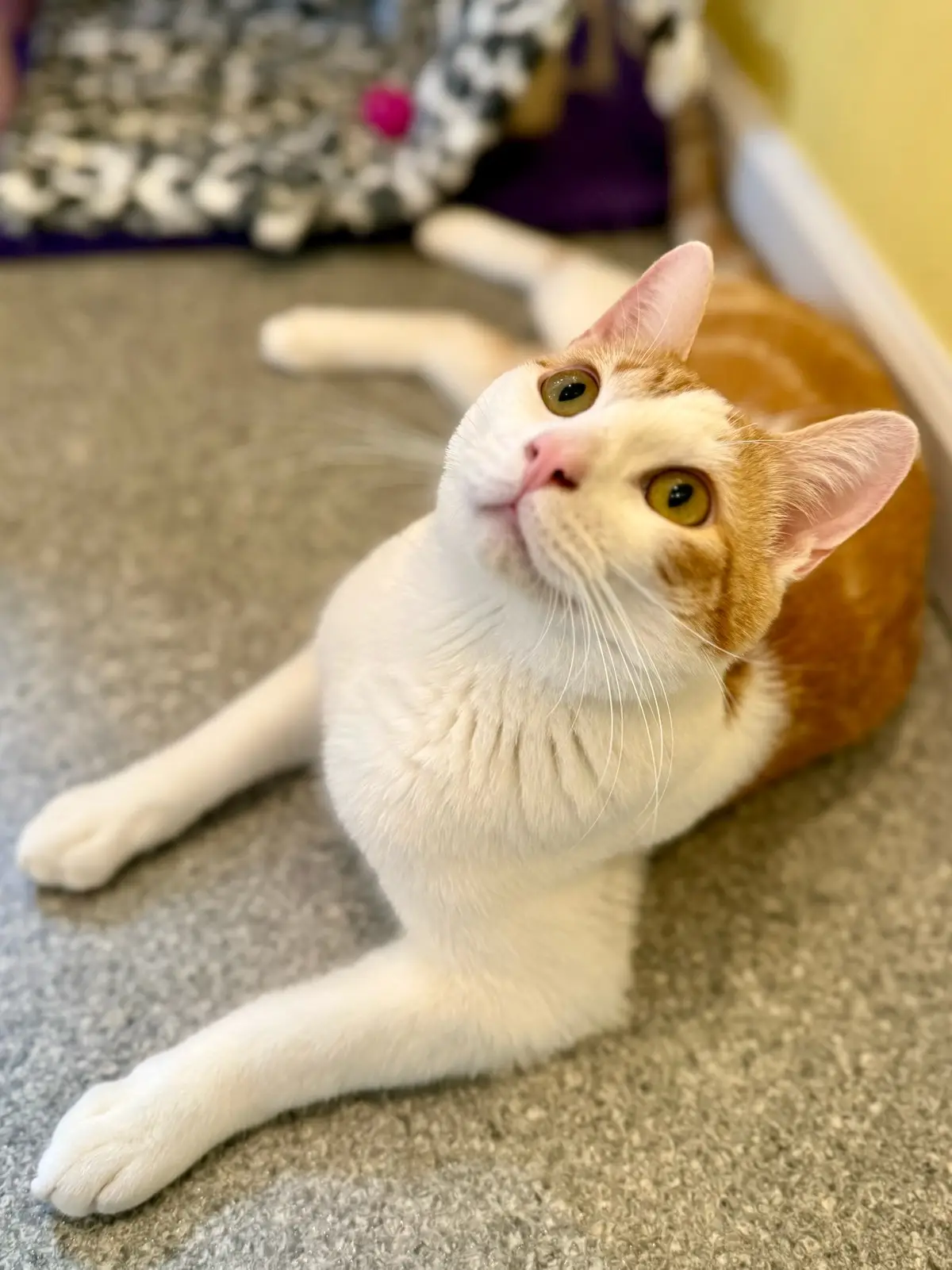
Keep the family together
Guardian Stabilization
Temporary crisis, caregiver exhaustion, housing instability, medical overload, grooming collapse, or behavioral stress does not always have to become permanent surrender.
Cats in the City Rescue | FELINE TRANSITIONS®
A cat may need help staying with their family, structured rehabilitation, a carefully planned transition to another home, adoption support, medical or behavioral recovery, or simply enough time for the right decision to become clear. Start with what is happening now and we'll help you find the right path.
Six routes through Cats in the City Rescue
Rescue is not a single intake process. The appropriate intervention depends on whether the cat needs support in the current home, rehabilitation, a new placement, adoption, financial support, or systems-level consultation.
Keep the family together
Temporary crisis, caregiver exhaustion, housing instability, medical overload, grooming collapse, or behavioral stress does not always have to become permanent surrender.
Plan the next home
When remaining in the current household is no longer sustainable, FELINE TRANSITIONS® provides a slower, assessment-led alternative to informal transfer or immediate shelter surrender.
Rebuild what is failing
Structured programs address medication resistance, diabetic routines, litter box breakdown, fear, reactivity, behavioral dysregulation and other barriers to sustainable care.
Find your cat
Adoption through Cats in the City Rescue is organized around household fit, cat readiness, transition needs, compatibility and long-term placement durability.
Strengthen the safety net
Donor support can fund surrender diversion, medical care, senior and special-needs cats, behavioral recovery, transportation and stabilization.
Professional systems work
Organizational assessment, placement systems, rehabilitation design, surrender diversion, program evaluation and implementation support for animal-welfare organizations.
Before surrender
Some families are not asking to stop loving their cat. They are asking for enough support to keep going. Guardian stabilization creates options before temporary instability becomes permanent separation.
Main pathway
Support before surrender for families experiencing care collapse, overwhelm or temporary instability.
Explore program →Crisis care
A temporary bridge during hospitalization, housing disruption, caregiver crisis or major life transition.
Explore pathway →Guardian capacity
Support when prolonged care demands have exceeded what the guardian can currently sustain.
Explore support →Residential support
Structured feline-only temporary care when the home environment cannot safely hold the cat right now.
Explore care →Distance support
A pathway for cases where geographic distance would otherwise prevent access to structured feline support.
Explore program →Coat crisis
When coat burden and inability to maintain hygiene become part of the surrender or welfare crisis.
Explore support →FELINE TRANSITIONS®
Some cats need more than a new address. Structured rehoming preserves medical, behavioral and environmental information, creates time for stabilization where needed, and focuses on future household fit.
Start here
The primary pathway for assessment, stabilization and carefully matched placement.
Open rehoming hub →Program framework
How the broader rehoming and transition model is structured.
Explore framework →Shelter diversion
Alternatives when there is enough time to plan a safer, more individualized transition.
Explore alternatives →Collaborative placement
Placement planning while the guardian can temporarily maintain the cat in the current environment.
Explore pathway →Bonded cats
Placement planning that considers relational safety and whether cats should transition together.
Explore bonded placement →Senior cats
Medical-aware, age-aware placement support for older cats.
Explore senior support →Medical complexity
Placement support when medications, chronic disease or layered care needs must travel with the cat.
Explore medical placement →Behavioral sensitivity
Placement planning for cats whose fear, reactivity or environmental sensitivity affects fit.
Explore sensitive placement →Understanding shelter stress
Why crisis behavior in a shelter environment may not represent the cat's stable behavior.
Read more →Rehabilitation
Rehabilitation addresses specific barriers that can make a cat appear impossible to medicate, manage, groom, live with or place.
Start here for the complete rehabilitation system.
Open rehab hub →
Structured support for medication and handling routines.
Explore program →
Support for insulin routines, feeding and caregiver confidence.
Explore program →
Residential support for stress, shutdown and environmental mismatch.
Explore program →
Environmental, medical and behavioral factors considered together.
Explore program →
Support for cats whose fear or defensive behavior obscures their needs.
Explore program →
Stabilization in practice
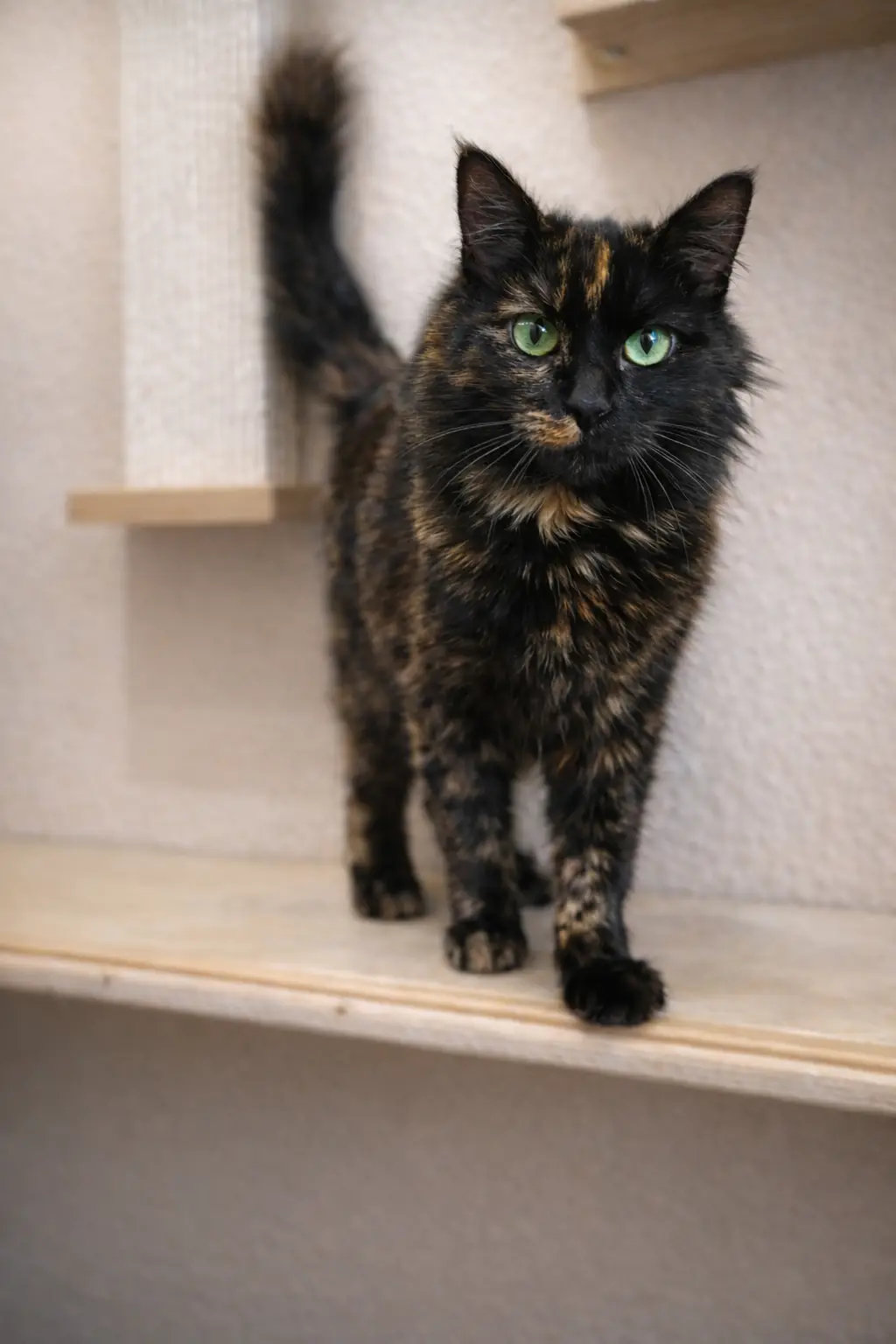
Mildred arrived fearful and reactive after repeated change. Her care included medication support, food trials, trust-building, gradual exposure to people and spaces, and time to become readable outside the conditions that had overwhelmed her.
That distinction matters throughout FELINE TRANSITIONS®: placement decisions should be informed by the cat we can actually understand, not only the behavior visible at the height of distress.
Adoption
Cats need time to land. Adopters need clarity. Sensitive cats need patience. Medical cats need routines. Senior cats need stability. Matching considers the environment the cat will actually live in.
Available cats
Meet cats currently supported through Cats in the City Rescue and FELINE TRANSITIONS®.
View cats →Matching process
How readiness, household fit, adopter capacity and transition needs are considered.
Explore matching →Placement philosophy
Why the fastest available placement is not necessarily the most durable placement.
Read philosophy →Sensitive cats
Preparing for shy, fearful, shutdown, reactive or transition-sensitive cats.
Learn more →Senior placement
Understanding routine, medical needs, stability and fit for aging cats.
Learn more →Household ecology
Placement planning when the future home already includes cats.
Learn more →After placement
Transition support does not end when the cat leaves rescue.
Explore support →Ready to apply?
Begin the qualification process for adoption through Cats in the City Rescue.
Open application information →Stories of hope
Safety matters. Stabilization matters. But the outcome has to hold after the transition.
Zuzu
Zuzu entered rescue after a severe untreated leg injury was discovered. Emergency veterinary treatment led to amputation, recovery and adaptation to life as a tripod. A carefully selected family then became his permanent home.
Lavaman
Lavaman had already been part of the Cats in the City community for years when life circumstances changed. After an extended transition period, he moved into a carefully chosen home and became an adventure cat.
Successful transitions
These cats are part of the Cats in the City Rescue placement history. Hover over a photograph for a quick profile, or select a cat to open the full adoption details.
Successful transition
This profile is part of the Cats in the City Rescue placement history and records the cat's age and profile at adoption.
Support the rescue
Donations support the time, housing, medical resources, transition work, transportation and behavioral recovery required for safer, more durable outcomes.
Help intervene before temporary instability becomes permanent separation.
Help medically vulnerable cats move toward stability and placement.
Support cats whose age or care complexity makes placement more resource-intensive.
Help cats reach appropriate medical, foster, reunification or placement options.
Fund the time and environment needed for crisis behavior to settle before placement decisions are made.
Give where support is most useful across the Cats in the City Rescue system.
For organizations
The same assessment-first, stabilization-first and fit-based framework used in Cats in the City Rescue can also inform organizational systems.
Consulting is designed for shelters, rescues, veterinary organizations, foundations and animal-welfare programs working to improve placement durability, surrender diversion, rehabilitation systems and outcomes.
Cats in the City Rescue
Keep the current placement together when possible. Stabilize before making irreversible decisions. Rehome thoughtfully when a new home is needed. Match adoption around fit. Support the work that makes those options possible.
Cats in the City Rescue pathways are individualized. Rehabilitation, temporary stabilization, structured rehoming, adoption and donor-supported care serve different purposes; selecting a pathway does not guarantee intake or placement.
At Cats in the City Rescue, we believe every cat deserves a loving and permanent home. Whether it’s rescuing cats from dangerous situations, providing medical care, or matching them with the perfect family, we’re here to ensure no cat is left behind.
With your support, we are building something meaningful — creating safe pathways for cats to move from uncertainty into stability and care. And there are still so many who need that chance.
We provide a safe haven for cats in need, whether they’re abandoned, compassionately surrendered, or rescued from unsafe conditions. Our team ensures every cat receives medical care, emotional support, and socialization to prepare them for adoption. Through careful matching and support, we place cats in forever homes where they’ll thrive.
Zuzu’s story is one of courage, compassion, and a commitment to saving lives.
Zuzu’s mom had trusted another boarding facility she found online, but when her messages went unanswered for over a week, she feared something was wrong. Through tears, she called Cats in the City Rescue, desperate for help. She asked if we could step in, retrieve Zuzu, and care for him until her return in a month. We couldn’t promise success, but we assured her we’d do everything possible to bring Zuzu to safety.
What followed was a whirlwind of urgency and action. Upon arriving at the boarding house, we found it in a remote area, with windows sealed by duct-taped cardboard. The home’s occupant appeared disheveled and unwell, but after a tense exchange, Zuzu was handed over in a carrier. The relief of having him back quickly turned to concern—Zuzu smelled terribly, and his sad, motionless demeanor hinted at something far worse.
A closer look revealed the truth: Zuzu’s left hind leg dangled unnaturally. We rushed him to DoveLewis Emergency Veterinary Hospital, where X-rays confirmed a severe, untreated break that left no option but amputation.
Zuzu’s mom, unable to afford the surgery, relinquished custody to Cats in the City Rescue, trusting us to provide the care he needed. Zuzu had surgery that same day and adjusted remarkably well to life as a tripod. Within days, he was hopping around, learning how to navigate his new world with inspiring resilience.
Soon after, we handpicked a loving family we knew would treasure Zuzu. After a trial stay, Zuzu found his forever home—a place where he’s cherished every day. Today Zuzu remains happy and thriving, and he still visits us! It is a great joy to be part of his care team.Â
Helping cats like Zuzu is why Cats in the City Rescue exists. With your support, we can ensure more cats like Zuzu find safety, care, and the love they deserve.
Mildred came into care extremely nervous and a tendancy toward fear reactivity, especially around other cats. She required a slow, structured approach to build safety, trust, and stability.
Her care has included medication support, food trials, trust-building, and slow exposure to new spaces and people. As her system has stabilized, Mildred has begun accepting pets, engaging with the team, enjoying catnip, and exploring with greater confidence.
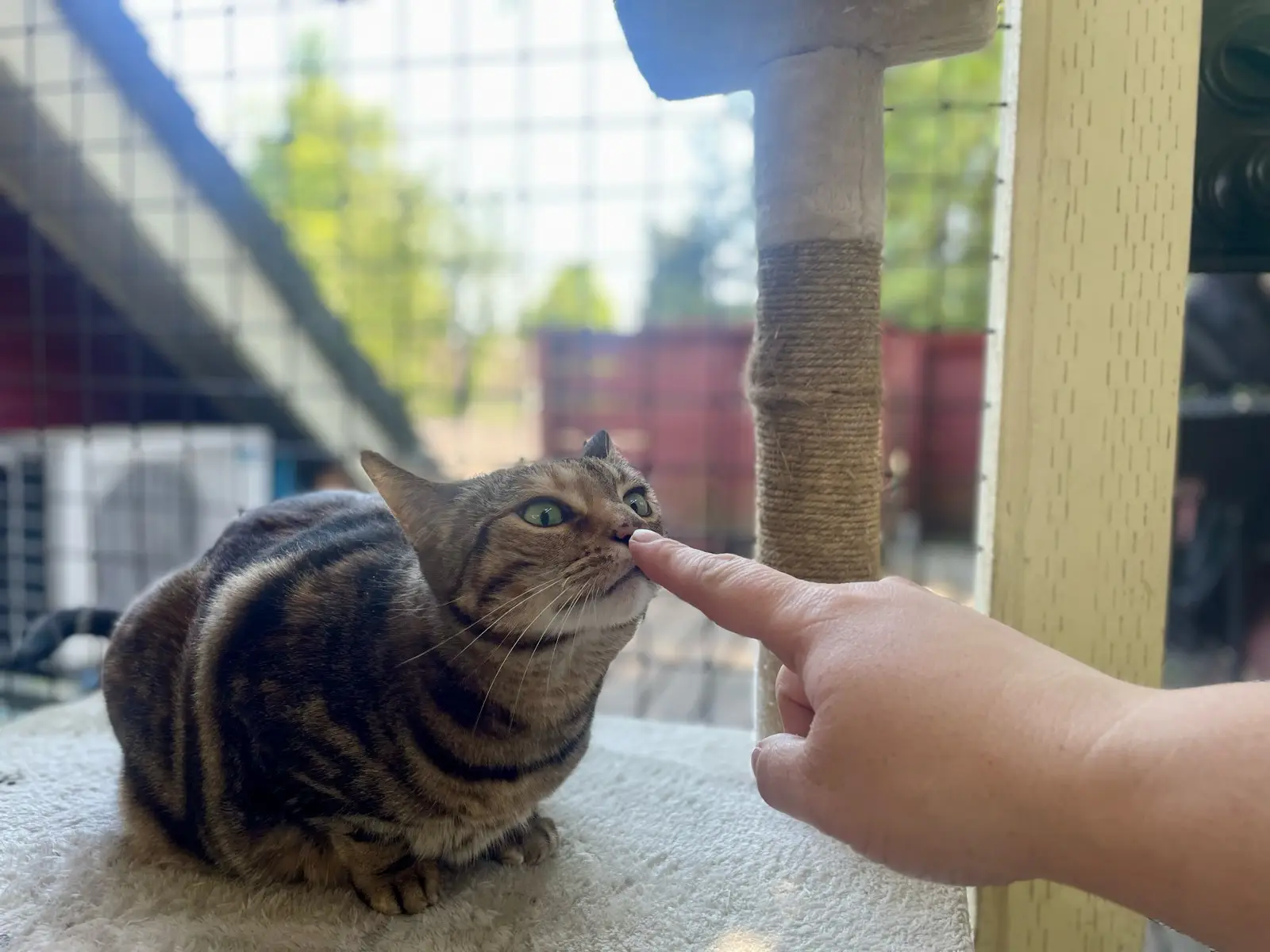
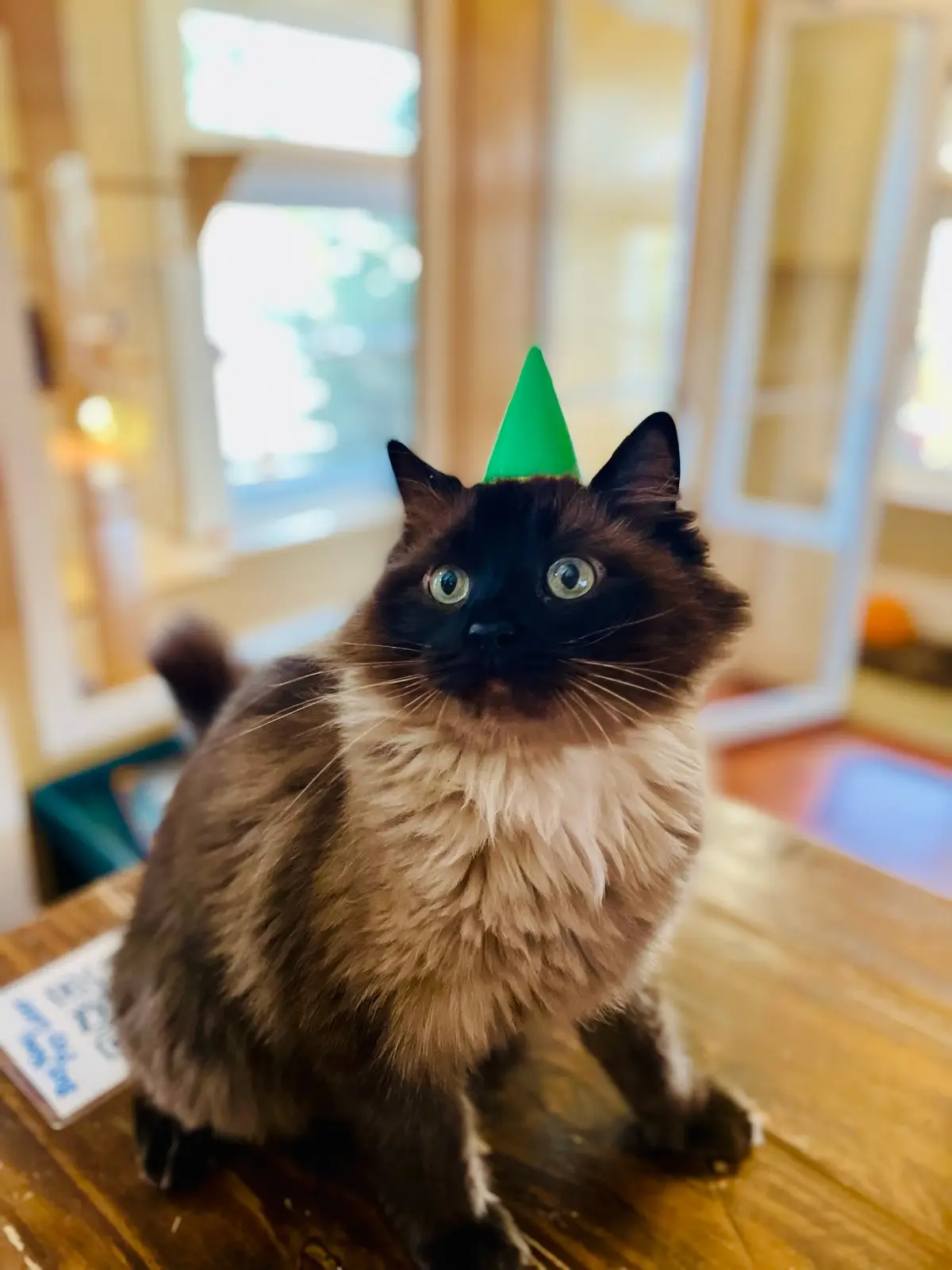
Mildred remains sensitive during introductions and may still hiss when overwhelmed, but she does not escalate to attack. Her progress is steady, and she is approaching readiness for adoption with the right match.
Most recently, she made a beeline for the catio when released from her room—something that would not have been possible earlier in her care. She now seeks out the catio, enjoys catnip, and is moving through space with more confidence.
Recent direct care expenses include food at $59.44, a veterinary visit with vaccines and medication at $244.90, and ongoing medication, boarding, and rehabilitation support.
This includes medical care, behavioral rehabilitation, food support, medication, housing, and preparation for adoption.
Are you able to fully support Mildred’s care or contribute toward her transition into a permanent home?
Donations to Cats in the City Rescue are tax deductible.
Your support allows us to save more lives. Every donation helps provide medical care and vaccinations for cats in need, food, housing, and litter while they await adoption, and resources to match cats with loving families.
Your generosity makes our mission possible. A single donation can provide food, medical care, or a second chance for a cat in need. Together, we can change lives—one paw at a time.
"*" indicates required fields