
Tuna: Senior Cat Grooming with Arthritis Support, Ingrown Claw Care, and Coat Relief
Tuna, a 16-year-old senior cat with arthritis, came to Cats in the City for TANDEM Cat® grooming focused on comfort, coat compaction, early matting, sanitary buildup, and ingrown claw care.
Her case shows how grooming can support the whole senior body: coat, skin, paws, movement, hygiene, and comfort.
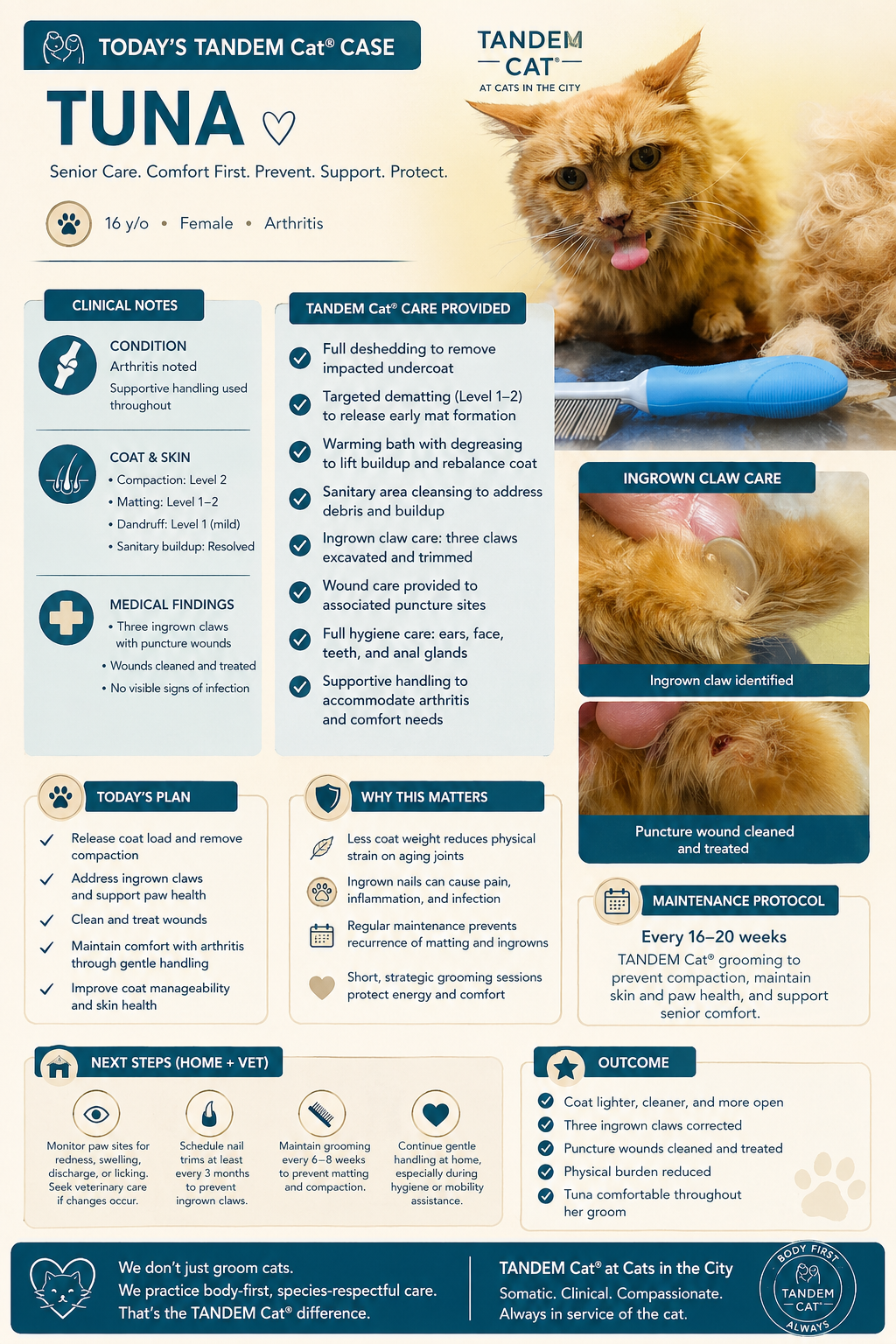
Senior Care. Comfort First. Prevent. Support. Protect.
Tuna’s grooming needs were not limited to coat care. Her session involved arthritis-aware handling, compacted coat relief, early mat release, sanitary cleanup, and ingrown claw correction with wound care.
For senior cats, small problems can stack quickly. Coat weight, paw pain, stiffness, matting, dandruff, and sanitary buildup all affect how a cat moves, rests, grooms, and tolerates handling.
This case connects closely to Dewey’s senior grooming case. Dewey’s care focused on severe matting relief and senior comfort. Tuna’s care adds another senior-care layer: arthritis support, ingrown claws, puncture wound care, and prevention.
Tuna’s Visit
Tuna’s case belongs in the same grooming case-study library as Benny’s Level 3 matting and debris case, but the clinical priorities were different. Benny needed an active young-body coat reset. Tuna needed senior comfort, paw health, and prevention.
Arthritis, Coat Compaction, Early Matting, and Paw Pain
Tuna presented with arthritis, Level 2 coat compaction, Level 1–2 matting, mild dandruff, and sanitary buildup. The grooming team also identified three ingrown claws with puncture wounds.
In a senior cat, these findings matter because discomfort in one area can change how the whole body moves. Arthritis can reduce grooming ability. Reduced grooming can increase compaction. Compaction can increase skin load. Ingrown claws can alter stance, weight-bearing, and mobility.
For guardians trying to understand when grooming becomes medically relevant, the Cat Grooming Guide explains how coat condition, matting, hygiene, and timing fit together.
Coat Relief, Degreasing Bath, Sanitary Cleanup, and Ingrown Claw Care
- Full deshedding to remove impacted undercoat.
- Targeted dematting for Level 1–2 early mat formation.
- Warming bath with degreasing to lift buildup and rebalance coat.
- Sanitary area cleansing to address debris and buildup.
- Ingrown claw care: three claws excavated and trimmed.
- Wound care provided to associated puncture sites.
- Full hygiene care including ears, face, teeth, and anal glands.
- Supportive handling to accommodate arthritis and senior comfort needs.
This is why TANDEM Cat® grooming is built around the whole cat. Tuna’s session required coat care, skin care, paw care, hygiene care, and comfort-aware handling in one coordinated visit.
Three Ingrown Claws Corrected and Puncture Wounds Treated
During Tuna’s visit, the team identified three ingrown claws with associated puncture wounds. The claws were carefully excavated and trimmed, and the puncture sites were cleaned and treated.
Ingrown nails can cause pain, inflammation, infection risk, and altered movement. For a senior cat with arthritis, paw discomfort can compound mobility challenges and make routine movement more difficult.
Tuna’s case helps show why senior grooming should include more than coat review. Our Senior Cat Grooming Portland page explains how aging changes grooming needs, session pacing, and comfort planning.
Less Coat Weight, Cleaner Skin, Healthier Paws, Better Comfort
For Tuna, grooming reduced physical strain on an aging body. Removing compacted undercoat and early mats helped lighten the coat, while sanitary cleansing improved hygiene and skin comfort.
Correcting ingrown claws reduced paw burden and addressed puncture wounds before they escalated. Short, strategic grooming sessions can protect energy and comfort while preventing recurrence of matting and ingrown nails.
This is the same care logic that connects Tuna to Benny and Dewey: grooming decisions should be shaped around the cat’s body, not just the coat.
Coat Lighter, Claws Corrected, Physical Burden Reduced
- Coat lighter, cleaner, and more open.
- Three ingrown claws corrected.
- Puncture wounds cleaned and treated.
- Physical burden reduced.
- Tuna remained comfortable throughout her groom.
Tuna’s outcome shows how grooming can act as preventive support for senior cats when coat, paw, skin, and mobility needs are assessed together.
Tuna’s Ongoing Care Plan
- Maintain TANDEM Cat® grooming every 16–20 weeks to prevent compaction.
- Schedule nail trims at least every 3 months to prevent ingrown claws.
- Monitor paw sites for redness, swelling, discharge, or licking.
- Maintain grooming every 6–8 weeks if matting or compaction returns quickly.
- Continue gentle handling at home, especially during hygiene or mobility assistance.
For cats with recurring matting, coat compaction, or hygiene buildup, review our severe matting grooming approach and the broader Cat Grooming Guide.
Where Tuna’s Case Connects
Tuna’s case sits at the intersection of senior care, coat compaction, early matting, arthritis support, and paw health. It connects naturally to the larger TANDEM Cat® grooming system and to other real-world cases showing how different cats need different care plans.
Dewey: Senior Cat Grooming Case Study
See how TANDEM Cat® grooming supported a 19-year-old senior cat through severe matting relief, comfort pacing, and age-aware handling.
View Dewey’s case →Benny: Level 3 Matting Case Study
Compare Tuna’s senior prevention case with Benny’s young active-body coat reset involving Level 3 matting and debris removal.
View Benny’s case →TANDEM Cat® Grooming
The body-first grooming framework behind this case: reading coat, skin, paws, hygiene, movement, and tolerance in real time.
Learn the model →Senior Cat Grooming Portland
How grooming decisions change when age, arthritis, mobility, skin comfort, and session tolerance become central.
View senior care →Severe Matting Cat Grooming
How matting, debris accumulation, coat compaction, and skin risk are assessed and safely resolved.
Explore matting care →Solo Cat Grooming Ethics
Why safe feline grooming requires support systems, trained judgment, and care structures that protect the cat and groomer.
Read ethics →Does Your Senior Cat Need Coat, Paw, or Comfort Support?
Cats in the City provides feline-only grooming designed around comfort, hygiene, safety, and the real needs of the cat in front of us.
Whether your cat is managing arthritis like Tuna, carrying dense coat like Benny, or aging into senior matting changes like Dewey, TANDEM Cat® grooming starts with the same question: what does this cat’s body need today?
Better Care for Cats.
