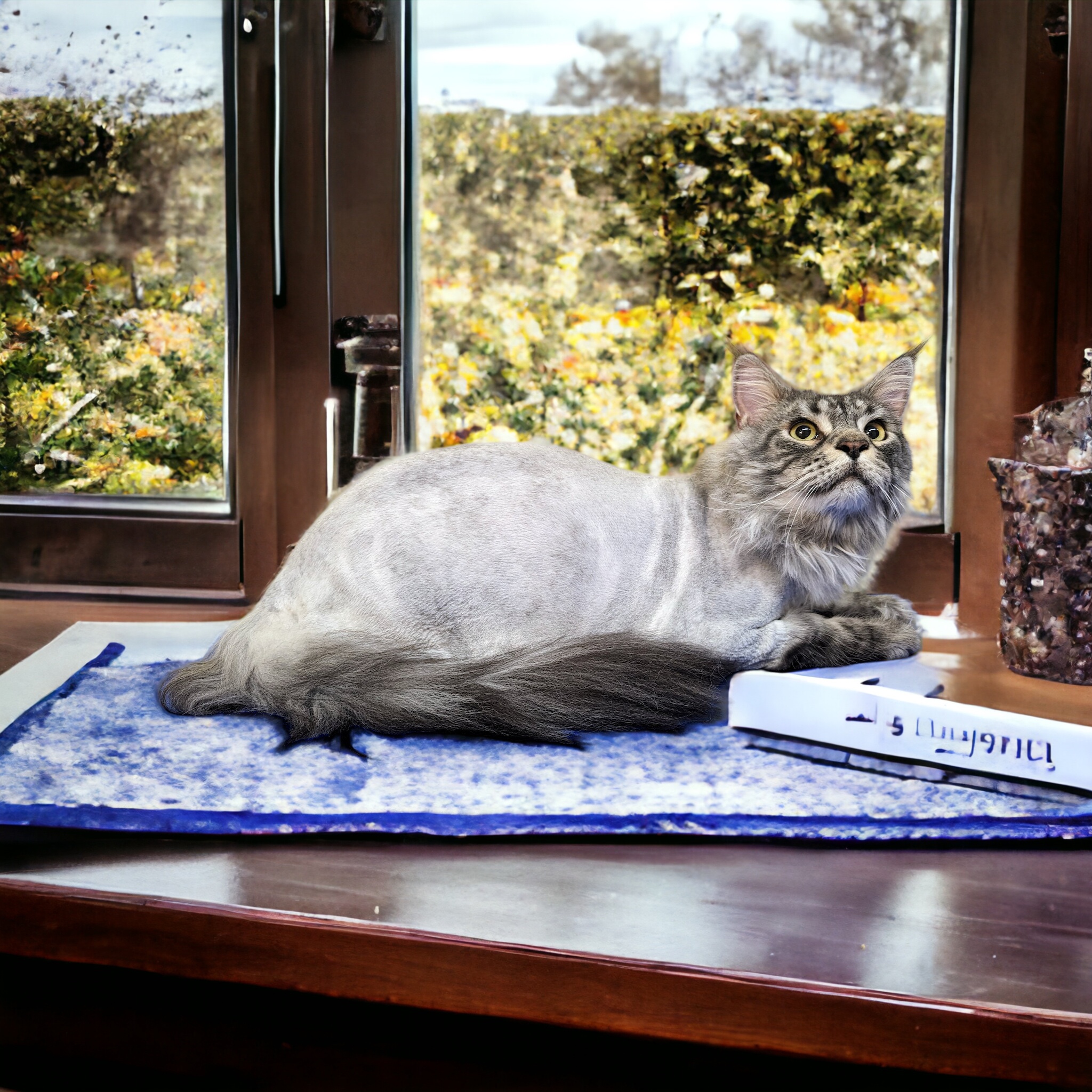
The Grooming Suite as End-of-Life Care
Some cats reach a point where grooming is no longer cosmetic. It becomes comfort care.
This authority page documents a real TANDEM Cat® case involving a terminally ill cat with advanced cardiac disease whose coat burden could not safely be ignored, yet whose body could not safely tolerate standard grooming or sedation.
The case shows how trauma-informed handling, structured consent, minimal physiologic demand, and somatic pacing can transform grooming into a legitimate form of palliative intervention when comfort matters and options are limited.

The Patient: Waffles
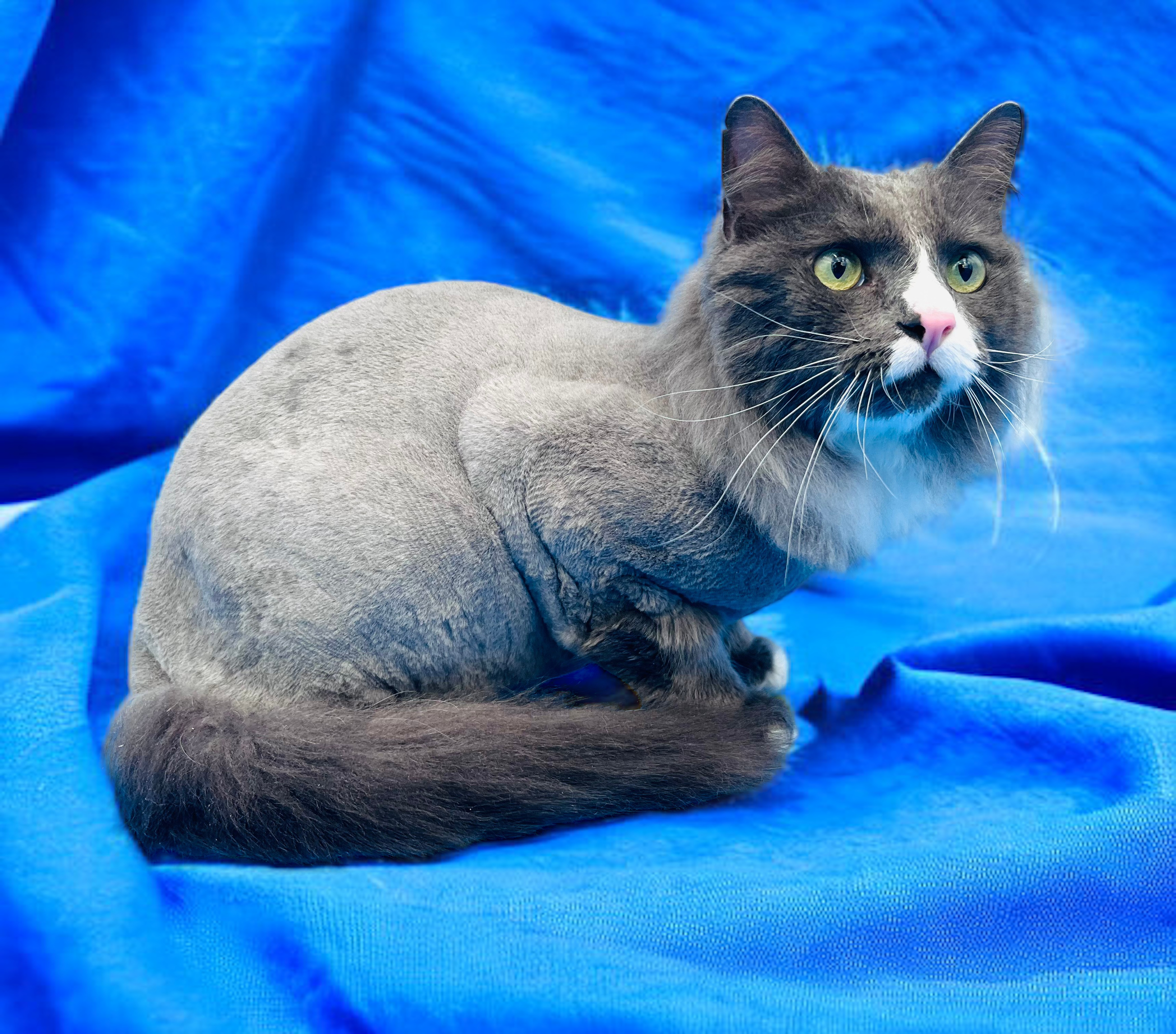
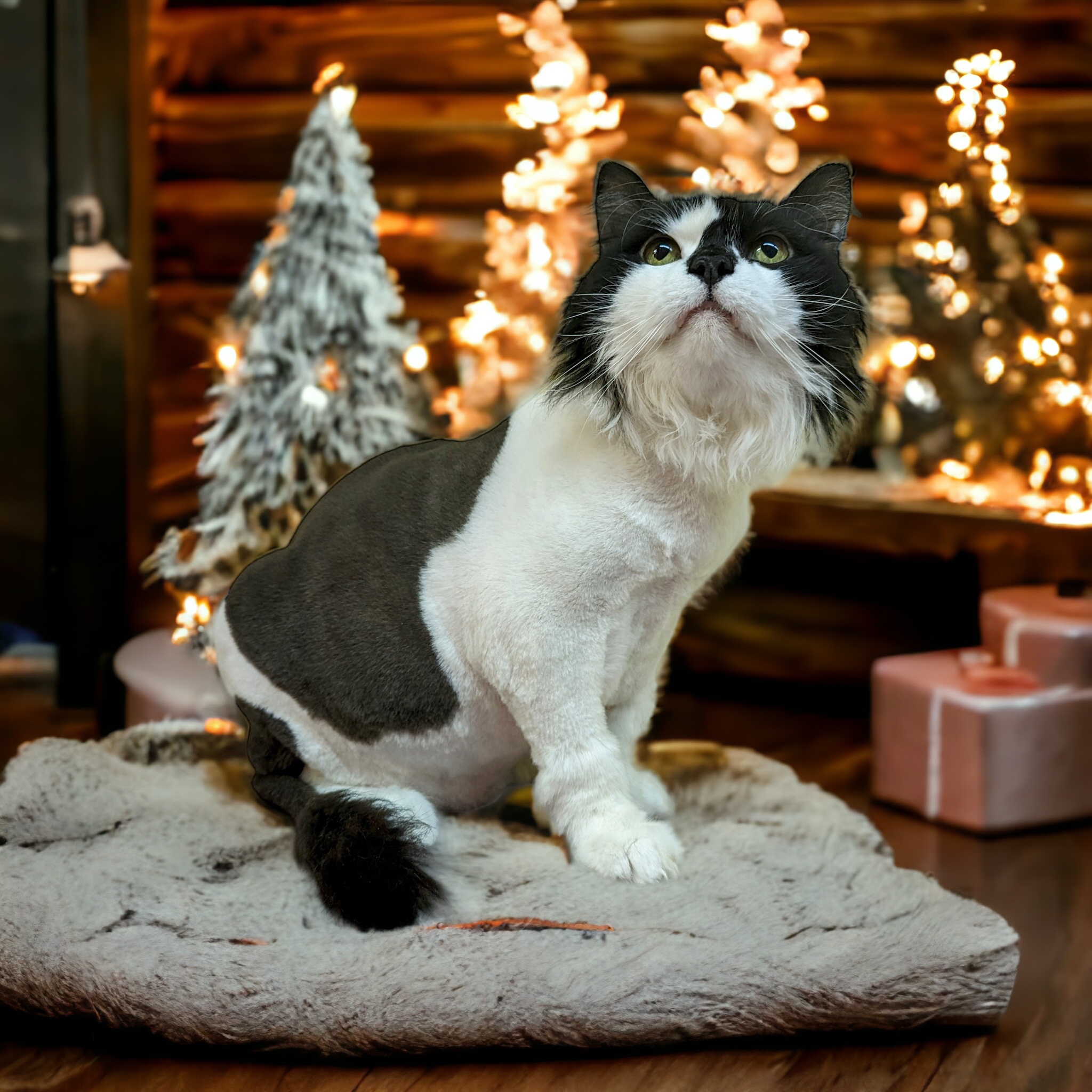
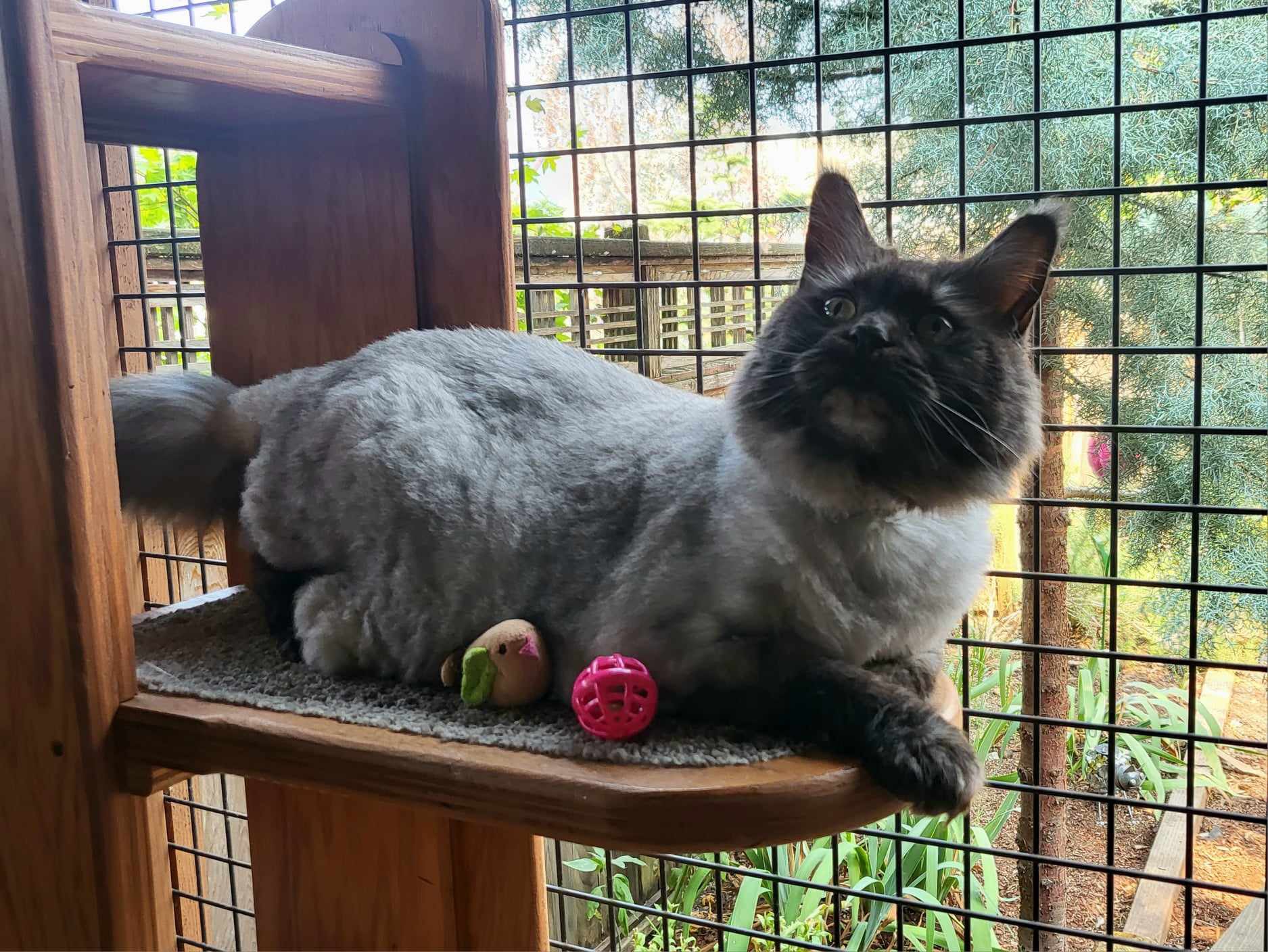
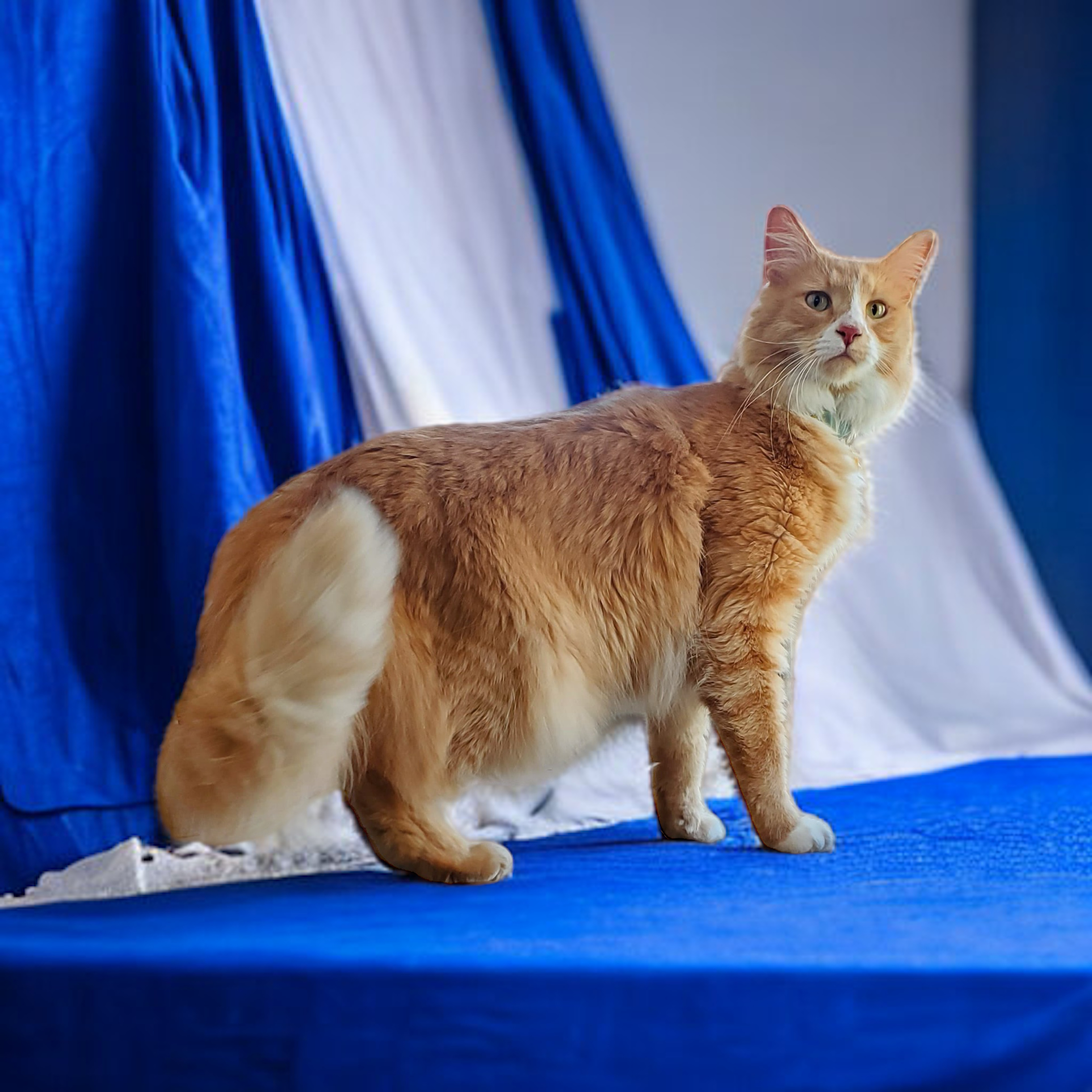
Waffles was a 6-year-old neutered male domestic longhair cat with terminal cardiac disease, including suspected unclassified cardiomyopathy and a Grade 6/6 heart murmur.
His guardian initially requested a full-body teddy bear trim to reduce coat burden and improve comfort. But because Waffles’ cardiovascular status made sedation unsafe, the usual grooming pathways were no longer clinically appropriate.
This case required a different question: not how much grooming could be completed, but what level of intervention his body could safely tolerate while still meaningfully improving quality of life.
When Grooming Stops Being Cosmetic
Grooming is often treated as optional, aesthetic, or secondary. But in medically fragile cats, unresolved coat burden can become part of the suffering itself.
In these cases, grooming is not about appearance. It is about relieving drag, discomfort, soiling, friction, and the physical burden of a coat the cat can no longer comfortably carry.
Why Sedation Was Not the Answer
Waffles had already been identified as a high-risk cardiac patient. Sedation was contraindicated because his cardiovascular fragility made the physiologic cost of pharmacologic suppression too dangerous.
Instead, the referring veterinarian prescribed a single 150 mg dose of gabapentin to support nervous system regulation. Under TANDEM Cat®’s Gabapentin-Assisted Awake Grooming framework, Waffles remained awake, responsive, calm, and physiologically trackable throughout care.
That distinction matters. The goal was not suppression. The goal was steadier awake care.
Trauma-Informed Consent Was Part of the Intervention
Before grooming began, the TANDEM Cat® team had a structured trauma-informed consent conversation with Waffles’ guardian. This was not a routine waiver. It was a clinically important part of care.
The team clearly explained that a full-body trim would likely require more handling, more exertion, and more physiologic demand than Waffles’ body could safely tolerate. They also named the reality that even minimal grooming could trigger decline, including in-procedure death.
After private discussion, Waffles’ guardian chose to proceed with a modified lower-risk plan, deciding that comfort mattered enough to justify a carefully limited intervention.
The Team and the Somatic-Critical Setup
This procedure was performed inside TANDEM Cat®’s trauma-informed clinical grooming infrastructure under Somatic-Critical Protocols.
The attending team included one Doctor of Somatic Medicine and two Certified Somatitarian Technicians™. Their work was not improvised. It was choreographed through TANDEM Touch™ support architecture designed to reduce neuromuscular demand, preserve emotional regulation, and maintain physiologic safety in fragile cats.

What the Groom Actually Included
The intervention was intentionally limited and low-demand. Instead of attempting the originally requested full-body teddy bear cut, the team used the least invasive path capable of providing meaningful relief.
- Manual deshedding and targeted mat removal completed in under 10 minutes
- Low-stimulation table-side bathing using small-batch warm rinses
- Passive incubator drying over approximately three hours instead of high-velocity drying
- No mechanical restraint, no injectable sedation, and no force-based override
Everything about the session was designed to reduce physiologic demand while preserving comfort, trust, and cardiac stability.
Passive Incubator Drying Was a Clinical Choice
High-velocity drying can be too intense for fragile cats, especially those with advanced cardiac disease. In Waffles’ case, the drying phase was handled through passive incubator drying instead.
This created a lower-noise, lower-force recovery environment with even airflow and less sensory demand. Rather than turning drying into another stressor, it became part of autonomic recovery.

Clinical takeaway
In high-risk cases, the method of drying is not a cosmetic afterthought. It can be part of whether the cat remains stable enough to complete care.
Heart Rate Stayed Within the Safety Window
Waffles’ heart rate was monitored throughout the procedure. Baseline heart rate began at 170 bpm, rose gradually during deshedding, and peaked at 187 bpm during bathing.
It never crossed the 190 bpm safety threshold. After bathing, it declined again and reached 160 bpm following passive drying, indicating physiologic downregulation rather than escalating distress.
Just as important, Waffles showed no meaningful behavioral signs of overwhelm: no significant vocalization, no panic response, no physical thrashing, and no cardiovascular decompensation.

This Is Not a Recommendation to Groom All Cardiac Cats
This page does not argue that every cat with advanced cardiac disease should be groomed, or that all such cases can be handled safely without sedation.
It shows something narrower and more important: when sedation is contraindicated, coat burden is compromising comfort, and the care environment is specifically designed for awake stabilization, trauma-informed grooming may offer a legitimate palliative option.
These outcomes should not be generalized to solo grooming environments or to settings without equivalent training, staffing, support architecture, and somatic decision-making.
This Case Belongs to a Bigger TANDEM Cat® Framework
Waffles’ case stands on its own, but it also shows how TANDEM Cat® approaches medical fragility more broadly: not through force, not through automatic sedation, and not through cosmetic thinking.
Explore related pages:
TANDEM Cat® Groomed Awake
How high-risk cats were groomed without injectable sedation using trauma-informed support, team-based stabilization, and environmental choreography.
Open page →Grooming Cats with Heart Murmurs
How cardiac-aware pacing, breath protection, and lower-stimulation handling change what safer grooming can look like.
Open page →Questions This Page Helps Answer
Bottom Line
Waffles’ case shows that grooming can become a legitimate form of end-of-life care when coat burden is compromising comfort and sedation is no longer a safe option.
The intervention succeeded not because the team forced completion, but because they redefined success around physiology, comfort, and consent.
This is the larger TANDEM Cat® position: fragile cats do not need less care. They need care redesigned around what their bodies can safely tolerate.
Why This Matters
Cats in the City operates as a Certified TANDEM Cat® Grooming Facility, using a feline-specific care model built around shared support, trauma-informed handling, and safer pathways for cats with higher needs.