Certification Notice
The services documented in this report were performed by an individual authorized to provide services certified under the TANDEM Cat® Somatitarian Technician certification program. TANDEM Cat® establishes and administers the standards governing this certification.
These services were provided through Cats in the City, an independent service provider authorized under TANDEM Cat® certification standards.
Cat: Kewpie Hayes
Guardian: Christina Hayes
Age: 3 months
Weight: 2.91 lbs
Eyes: Grey
Sex: Female (Intact)
Date: June 19, 2025
Service Provider: Daniel
Certification Status: Authorized provider under TANDEM Cat® Somatitarian Technician certification
Somatitarian Technician–Certified Services Provided
Marguerite, Sam, Tora, Quinn
Summary
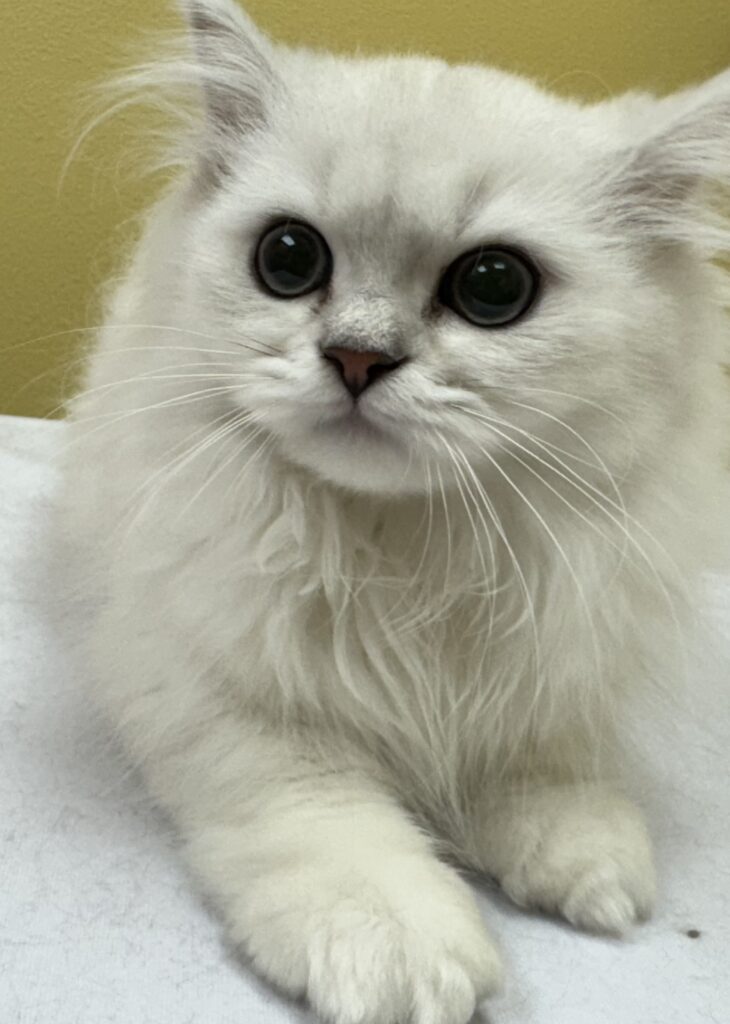
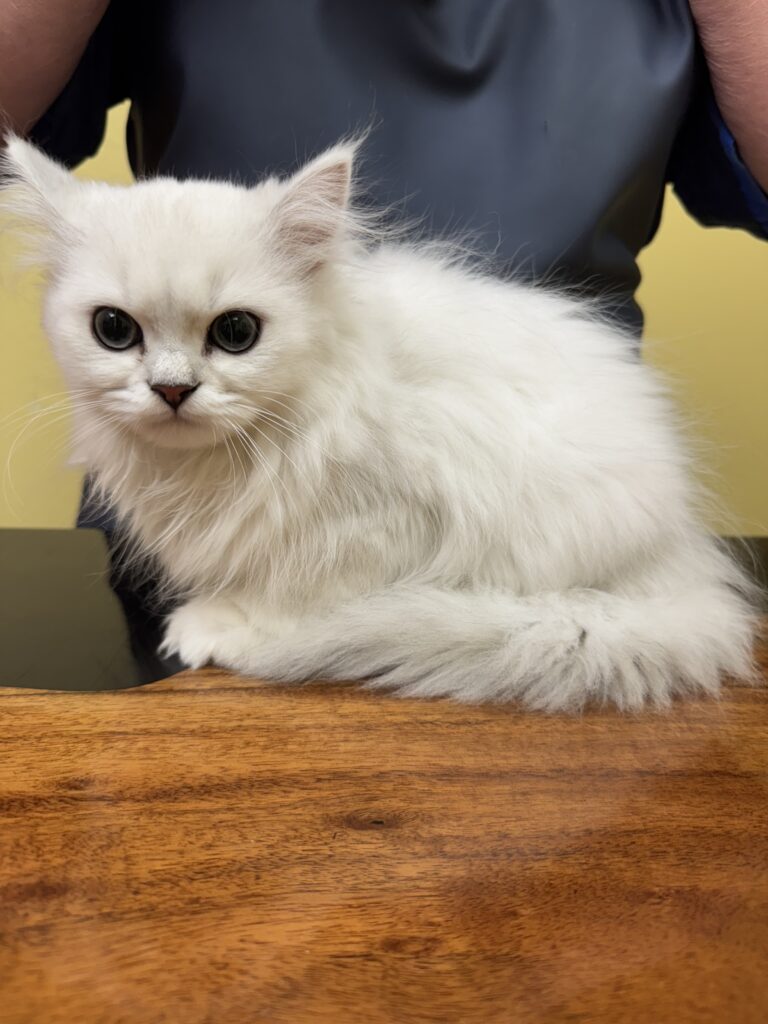
Kewpie Hayes is a joyful and emotionally fluent 3-month-old kitten whose first TANDEM Cat® session revealed early markers of resilience, secure attachment, and care compatibility. Her physical health is excellent, and her emotional presentation exceeded developmental expectations. What stood out most was her ease in navigating new sensations and spaces, balanced by a calm alertness and clear trust in her guardian. She demonstrates rare baseline confidence, paired with supple somatic acceptance and open social referencing. Her body is healthy and growing well, and her temperament positions her for long-term success in grooming and care contexts.
Somatic Body Scan
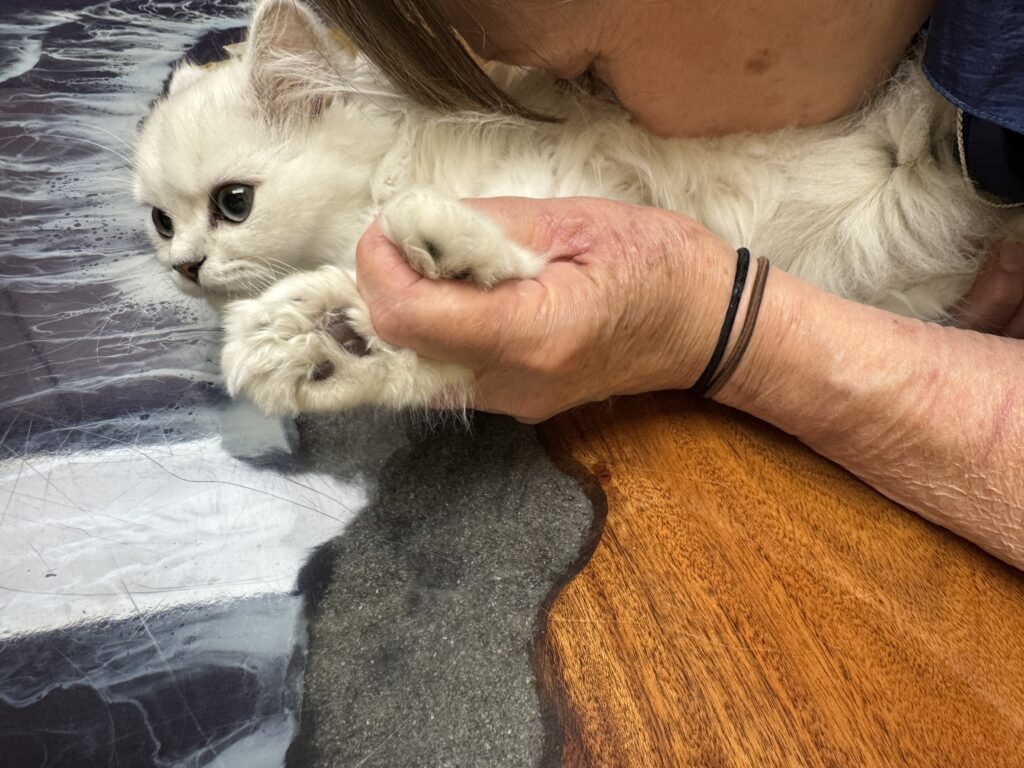
Kewpie’s full-body tactile exam revealed no signs of somatic distress. She remained relaxed and receptive across all regions of the body, including the paws, limbs, spine, hips, and abdomen. Individual digit separation for nail trim previewing elicited exploratory movement without defensiveness, vocalization, or tension.
Her paw pads were soft and even, with no swelling or compaction. Nail beds were clean and healthy. Her response to limb handling—particularly full extension and ventral access—was cooperative and grounded. Her posture during exam reflected Resting Posture Acceptance, as defined in the glossary.
Kewpie’s coat is in excellent condition for her age. She shows the early signs of undercoat thickening but no matting, static buildup, or oil imbalance. Her skin was soft, elastic, and free of dander or dermatitis. No areas were dirty or in need of urgent care, though mild early tear staining was noted and gently addressed with a Vetericyn-dampened sponge.
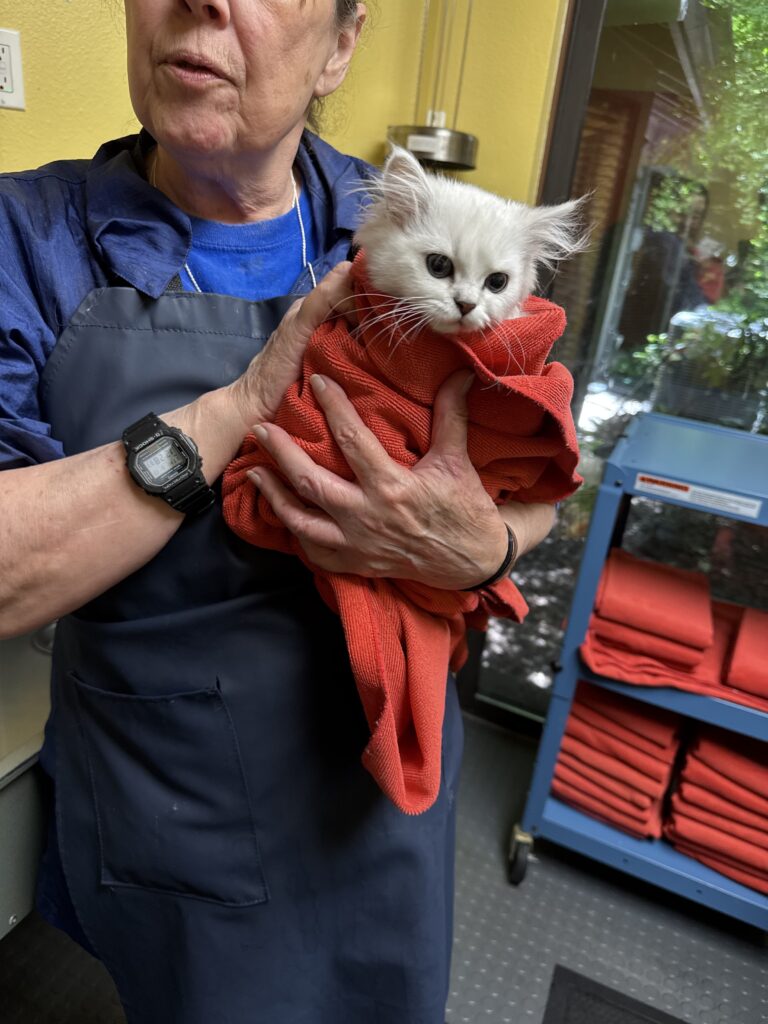
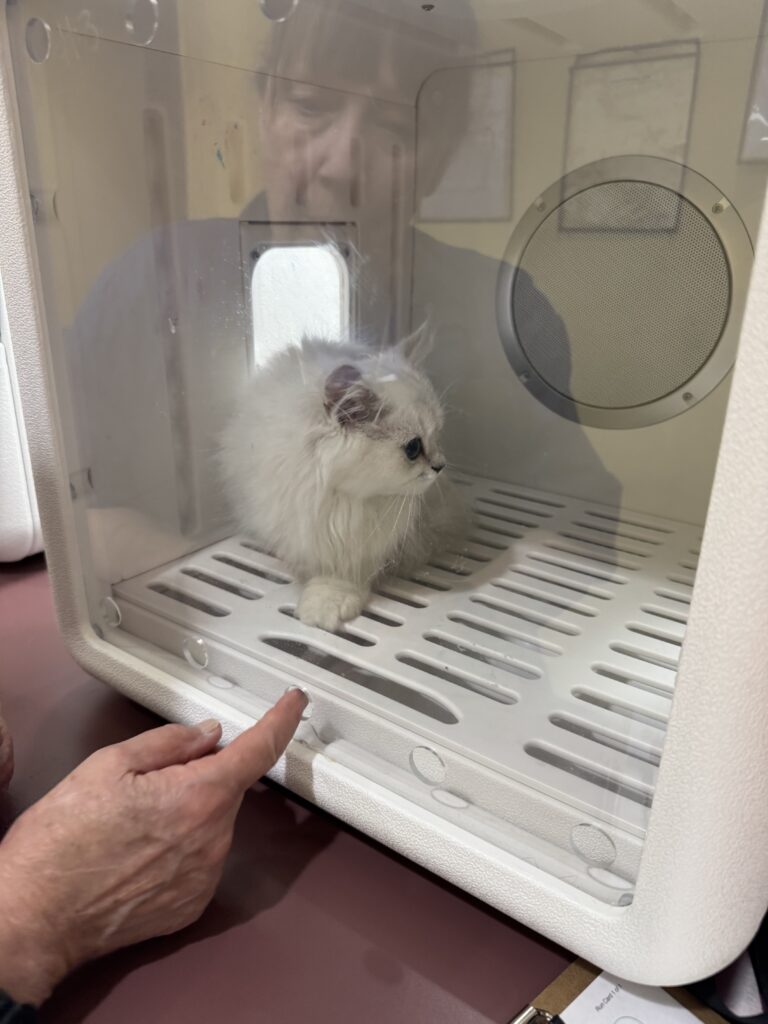
In the bathing suite, Kewpie calmly tolerated ambient noise and role-played towel drying in relational positioning. She was also briefly placed in the incubator with the machine both off and on. In both cases, she remained curious and engaged, with no signs of sound sensitivity, withdrawal, or distress.
Behavior Reading
Kewpie stepped out of her carrier with a gentle low walk and immediately began exploring. Her whiskers and nose led the way, and her tail posture remained relaxed. She showed orientation to the team through healthy social referencing—glancing at familiar and unfamiliar faces to gauge safety and adjust her behavior.
Throughout the session, Kewpie remained soft and integrated during tandem choreography with four team members. She responded well to co-regulation and accepted each transition fluidly. Her emotional range stayed within the green zone of somatic tolerance, and she demonstrated clear nervous system resilience by reentering calm postures repeatedly between touch-based interactions.
Tool introduction, including clippers in the ON position, was met with curiosity. Kewpie sniffed, explored, and showed no flinching, ear-flicking, or startle response. The toothbrush and feline toothpaste were also introduced through scent-based previewing and accepted without retreat. Her only moment of active movement—during digit isolation—was exploratory and unguarded.
Emotional Mapping
Kewpie was scored at 0–1 on the TANDEM Cat® Sound Sensitivity Scale (TCSSS). She displayed near-zero reactivity to grooming-related sounds including clippers, running water, fan airflow, and quiet conversation. Her emotional system appears deeply rooted in safety and flexibility, an excellent marker for long-term care compatibility.
Her eye contact was confident and soft, with cheek presentation, slow blinking, and rhythmic breathing throughout tactile engagement. She sought out human contact voluntarily, co-regulated with multiple team members, and remained emotionally accessible even in new spaces. Her engagement during her incubator placement and towel choreography reflected a highly resilient nervous system and a stable relational foundation.
TANDEM Cat® Somatic Care Glossary
Somatic Body Scan
A full-body, hands-on assessment that gently checks a cat’s muscles, joints, coat, paws, and posture for early signs of discomfort, imbalance, or systemic tension—without sedation or fear-based handling. “Somatic” means “body-based.”
Co-Regulation
A calming dynamic between a cat and a human, where the cat mirrors the human’s steady presence and touch. It’s how trust is built during care—especially in new environments.
Social Referencing
The way a cat looks to a familiar human (like their guardian or a caregiver) to understand how to respond in a new situation. A confident glance or a relaxed body from the human helps the cat feel safe enough to explore.
Choreography
A coordinated flow of care involving multiple team members moving in sync to reduce overstimulation. By passing the cat gently from one handler to another, we avoid abrupt transitions and build emotional ease.
TANDEM Cat® Sound Sensitivity Scale (TCSSS)
A trauma-informed 0–4 scale that helps us measure how sensitive a cat is to sound during care. A score of 0–1 means the cat showed almost no reaction to grooming sounds like running water or clippers—an excellent sign for grooming readiness.
Startle Reflex
An involuntary flinch or jump that shows a cat has been startled. We track whether this occurs during exposure to sound, movement, or tools, as it tells us about nervous system sensitivity.
Flinch Pattern
A subtle or sudden body movement—like shrinking away, pulling back, or tensing—that signals a cat is experiencing discomfort, even if they’re not vocalizing.
Green Zone (of Somatic Tolerance)
A zone of emotional and physical comfort in which the cat remains curious, open to care, and not showing signs of fear or withdrawal. It’s the zone we aim to stay in during every interaction.
Breed-Specific Drainage
Some breeds, like Persians and Chinchillas, have facial structures that naturally lead to more eye discharge. It’s normal, but gentle facial care helps keep things clean and comfortable.
Relational Reward
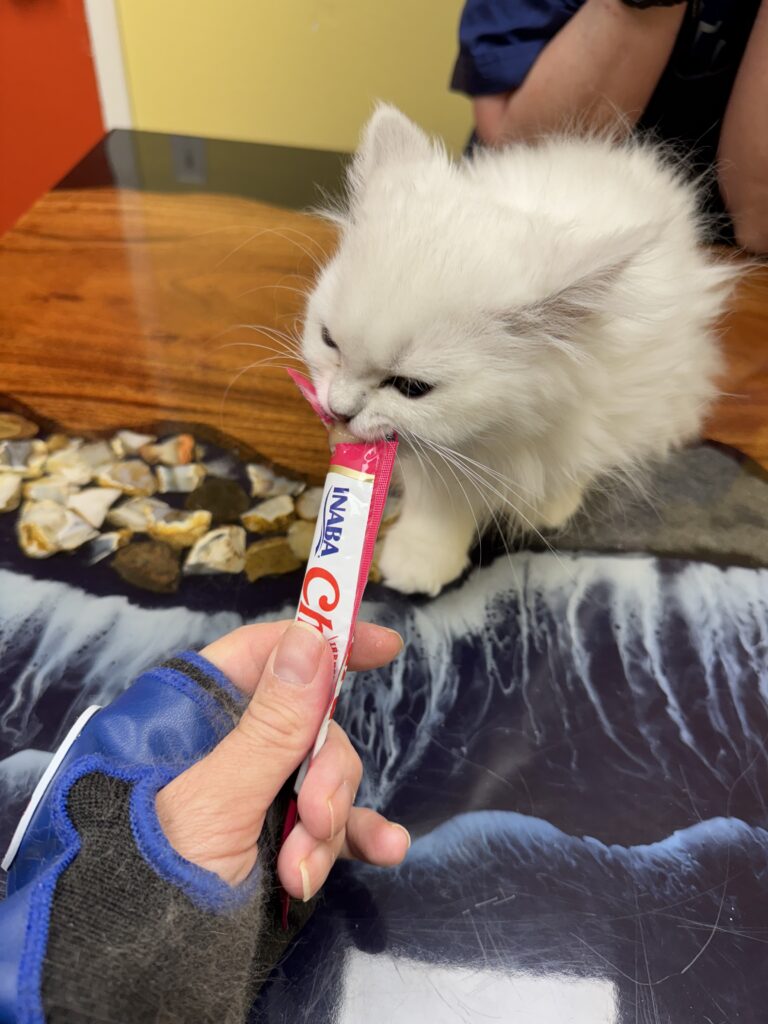
A treat or experience (like Churu or soft brushing) used not as a distraction or bribe, but as a way to build trust and joy during care. It turns care into bonding.
Resting Posture Acceptance
When a cat is relaxed enough to receive care while lying down, belly-up, or in a lap. It signals that they trust the environment and don’t feel the need to guard themselves.
Exploratory Wiggle vs. Defensive Reaction
A wiggle can mean playfulness, curiosity, or mild protest—without fear. Defensive reactions (like hissing or biting) signal overwhelm. Kewpie’s wiggles were exploratory, not defensive.
Environmental Soundscape
The collective background noise of a care space—like water running, quiet conversation, or grooming tools. Our spaces are designed so this soundscape feels neutral or safe, not stressful.
Relational Positioning (Towel Choreography)
Using a towel to wrap or hold a cat in a way that promotes safety and comfort, without physical force. It’s part of building a trust-based interaction, especially during drying or transitions.
Scent-Based Previewing
Introducing a grooming tool by letting the cat sniff and investigate it first. This respects their autonomy and helps reduce fear through curiosity.
Facial Wipe Conditioning
Gently wiping a kitten’s face during early visits to help them get used to future grooming needs—especially important for breeds that may need lifelong facial care.
Sensory Defensiveness
A heightened sensitivity to touch, sound, or motion that causes stress or withdrawal during care. Kewpie showed no signs of this.
Ventral Inspection
Checking the chest and abdomen area while the cat is in a comfortable position. Acceptance of this handling shows deep trust and emotional safety.
Baseline Confidence
A cat’s default emotional state in new environments. High baseline confidence means the cat doesn’t default to fear or withdrawal when exploring something unfamiliar.