Why Is My Cat Greasy? Causes, What It Means, and How to Help
If your cat feels oily, sticky, clumped, or dirty even after brushing, this guide explains the most common causes of a greasy cat coat, when grooming can help, and when a greasy coat may point to pain, obesity, skin disease, or another deeper issue.
A greasy cat coat is one of the most common and most misunderstood coat complaints guardians notice at home. Some cats feel oily when you pet them. Others look clumped, stringy, dusty, or unkempt even though they live indoors. In many cases, the buildup shows up along the back, lower spine, hips, or base of the tail, where the coat stops looking light and naturally separated and instead starts looking heavy, sticky, or dull. What many people call a dirty coat is often something more specific: a coat that is no longer maintaining itself the way it should.
In This Article
- Why Is My Cat Greasy?
- What a Greasy Cat Coat Actually Means
- Common Causes of a Greasy Cat Coat
- Why Grease Often Shows Up on the Back or Tail Base
- Why a Greasy Coat and Dandruff Often Happen Together
- Can You Fix a Greasy Cat at Home?
- How Professional Grooming Helps a Greasy Cat
- How TANDEM Cat® Grooming Approaches Greasy Coats
- When a Greasy Coat May Signal a Bigger Problem
- Senior Cats and Overweight Cats
- How Often Should a Greasy Cat Be Groomed?
- Frequently Asked Questions About Greasy Cats
Why Is My Cat Greasy?
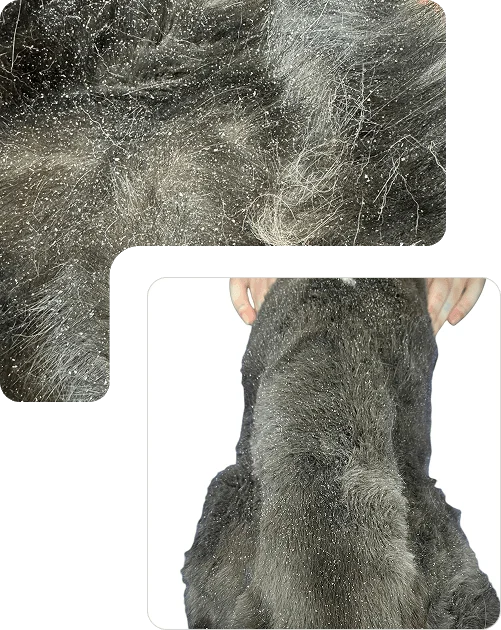
If you have been wondering why your cat feels greasy, the answer is usually not as simple as “the cat needs a bath.” Cats naturally produce skin oils, and those oils are supposed to help protect the skin and support the coat. In a healthy system, the oils are distributed through normal self-grooming and the coat stays soft, light, and evenly separated. When that maintenance system starts to fail, the oils stop moving normally. Once that happens, the coat begins holding onto oil, loose undercoat, dandruff, and debris instead of clearing them.
At Cats in the City, we see greasy coats in short-haired cats, long-haired cats, senior cats, overweight cats, medically sensitive cats, and cats who seem healthy but are quietly falling behind on coat maintenance. The grease may be mild and localized or obvious and widespread, but the larger question is always the same: why is this cat’s coat no longer regulating itself normally?
That is where TANDEM Cat® grooming matters. Rather than treating oiliness as a superficial cosmetic problem, TANDEM Cat® grooming looks at grease as a meaningful coat pattern. A greasy coat may reflect reduced self-grooming ability, trapped undercoat, pain, aging, skin disease, obesity, seborrhea, or another deeper disruption in how the cat’s body is managing the coat.
What a Greasy Cat Coat Actually Means
A healthy cat coat should not usually feel oily, sticky, waxy, or heavy. Even dense coats should generally feel clean, mobile, and naturally separated. When the coat begins to feel greasy, one of two things is typically happening: the skin is producing or retaining more oil than normal, or the coat is no longer moving well enough to distribute that oil correctly.
That distinction matters. A greasy coat is often best understood as a coat-function problem, not just a cleanliness problem. The issue is not merely that oil exists. The issue is that the coat has stopped releasing and redistributing what it should. Once that happens, the fur starts trapping material instead of clearing it. Loose hair, dead skin, dust, oil, and dandruff begin to build together until the coat feels heavy or dirty no matter how much brushing happens on the surface.
This is why so many greasy cats also have coats that feel dull, clumped, or sticky. The fur is no longer breathing and renewing itself normally. It is becoming congested.
Common Causes of a Greasy Cat Coat


There is no single cause of a greasy cat coat. Several different patterns can produce the same oily look and feel.
Reduced Self-Grooming
One of the most common causes is simply that the cat is no longer grooming thoroughly. Cats maintain their coats through constant licking, smoothing, separating, and redistributing oils. If that process becomes incomplete, oils begin collecting in the places the cat is no longer maintaining well. Senior cats, overweight cats, and cats with arthritis are especially prone to this pattern.
Obesity and Limited Reach
An overweight cat may become greasy because certain parts of the body are harder to access. This is not a behavioral failure. It is a mechanical one. If the cat cannot comfortably bend and twist to groom the lower back or tail base, the coat starts accumulating oil and debris in those areas.
Age-Related Grooming Decline
Many older cats develop oily fur because age changes how they move. Even a cat who once groomed meticulously may begin falling behind as joints stiffen, stamina decreases, or reaching the back becomes more difficult. A greasy coat in a senior cat is often one of the earliest visual signs that the cat needs more support with routine maintenance.
Trapped Undercoat and Coat Compression
Some coats become greasy not just because of excess oil, but because the coat is congested. When old undercoat, dead skin, and shed fur remain trapped in place, the natural oils stop moving through the fur normally. The coat begins to feel waxy, sticky, or heavy because it is holding too much material. This is especially common in cats with dense coats or strong seasonal shedding patterns.
Seborrhea or Skin Disease
Some greasy coats reflect a genuine dermatologic problem. Seborrhea can cause excess oil, flaking, or both. A cat with seborrhea may have a coat that feels sticky, clumps together, smells unusual, or becomes greasy again quickly after superficial improvement. Skin disease does not always appear as obvious redness or wounds. Sometimes the first sign is simply that the coat stops feeling normal.
Inflammation, Allergies, and Skin Barrier Problems
Chronic inflammation, allergies, and skin barrier dysfunction can also change the way the skin and coat handle oil. Some cats become both greasy and flaky at the same time. Others show mild oiliness first and then develop larger coat-quality problems later.
Stud Tail and Tail-Base Oiliness
Some cats develop significant oil buildup right above the tail, where sebaceous glands can become especially active. This is often called stud tail. The fur may look darkened, greasy, stringy, or dirty in a narrow band at the tail base. While this is classically associated with intact males, similar oil patterns can appear in other cats and should be interpreted in context rather than assumed automatically.
Why Grease Often Shows Up on the Back or Tail Base
One of the most common guardian observations is that the cat is greasy specifically on the back or at the base of the tail. That pattern is extremely common because those areas are among the hardest places for a cat to maintain if flexibility, reach, or comfort begins to decline.
The lower back and tail base also tend to show coat congestion early. Once oils stop moving evenly and loose coat starts getting retained, those regions become maintenance bottlenecks. The result is fur that feels clumped or sticky to the touch. Guardians may notice petting the back leaves a slight residue on the hand, or that the fur near the tail separates into oily points instead of lying naturally.
When grease is concentrated in these areas, the better question is usually not “What product should go on the coat?” but “Why has this cat stopped clearing and regulating this part of the coat?”
Why a Greasy Coat and Dandruff Often Happen Together
Grease and dandruff often appear together, and that can seem contradictory at first. Many people assume dandruff means dry skin while grease means oily skin. In cats, both can be true at once because the real issue is often coat dysfunction rather than a simple oil-level problem.
When the coat stops releasing dead skin properly, flakes collect in the fur. When natural oils stop distributing evenly, those flakes stick instead of clearing out. The result can be a cat who looks dusty on top, sticky underneath, and congested throughout the coat. This is why an oily coat often also has visible dandruff, especially along the back.
That combination is a strong sign that the coat needs more than surface brushing. It usually needs restoration.
Can You Fix a Greasy Cat at Home?
Sometimes mild oiliness improves with better maintenance, especially if the issue is new and the cat is otherwise healthy. Gentle brushing can help some cats, and hydration, weight awareness, and close observation of grooming habits all matter.
But many greasy coats do not respond well to casual home brushing because the problem is not just loose hair sitting on top. The coat may already contain trapped undercoat, dead skin, oily buildup, and uneven saturation through the fur. Brushing can skim the surface while leaving the real congestion in place.
Home bathing is also not always straightforward with cats. Stress, incomplete rinsing, poor technique, and incomplete coat opening can leave the coat temporarily cleaner without actually restoring coat function. In some cats, that means the grease returns quickly because the underlying problem was never addressed.
How Professional Grooming Helps a Greasy Cat
Professional feline grooming can be one of the most effective ways to address a greasy coat because it does more than remove surface oil. Done properly, it helps the coat start functioning more normally again.
Professional grooming can help by:
- removing trapped oils and retained debris
- lifting dead skin and releasing old undercoat
- breaking up coat compression
- improving airflow to the skin
- helping natural oils distribute more evenly
- revealing whether the skin looks medically suspicious underneath the buildup
For many cats, the visual difference after grooming is dramatic. But the more important change is functional. The coat becomes lighter, more mobile, less sticky, and easier for the cat to maintain afterward.
How TANDEM Cat® Grooming Approaches Greasy Coats
At Cats in the City, greasy coats are not treated as a simple dirt problem. We approach them as a meaningful pattern in feline skin and coat function. The buildup may reflect limited reach, pain, obesity, aging, skin imbalance, or retained undercoat that has interfered with normal oil movement through the fur.
TANDEM Cat® grooming is designed to restore coat function while keeping the feline experience calm, supported, and low stress. That matters because stressed handling, rough bathing, or rushed coat work often leaves the real problem unresolved. A cat may leave looking temporarily better while still carrying a congested, unstable coat underneath.
Depending on the cat, the grooming process may include careful coat opening, controlled removal of retained coat, deep cleansing of buildup, and behavior-first handling throughout. The goal is not just to degrease the coat in the moment. The goal is to restore the conditions under which the skin and coat can regulate themselves more normally afterward.
When a Greasy Coat May Signal a Bigger Problem
Some greasy coats are mainly a maintenance issue. Others are one clue in a larger medical picture. Veterinary involvement is a good idea when the greasy coat is persistent, worsening, or accompanied by other changes.
Red flags can include:
- strong odor
- heavy dandruff or scaling
- redness or irritation
- hair loss
- scratching or excessive licking
- sudden grooming decline
- weight gain
- stiffness or visible discomfort
- pronounced oiliness concentrated at the tail base
In these cases, the coat may be reflecting seborrhea, allergy, endocrine issues, obesity-related grooming failure, chronic pain, or another dermatologic or systemic problem. Grooming can still help significantly, but it works best alongside appropriate medical assessment when needed.
Senior Cats and Overweight Cats
Two of the highest-risk groups for greasy coats are senior cats and overweight cats. In both groups, the issue is often not the skin alone. It is the cat’s reduced ability to keep up with normal coat care.
A senior cat may still want to groom but lack the flexibility or stamina to do it thoroughly. An overweight cat may be physically unable to reach key areas effectively. In both cases, grease tends to collect where the coat is hardest to maintain. If that continues, the oil buildup can combine with dandruff, shedding, retained undercoat, and eventually matting.
This is why a greasy coat should not be dismissed as merely cosmetic in these cats. It is often a functional sign that the body is changing and the cat needs more support.
How Often Should a Greasy Cat Be Groomed?
There is no one grooming schedule that fits every cat. The right frequency depends on why the coat is becoming greasy, how dense the fur is, whether the cat sheds heavily, and whether there are ongoing mobility or skin issues.
Some cats need only an occasional reset. Others do better with regular maintenance because the underlying driver is ongoing. Senior cats, overweight cats, heavy shedders, and cats with recurrent oily buildup often benefit from not waiting until the coat has clearly failed again. In general, prevention is easier than restoration.
Key point: A greasy cat coat is often a coat-function problem, not just a cleanliness problem. Oil buildup can be a sign of reduced self-grooming, trapped undercoat, obesity, pain, seborrhea, or an emerging skin issue.
If the coat keeps feeling oily, sticky, clumped, or dirty, or if the grease is paired with dandruff, odor, discomfort, or grooming decline, it is worth pursuing both professional feline grooming support and veterinary input when needed.
Frequently Asked Questions About Greasy Cats
Why is my cat greasy on the back?
Cats often get greasy on the back because the spine and lower back are some of the hardest places to groom thoroughly. Reduced flexibility, obesity, arthritis, age, and coat congestion commonly cause oil and debris to build up there first.
Why is my cat greasy at the base of the tail?
Oil buildup at the tail base can happen when self-grooming is incomplete or when sebaceous glands in that region become overactive. Some cats also develop stud-tail-type oiliness there. If the area is persistently greasy, dark, or clumped, it is worth evaluating more closely.
Does a greasy coat mean my cat is sick?
Not always, but it can. Some greasy coats are mainly caused by coat retention and reduced grooming. Others may be associated with seborrhea, obesity, pain, allergies, inflammation, or other skin and medical issues. Persistent grease deserves attention.
Can professional grooming help a greasy cat?
Yes. Professional feline grooming can help remove trapped oils, dead skin, and retained undercoat while restoring better coat function. In many cats, this produces a significant improvement in comfort and appearance.
Why is my senior cat suddenly greasy?
Senior cats often become greasy because they are grooming less effectively than before. Reduced flexibility, arthritis, pain, and age-related changes can all make full coat maintenance harder.
What is the best treatment for a greasy cat coat?
The best treatment depends on the cause. Some cats need coat restoration and grooming support. Others need veterinary evaluation for seborrhea, pain, obesity-related grooming decline, allergies, or another skin problem. The most effective treatment addresses why the coat is becoming greasy.
Related Cats in the City Resources
Need Help With an Oily, Sticky, or Failing Coat?
If your cat’s coat feels greasy, clumped, dirty, or hard to maintain, Cats in the City offers feline-only care designed to restore coat function, improve comfort, and support the whole cat through TANDEM Cat® grooming.
