Why Does It Cost What It Does?
What your fee funds: a synchronized team, trauma-informed methods, and suites designed to protect feline nervous systems.

TANDEM Cat® translates a one-day clinical census of undiagnosed cats: Across 29 feline appointments performed in a single trauma-informed, feline-exclusive care day, 24 cats revealed complexity flags indicating structural, somatic, behavioral, or medical concern.
The findings were not rare curiosities. They were ordinary admissions seen clearly because the infrastructure was designed to detect what standard intake, dorsal visual bias, and sedation-first care models routinely miss.
Diagnosed findings across the day included 15 cases of Pre-Felt Somatic Entrapment Syndrome (PFSES), 8 instances of embedded claw pathology, 2 cases of Feline Mammary Duct Impaction (FMDI), 16 anal gland impactions, 1 grooming-related scissor laceration, and 1 medically deferred stroke-recovery case due to lack of written pharmacological clearance.

Of 29 feline grooming appointments performed on a single day in a trauma-informed, feline-exclusive clinical system, 24 revealed complexity flags indicating medical, behavioral, or structural somatic concern. Five cats demonstrated visible emotional reentry after care.
All 29 assessments were performed awake, without injectable sedation, using the TANDEM Cat® clinical grooming model. While some cats received oral gabapentin under veterinary guidance, all sessions relied on manual stabilization, environmental containment, somatic observation, and team-based care rather than pharmacologic restraint.
Felines are widely treated as self-maintaining until overt illness, obvious behavioral change, or a visible hygiene crisis appears. But those surface signals often arrive late. Coat burden, glandular dysfunction, mobility restriction, embedded claws, and ventral entrapment can accumulate far earlier while remaining hidden beneath breed assumptions, dorsal visual bias, or passive behavior that gets misread as tolerance.
This one-day TANDEM Cat® census demonstrates that subclinical suffering is frequently present, structurally meaningful, and often reversible when cats are examined in infrastructure built to detect it. The larger implication is not simply that hidden pathology exists. It is that conventional systems routinely fail to see it.
All 29 cats were admitted for grooming on June 1, 2025. TANDEM Cat® intake protocols were followed, including full-body tactile mapping, ventral inspection, gland expression, claw evaluation, and coat decompression testing. All cats were evaluated awake. One medically fragile stroke-recovery patient was deferred because written gabapentin clearance had not been obtained.
Findings were recorded in real time by trained TANDEM Cat® personnel. Each cat was categorized by condition cluster, including PFSES, FMDI, claw bed impaction or infection, anal gland dysfunction, iatrogenic trauma, and emotional shutdown or recovery.
One of the most important clinical lessons from this census is that appearance from above is an unreliable proxy for wellness. A cat can look acceptable dorsally while being biologically sealed beneath, tethered across joints, fused with feces or urine, or carrying glandular and claw pathology with major structural consequence.

Moue, a 21-year, 2-month-old female cat under monthly veterinary care for renal disease, hyperthyroidism, and a 2/6 heart murmur, arrived for her first lifetime grooming session. She had ongoing medical oversight and was pre-approved for gabapentin, yet had never undergone coat decompression. Her dorsal coat appeared serviceable at a glance, despite compressive matting and dandruff.
A total of 1.09 pounds of retained coat was removed without sedation, approximately 10% of her likely body weight. Care included full-body deshedding, sebaceous decompression, and targeted gland expression. Moue tolerated the session calmly, displayed upright posture immediately afterward, and showed no behavioral distress.


Her case demonstrates that long-standing somatic burden may persist even under routine veterinary care when no one is structurally assessing the coat as a clinical burden rather than a cosmetic feature.
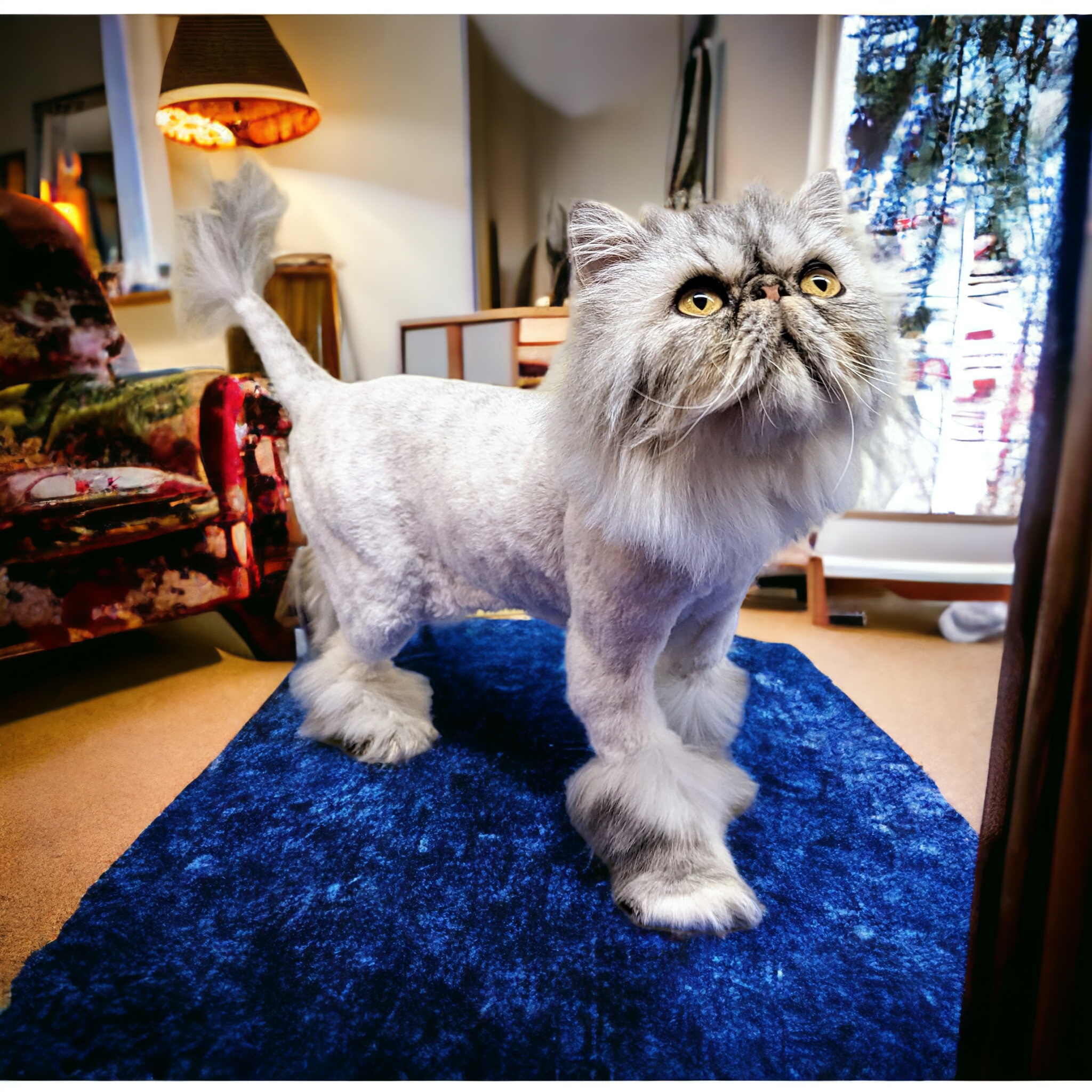
A 12.2-year-old Persian was referred for human injury risk and behavioral reactivity during home grooming attempts. Intake revealed dense interlocking matting across all limbs, chaining matting from hind thigh to hind thigh, tethering from one front axilla across the sternum into the other, and vertical entrapment around knees and an ankle. All four limbs showed visible muscle atrophy.
Bilateral mammary duct impactions were identified and manually expressed. The cat also demonstrated chronic face drainage, significant periocular debris, and moderate plantar pad buildup. Grooming was performed awake using multi-handler trauma-informed containment, followed by muscle reintegration massage after liberation.

This profile challenges breed-based masking directly. The Persian coat did not merely hide matting. It concealed full-body structural restriction and glandular pathology with clear clinical significance.
This 12-year-old Persian, reportedly confined to a bathroom for six months due to incontinence, was brought in by a neighbor. Intake revealed advanced fecal and urine entrapment throughout the ventral coat, a full-body pelt, at least six embedded claws, four areas requiring immediate wound care, perianal ulceration, and prominent mammary tumors raising concern for neoplasia.
The cat was systemically compromised and at immediate risk for septic progression. TANDEM Cat® performed a full awake pelt removal in a 90-minute non-sedated session, followed by claw bed flushing, wound care, gland expression, and decompression support.


Following care, the cat displayed upright posture and calm co-regulated behavior. The guardian submitted a five-star public review within hours. This was not a cosmetic win. It was a likely pre-euthanasia trajectory interrupted by infrastructure-based access to awake care.
The final cat of the day presented with chronic regrowth after a double declaw procedure. One medial claw had tunneled through the pad, while another digit showed keratin buildup consistent with longstanding regrowth trauma. This was resolved under TANDEM Cat®’s non-sedated stabilization protocol.
Manual extraction took under 30 seconds, followed by a five-minute wound flush and topical treatment using Vetericyn®. The guardian was counseled to return every 6–12 weeks for claw retraining to prevent re-embedding.


This case exemplifies the role of trauma-informed grooming as a point of access for legacy surgical complications that can remain painful, progressive, and behaviorally invisible.
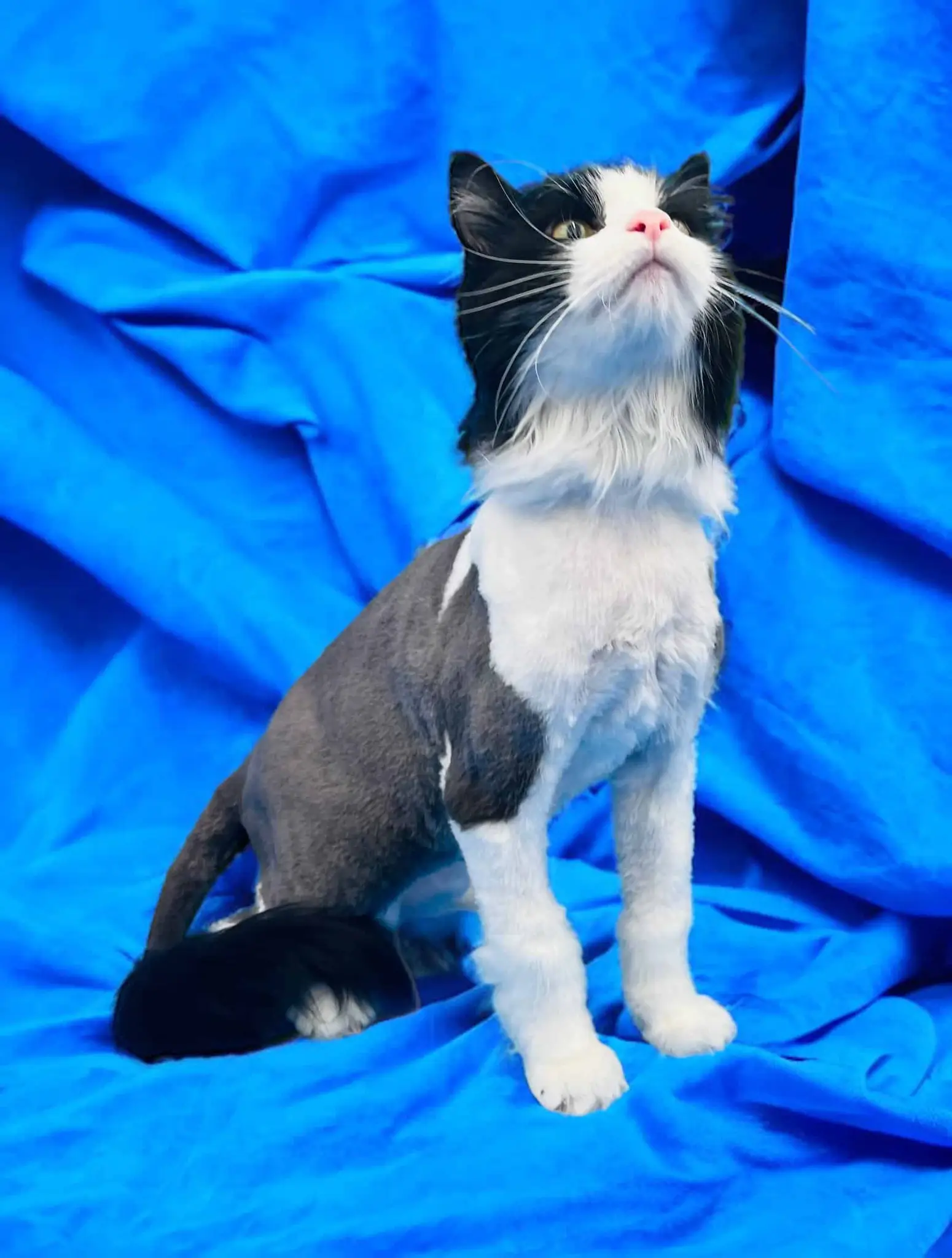
Several cats in this one-day census demonstrated visible post-care transformation. This was not “looking nicer.” It was an immediate reorganization of body use, posture, engagement, and affect after decompression.

This one-day clinical census directly challenges several dominant assumptions in feline care: that cats are self-maintaining, that grooming is elective, that visible calmness equates to wellness, and that injectable sedation is the only reliable path to safe access in complex cats.
Across 29 cats, including long-haired breeds and geriatric patients already under veterinary care, TANDEM Cat® identified widespread somatic pathology that conventional encounters had not surfaced. Several cats demonstrated immediate postural and behavioral transformation after decompression, with what had been read as aging, passivity, or withdrawal resolving into alert, upright, emotionally responsive engagement.
The deeper problem is not feline complexity. It is infrastructural deficiency. Sedation is not scalable, trauma-neutral, or equitable. By contrast, TANDEM Cat® uses co-regulated handling, multi-handler containment, ventral access, somatic touch literacy, and environmental choreography to create awake access ethically and consistently.
The significance of this page is not that one cat had a hidden problem. It is that a normal day of admissions revealed a pattern dense enough to function as epidemiologic evidence of structural under-recognition in feline care.
The conclusion is uncomfortable but clear: cats are not undergroomed because guardians do not care. They are structurally unseen because current systems are not built to detect, interpret, and relieve what they are carrying.
This one-day cohort documents the first known web authority page based on a sedation-free clinical census of 29 domestic cats assessed and stabilized using a trauma-informed grooming system built for diagnostic access.
Within eight hours, embedded claws, ductal impaction, PFSES, severe fecal entrapment, suspected mammary tumors, sepsis risk, surgical regrowth injury, and structural coat dysfunction were identified and relieved without injectable sedation, restraint trauma, or delay.
TANDEM Cat® did not invent this need. It revealed it. And if this is what walks in on an ordinary day, then the revolution in feline care has already begun.