How often should a Maine Coon be groomed?
Most Maine Coons do best with regular coat maintenance because the undercoat can pack down and trap shed hair.
Frequency depends on lifestyle and coat density, but consistent care helps prevent matting, reduces shedding,
and supports cleaner self-grooming.
What is “therapeutic deshedding” for Maine Coons?
Maine Coons often carry a heavy undercoat that compacts before you see visible mats. Therapeutic deshedding
means reducing undercoat density safely while protecting the topcoat and skin. Done correctly, it improves comfort,
reduces shedding, and helps the coat move again instead of sitting like a dense layer.
Does deshedding help with hairballs?
Often, yes. When less loose undercoat is left in the coat, many cats ingest less hair during self-grooming.
That can support hairball control for some cats. (Hairballs can also be medical—if yours are frequent, discuss with your vet.)
Why do Maine Coons get mats even when guardians brush them?
Maine Coon matting is often undercoat-based. The coat can look brushed on the surface while the undercoat
underneath is compacting—especially in friction zones like armpits, behind the ears, belly, and pantaloons.
We assess where the coat is locking and choose the least-stress path to restore movement.
Is shaving the only option for Maine Coon matting?
Not always. Shaving can be appropriate for advanced matting or pelting, but many Maine Coons can be restored
with careful dematting and undercoat reduction when matting is early or localized. We evaluate case-by-case based
on coat density, mat severity, skin integrity, and the cat’s tolerance for handling.
Do you do Maine Coon lion cuts in Portland?
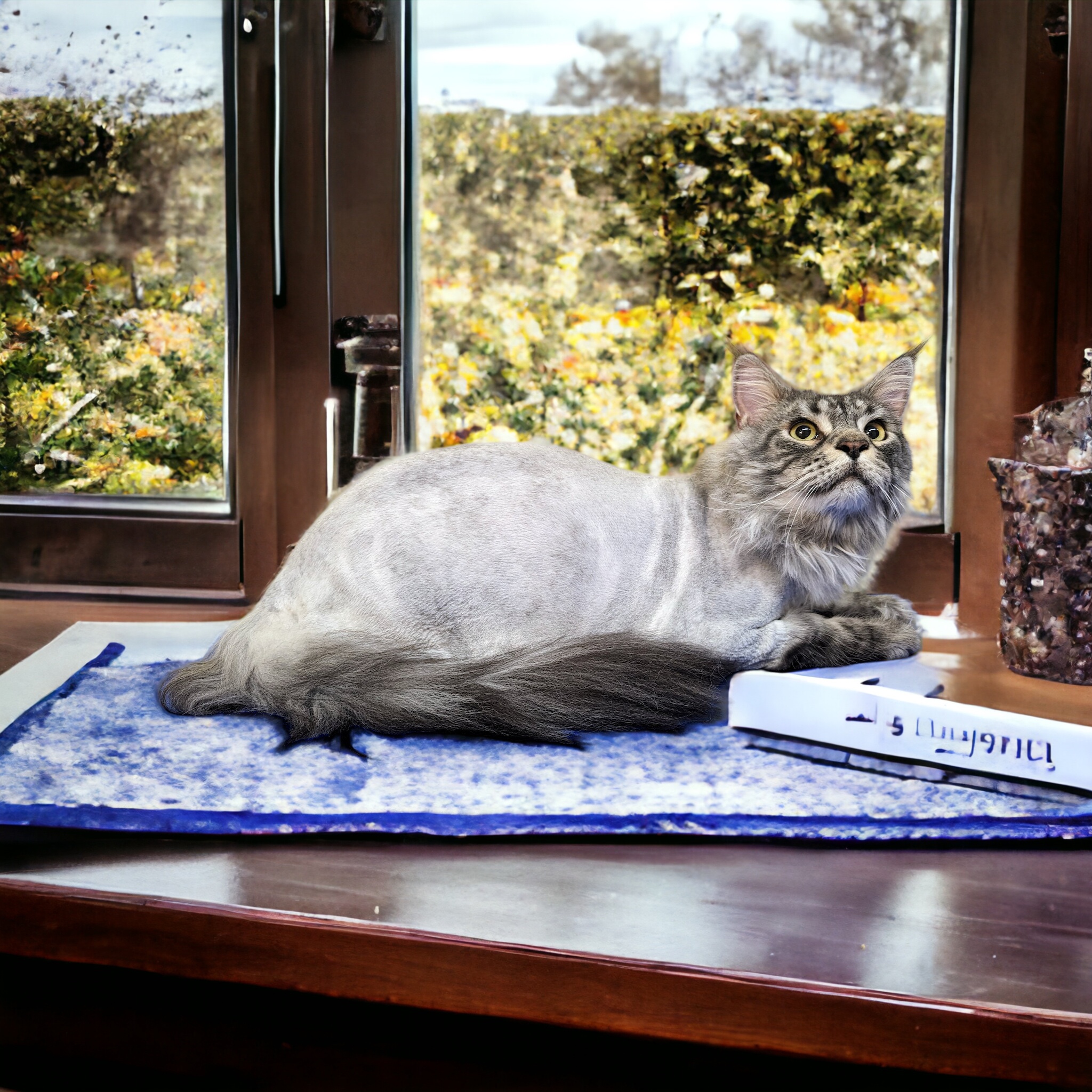
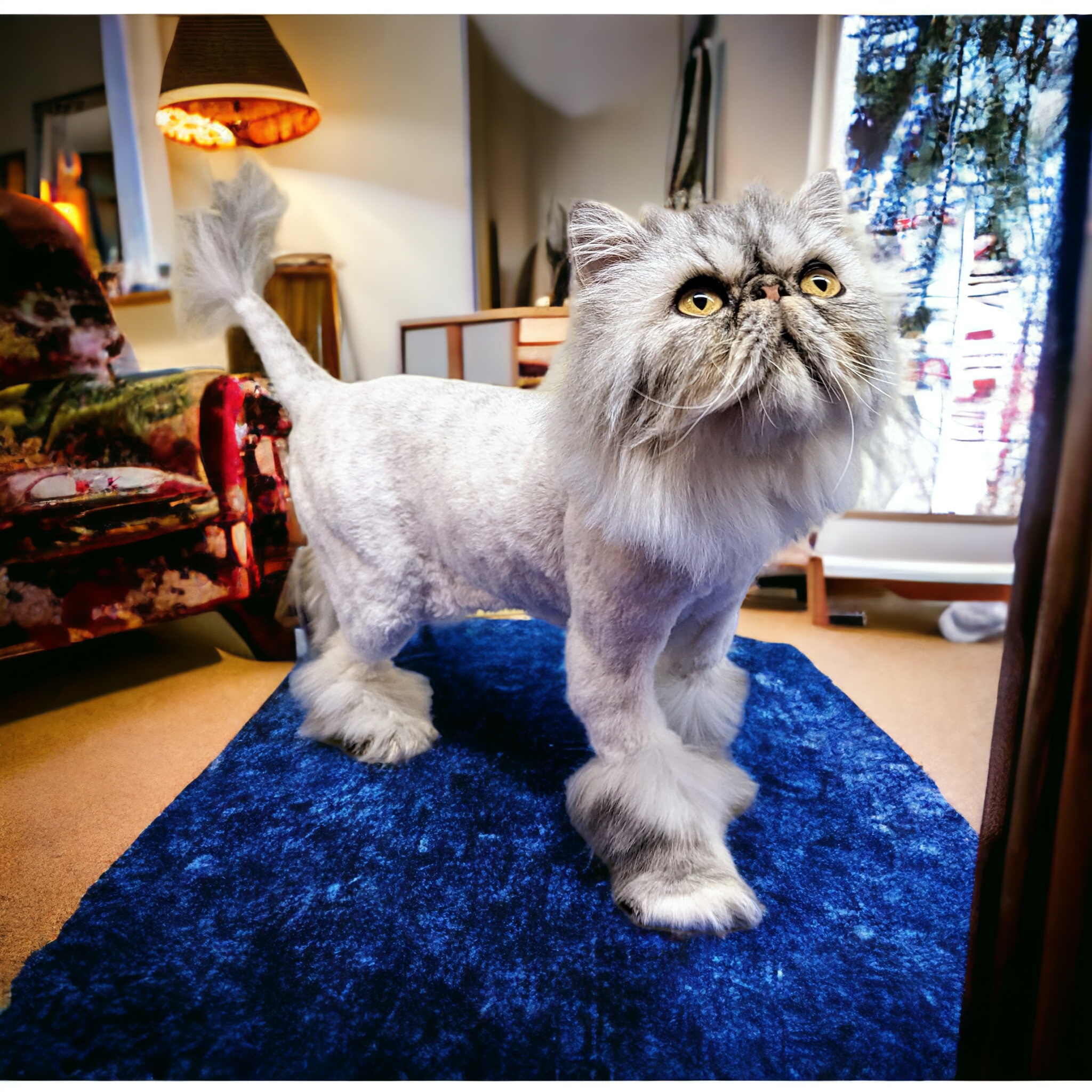
Yes. A Maine Coon lion cut can be the safest reset when matting is advanced or the coat is no longer functional.
We focus on comfort, clean lines, and skin protection. When possible, we preserve appropriate areas and avoid
unnecessary removal.
What is a “full reset” for a Maine Coon coat?
A full reset is a structured coat restoration plan that may include degreasing bath, coat conditioning, undercoat
removal, and targeted mat relief—sometimes paired with a strategic clip if needed. The goal is not “aesthetic grooming.”
The goal is coat function: clean, breathable, movable hair that the cat can live in.
Why do some Maine Coons need a degreasing bath?
Maine Coons can carry oil and product buildup that makes undercoat extraction harder and increases “coat locking.”
A degreasing bath can help separate hair, lift debris, and make deshedding safer and more effective—especially on
dense coats that feel heavy or waxy.
How do you handle very large Maine Coons safely?
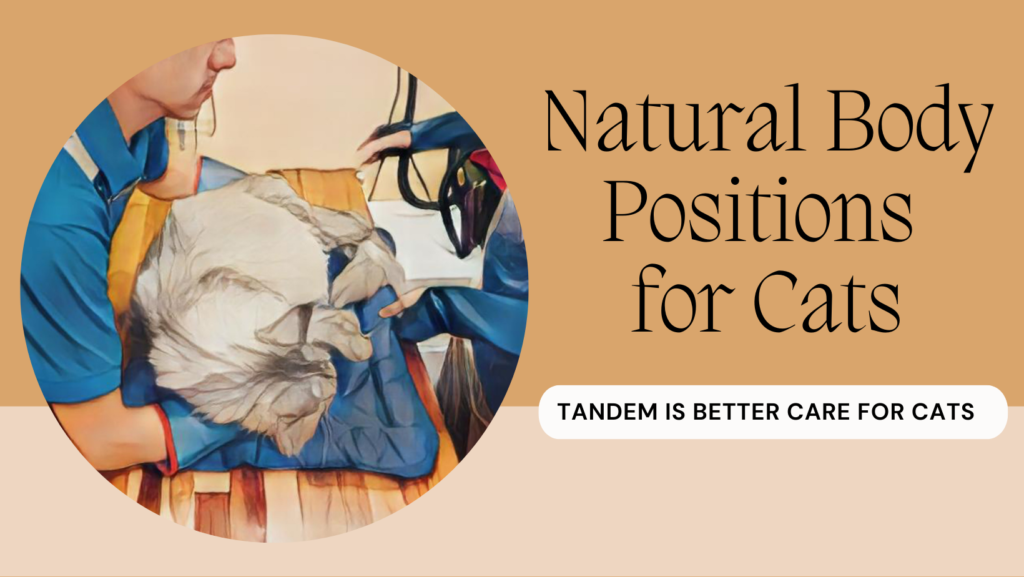
Large-body handling is a specialty. We use secure, comfort-forward positioning (including cradle support when appropriate),
frequent micro-pauses, and low-force restraint. Our goal is to protect joints, spine comfort, and nervous system regulation—
especially for 20+ pound cats.
Do you groom Maine Coons who hate grooming or get overstimulated?
Yes. Many Maine Coons are tolerant until they’re not—then overstimulation shows up fast. We work with consent-based pacing,
shorter handling loops, and clear stop points. If a cat needs a multi-visit plan, we’ll tell you directly.
What should I do at home between Maine Coon grooming visits?
Focus on friction zones first: armpits, belly, behind ears, and pantaloons. Use short sessions and stop while it’s still going well.
If brushing is creating conflict, don’t wait until matting is severe—early intervention is easier on the cat and the coat.