Cats in the City • TANDEM Cat® Clinical Grooming

Cat Nail Trim in Portland

Nail trims are not cosmetic. They’re maintenance care that prevents snag injuries, reduces stress during handling, and helps avoid overgrowth that can lead to ingrown claws—especially in senior cats and indoor cats.

This page is the hub for routine nail trims, ingrown claw guidance, and our simplified low-cost nail trim options.

  • Feline-only handling
  • Dewclaw checks
  • Senior cats welcome
  • Fast + calm sessions
  • Ingrown claw prevention
  • Low-cost trim options
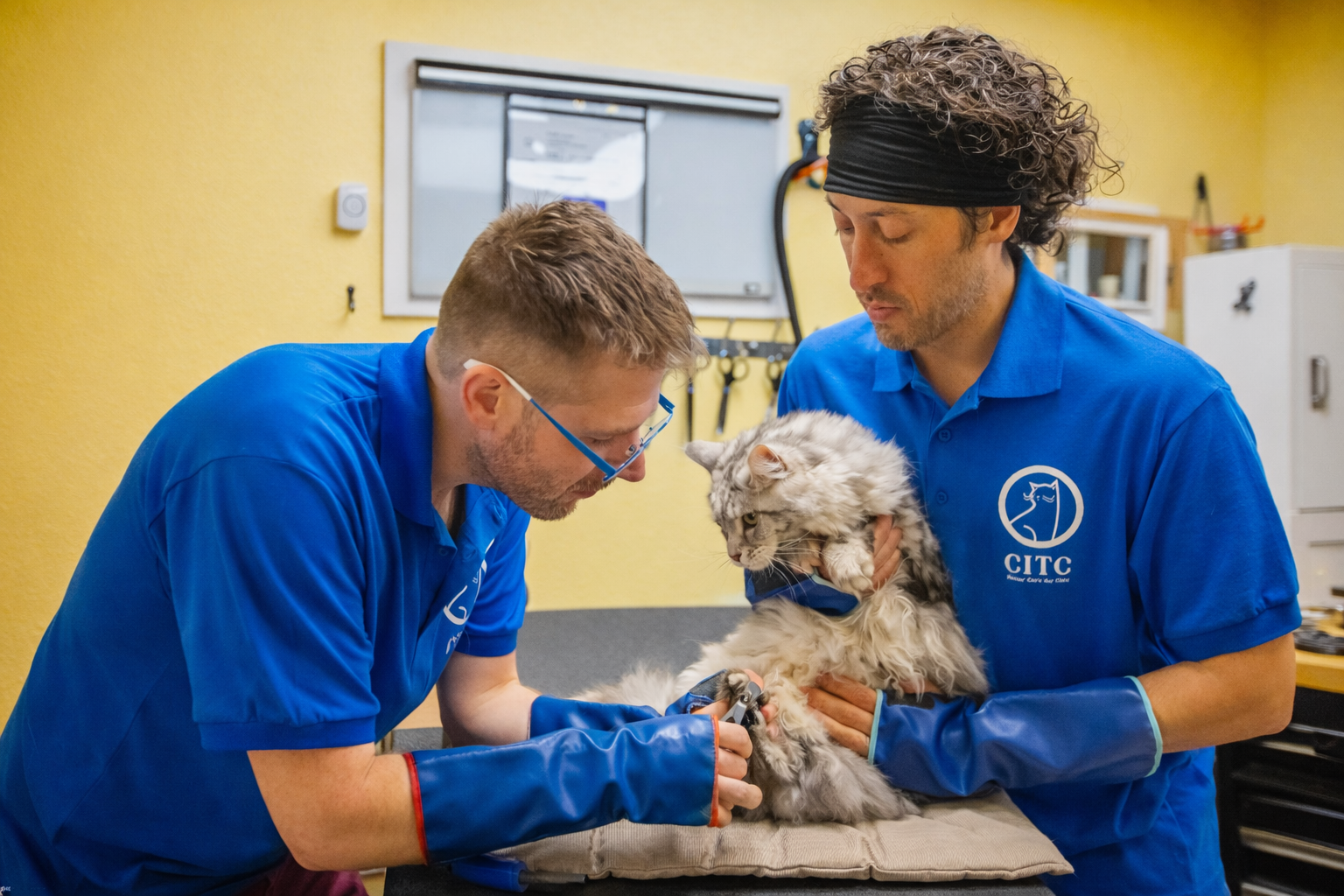
TANDEM Cat team performing a calm feline nail trim at Cats in the City in Portland
TANDEM team nail care.
Shawn and Dr. Dan of Cats in the City
Shawn + Dr. Dan.
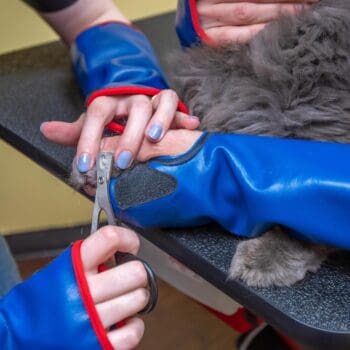
Closeup of a cat nail trim being performed by the TANDEM team
Precise trimming.

What a Cat Nail Trim Is (In Real Life)

Cats don’t always “wear down” nails naturally—especially indoor cats, senior cats, cats who scratch less, or cats whose nails grow fast. When nails get too long, they can snag, tear, split, or begin curving toward the paw pad.

We treat nail trims as routine care: quick, calm, and precise—while still respecting the cat’s tolerance window. If a cat needs breaks, repositioning, or a slower approach, we adapt in real time.

Behavior-first means every cat is seen at Cats in the City

Behavior-first means every cat is seen

If you’re searching for cat nail trims in Portland, you’re looking for a place that can meet real behavior and handling needs—safely. Some cats want it over fast. Others need time, grounding, or micro-breaks.

TANDEM Cat® is a structured, trauma-informed clinical grooming system. We adapt to the cat’s coping style so nail care can become tolerable and repeatable—not a once-a-year crisis.

We groom all cats. But we never treat them the same.

Why Routine Nail Trims Matter

Prevents Snags + Tears

Overgrown nails catch on carpet and fabric, creating painful panic moments and torn nails.

Reduces Ingrown Risk

Long nails curve. Dewclaws are especially likely to overgrow unnoticed until they become a problem.

Supports Senior Cats

Seniors often scratch less and need more routine maintenance to keep paws comfortable.

Makes Handling Easier

Shorter nails reduce accidental scratches during carrier loading, home care, and veterinary handling.

What We Check During a Nail Trim

TANDEM team performing a feline claw trim in Portland

Precision + Paw Awareness

We check nail length, curvature, and dewclaws. We look for uneven wear, overgrowth patterns, and signs of pressure or irritation—then trim conservatively to maintain comfort and safety.

If we see swelling, drainage, odor, bleeding, or anything that suggests infection or a deeper injury, we’ll tell you immediately and recommend veterinary escalation.

Ingrown Cat Claws

Ingrown claws happen when nails curve into (or toward) the paw pad. It’s common in senior cats, indoor cats, and cats who don’t scratch enough to shed nail length. Early intervention matters—especially for dewclaws.
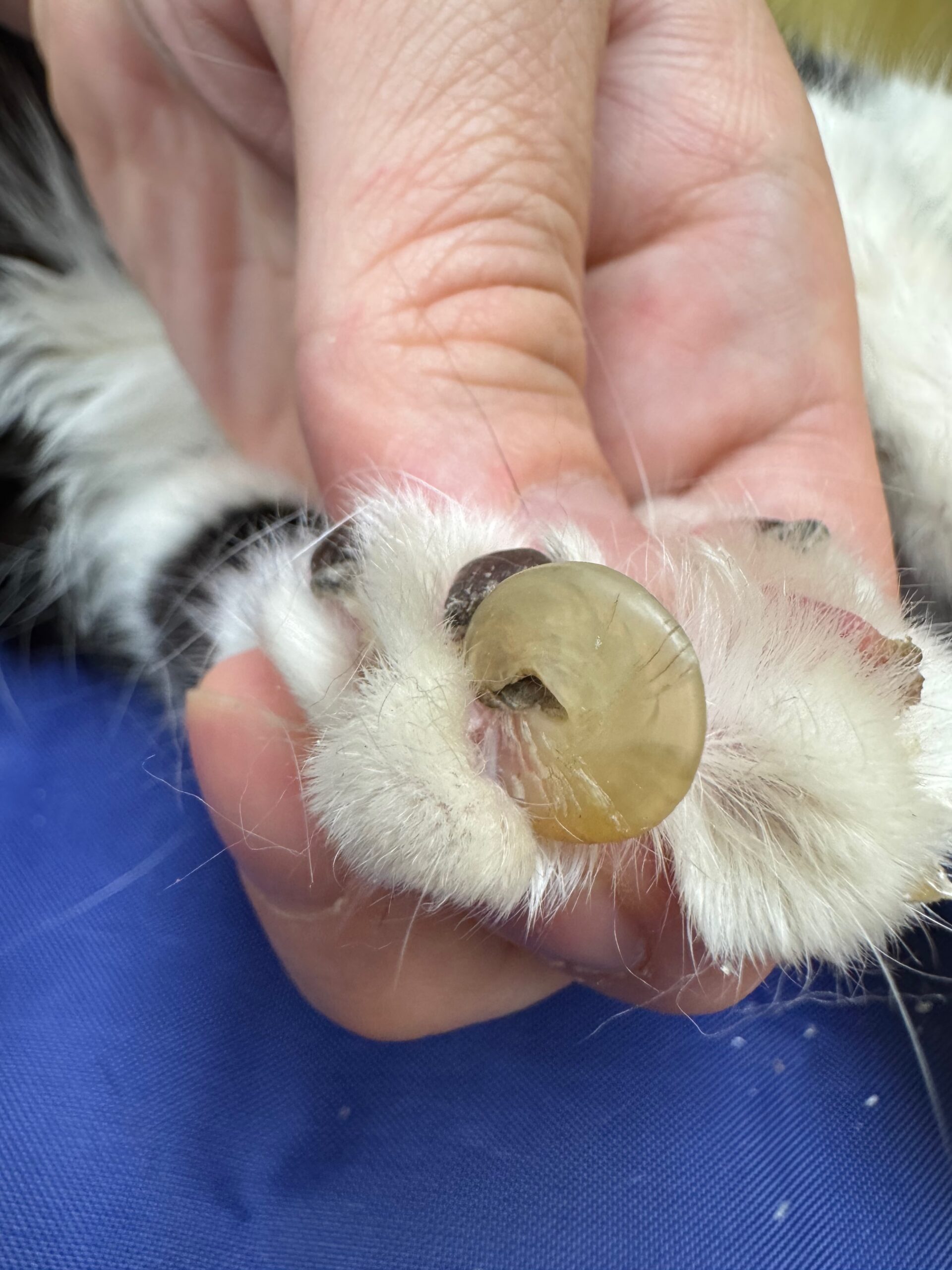
Overgrown cat claw curled toward the paw pad in Portland

Signs to watch for

  • Limping or “favoring” a paw
  • Swollen toe, redness, or heat
  • Frequent licking or sudden paw sensitivity
  • Visible nail curl toward (or into) the pad

If there is bleeding, drainage, strong odor, or visible pad penetration, contact your veterinarian.

Low-Cost Nail Trim Options

If you only need a focused maintenance trim, we offer streamlined low-cost nail trim appointments by location:

Ready to Schedule a Cat Nail Trim in Portland?

Routine nail care keeps cats comfortable and prevents escalation. Book a nail trim and add notes during intake if your cat is sensitive about paws or has a history of handling resistance.

Cats in the City • Grooming Locations

Choose your grooming location

Use the location pages below for hours, directions, and location-specific details for Portland-area cat grooming.

Powell Location

Portland cat grooming — location details & booking pathway

Open Powell →

Beaverton Location

Westside cat grooming — location details & booking pathway

Open Beaverton →
Medical-Sensitive Grooming

If your cat is high-risk, traditional grooming may not be appropriate

If your cat has a heart murmur, arthritis, diabetes, mobility limitations, anxiety, or a history of grooming trauma, grooming can shift from “routine” to medically sensitive very quickly. We specialize in medical-sensitive cat grooming in Portland using a trauma-informed TANDEM Cat® framework—built around safe positioning, pacing, and threshold recognition.

We do not replace veterinary care. We provide structured grooming within medical thresholds and collaborate when your veterinarian has guidance.

Scope

What “medical-sensitive” means

“Medical-sensitive” means grooming is planned with extra attention to physiology, comfort, and stability. Many cats still need coat and nail care—while also needing a gentler process that respects energy limits, breathing effort, pain, and stress response.

  • Cardiac conditions (including heart murmurs)
  • Diabetes, hyperthyroid, and metabolic fragility
  • Arthritis, mobility loss, spinal or hip pain
  • Neurological history (including seizure history)
  • Advanced age and low reserves
  • Behavioral fragility and prior grooming trauma
  • History of sedation complications or poor tolerance

Our clinical bridge approach

We keep grooming in its lane—while making it safer for medically complex cats. When a condition is active or unstable, we recommend veterinary guidance before proceeding.

Respect the diagnosis. We adjust the plan around known risks and limitations.
Respect the cat. We organize care around consent cues and coping ability.
Respect the threshold. We pace and stop early when stability requires it.
Method

How we modify grooming for high-risk cats

High-risk grooming is not about “pushing through.” It’s about achieving essential coat care while maintaining physiologic and behavioral stability. These are the core modifications behind trauma-informed cat grooming in Portland.

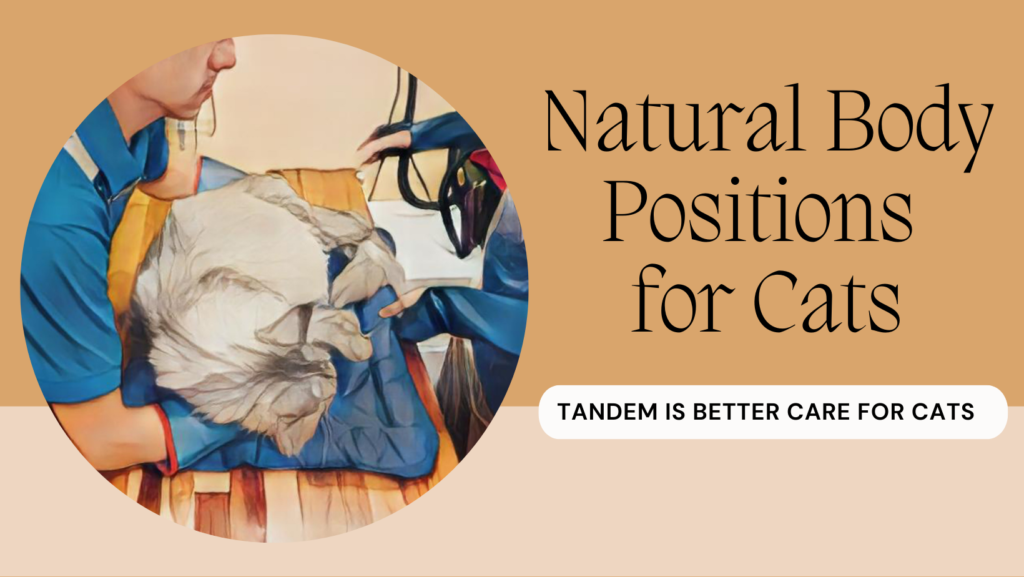
  • Natural body positioning with supported holds that reduce strain
  • Heart-rate monitoring pauses when indicated, with reset pacing
  • Reduced restraint model and low-force handling
  • No routine sedation (sedation remains a veterinary decision)
  • Blade-heat awareness and safer timing/technique
  • Decompression pacing with planned breaks
  • Short-session thresholds when a cat’s reserves are limited
  • Behavioral consent cues that guide when to proceed vs. pause

Helpful next reads

These pages deepen the “how” behind the approach.

Common Needs

Conditions we frequently work with

If your cat fits one of these categories, this page is the right starting point. Use the links to open the most relevant guide.

Cardiac

Heart Murmurs & Cardiac Concerns

We use slower pacing, observation, and stability-first handling for cardiac-sensitive cats.

Senior

Senior Cats (15+ years)

Older cats often have lower reserves. We prioritize comfort, gentle positioning, and shorter thresholds when needed.

Mobility

Cats with Arthritis / Mobility Loss

We reduce joint strain using supported positions and a slower pace for painful knees, hips, or backs.

Metabolic

Diabetic & Hyperthyroid Cats

We aim for low-stress handling, routine consistency, and a plan that respects energy and tolerance limits.

Neurological

Cats with Seizure History

We keep stimulation low, avoid escalation, and adjust pacing to support stability.

Behavior

Extreme Anxiety / Grooming Trauma

We work with consent cues, decompression pacing, and low-force handling to keep trust intact.

Sedation

When sedation is not the default

Sedation is a veterinary decision. For some cats, it’s absolutely appropriate. For many medically sensitive cats, however, a structured non-sedated approach can be safer—because it keeps the plan responsive to real-time tolerance.

Our focus is measured: we reduce stress and organize grooming around thresholds. If sedation is indicated by your veterinarian, we’ll coordinate accordingly.

Why This Matters

Why specialized handling matters

High-risk grooming isn’t only about coat. It’s about the stress response. When a cat becomes physiologically overwhelmed, grooming can become unsafe, incomplete, or emotionally costly. Our approach protects stability through early recognition and intentional pacing.

  • Physiologic stress awareness (how escalation looks in the body)
  • Threshold recognition (knowing when to pause, reset, or stop)
  • Somatic observation (posture, breath, tension, coping signals)
  • Integrated team handling (shared choreography reduces struggle)

Related hubs

If your cat’s condition includes coat compromise or claw issues, these hubs connect the pathways.

Schedule medical-sensitive cat grooming in Portland

If your cat is senior, cardiac, medically complex, painful, or fear-responsive, this is the correct entry point. Book now and we’ll route you into the safest pathway for your cat’s needs.

FAQ

Common questions

Is medical-sensitive cat grooming safe for seniors?

Yes—when the plan is paced and organized around energy limits, comfort, and stability. We adjust positioning and session structure to protect reserves.

Do you sedate cats for grooming?

We do not use routine sedation. Sedation is a veterinary decision. Many high-risk cats do better with structured non-sedated grooming and decompression pacing.

What if my cat has a heart murmur?

We plan grooming with cardiac sensitivity in mind, including pacing and observation. If your veterinarian has specific guidance, we’ll incorporate it.

TANDEM Cat® is a registered trademark. Educational content only and not a substitute for veterinary diagnosis.

Cats Groomed
0 k
Locations
0
Nights of Boarding
0 k
Lbs of Hair Removed
0 k

Learn More

Certified TANDEM Cat® Grooming Facility logo – Cats in the City

Our Certification as TANDEM™ Cat Groomers reflects our commitment to excellence and professionalism in the cat grooming industry. It signifies that we have completed comprehensive training in TANDEM™ cat grooming techniques, equipping us with the specialized skills necessary to groom cats with the utmost care, precision, and compassion.


Cats require a unique approach to grooming, distinct from other pets. Our TANDEM™ certification equips us with advanced techniques specifically tailored for feline grooming, including handling challenging cats and understanding feline behavior. The TANDEM™ methodology also emphasizes the importance of collaboration between two groomers to ensure a safe, efficient, and low-stress grooming experience for your cat. This collaborative approach allows us to provide meticulous attention and gentle handling, ensuring that each cat receives the care and comfort they deserve during grooming sessions.


We are dedicated to maintaining the highest standards in cat grooming and are excited to offer you the exceptional care that comes with being Certified TANDEM™ Cat Groomers. Thank you for trusting us with your feline friends

TANDEM Cat® grooming demonstrating natural body positioning and low-stress handling for feline care at Cats in the City
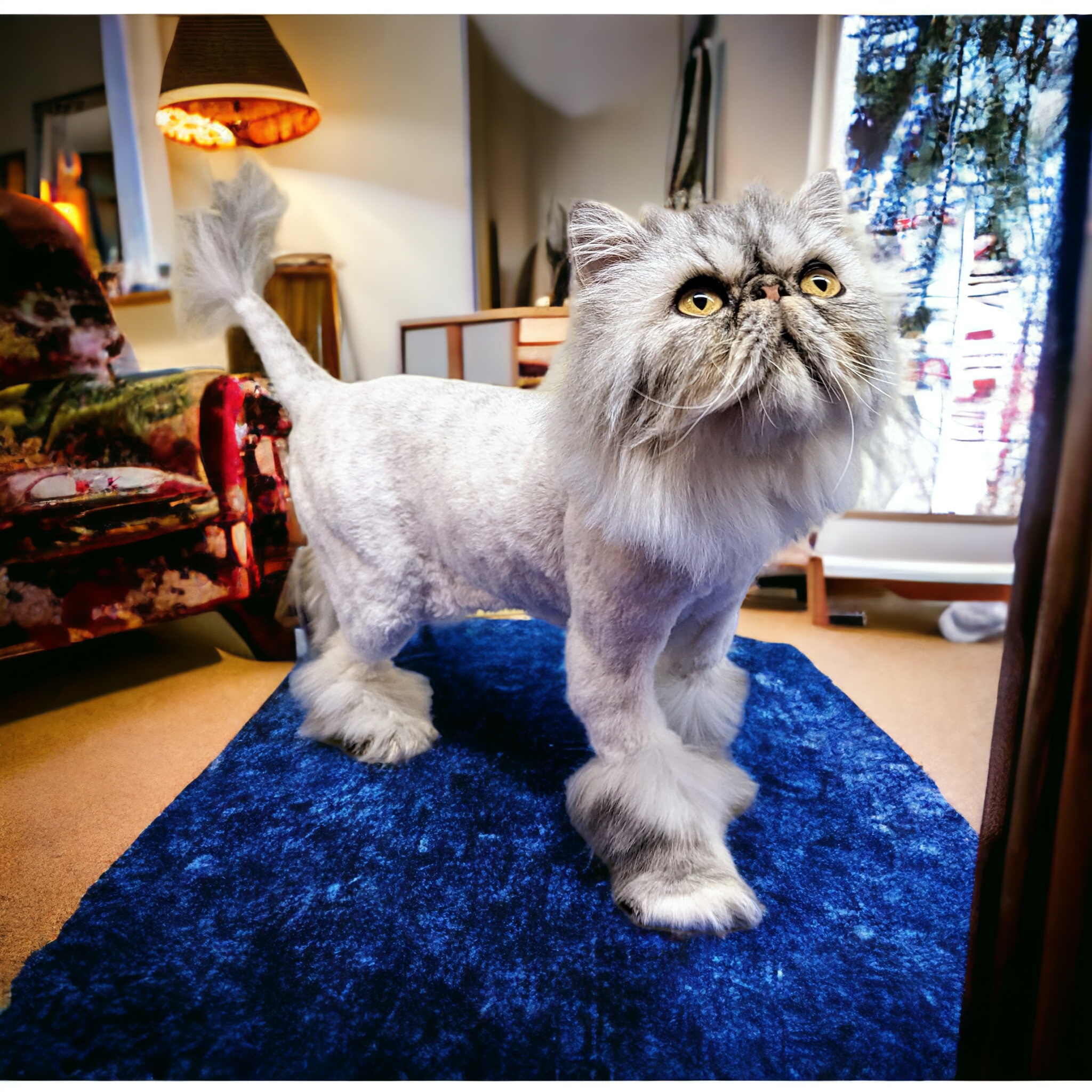
Professional cat grooming benefits at Cats in the City in Portland using the TANDEM Cat® method
TANDEM Cat® Grooming graphic titled “Understanding Feline Behavior”
Creating Stress-Free Environments for Tandem Cat Grooming

Cat Grooming by Location

Looking for feline-only grooming near you? Choose your location above to book a cat grooming appointment.

Caring for Cats in the Portland Metro Area

We measure our love of cats by how much we are loved by them.

Have questions or need to arrange care for your feline friend? We’re here to help! Reach out to us for any inquiries or to schedule our services.

For more immediate assistance, feel free to call us. We look forward to hearing from you and providing the best care for your cat!

NE Tabor

415 NE 80th Ave.

Sellwood

2036 SE Tacoma St.

Powell

5528 SE Powell Blvd.

Beaverton

4690 SW Hall Blvd.