
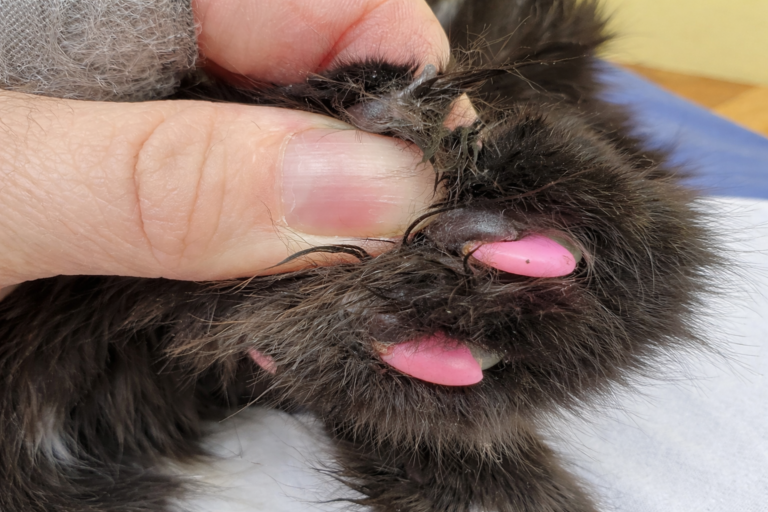
Multiple Embedded Claws Under Nail Caps (Soft Paws): Case Study
Nail caps (often sold under names like Soft Paws) are frequently recommended as a humane alternative to declawing. When maintained on a strict schedule, they can be a workable tool. When maintenance lapses, they can conceal progressive claw overgrowth until the nail has already punctured the paw pad. This case documents five embedded claws discovered during intake and resolved without sedation using trauma-informed TANDEM Cat® clinical grooming—followed by sterile flushing, aftercare guidance, and referral thresholds when appropriate.
Educational content only, not medical advice. If your cat has swelling, discharge, odor, limping, fever, or severe pain, contact your veterinarian urgently.
Case Snapshot: Quinia (8 years, 6 months)
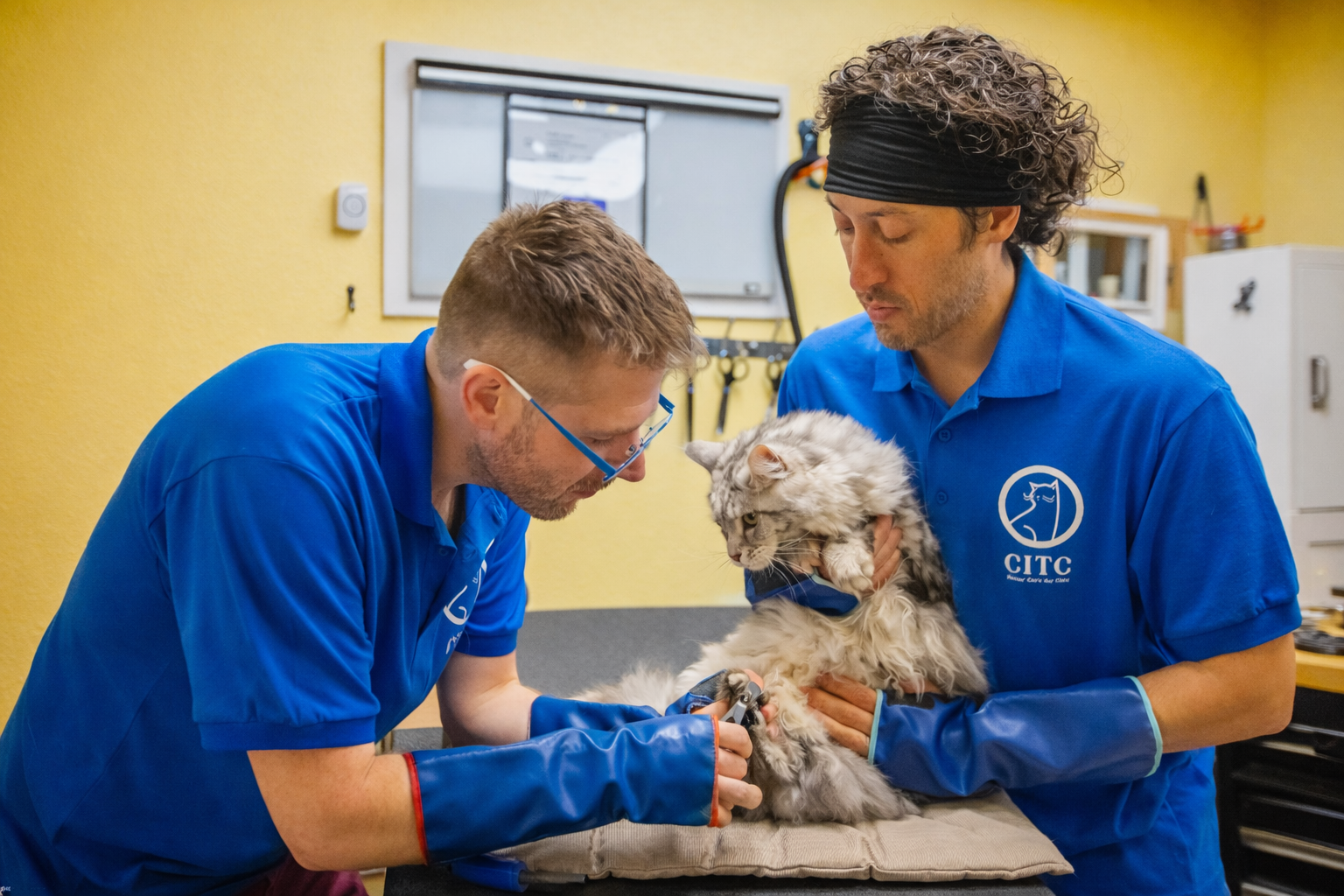
Quinia presented for deshedding and coat maintenance. During intake and claw assessment, we discovered five embedded claws causing significant compression and active tissue injury. The primary goal of the session shifted immediately: relieve pressure, safely release embedded nails, cleanse puncture sites, and create a prevention plan.
Care Provided
- Removal of existing nail caps (Soft Paws)
- Deshedding and light dematting
- Pantaloon trim for coat balance
- Full claw trim
- Excavation of five embedded claws
- Sterile wound flushing and cleansing of affected paw pads
- Full hygiene care completed
Claw & Paw Findings
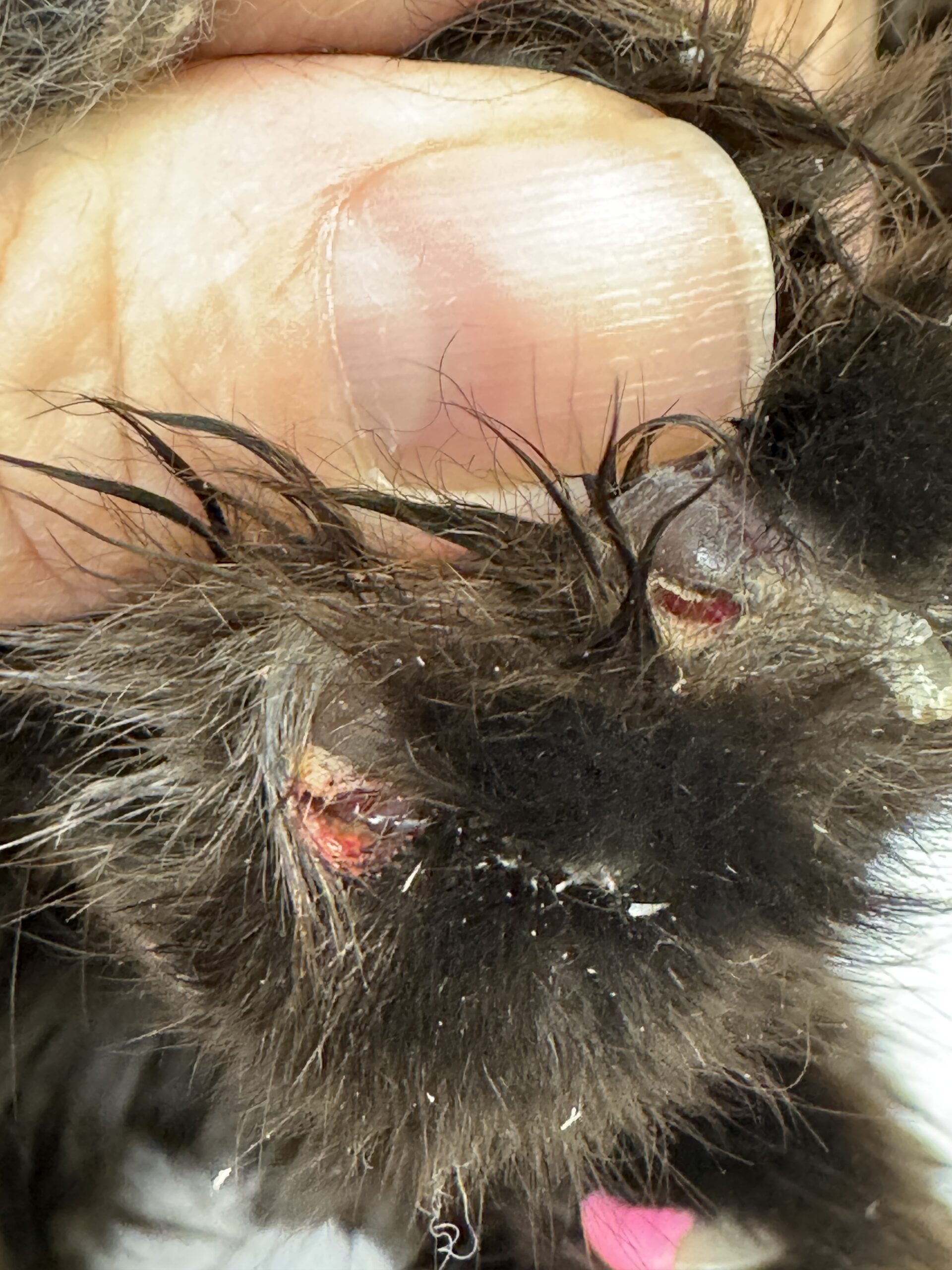
- Five claws were embedded into paw pads with visible puncture wounds and inflamed tissue
- Several pads showed active open lesions where the nail had penetrated and curled inward
- Embedded claws were carefully extracted using controlled release (no pulling)
- Wounds were thoroughly irrigated in a sterile environment
- No abscess formation was noted at time of service, though tissue was significantly irritated
Puncture wounds can seal superficially while bacteria remain internally. That’s why we treat embedded claw injuries as an aftercare and monitoring case—not “just a trim.”
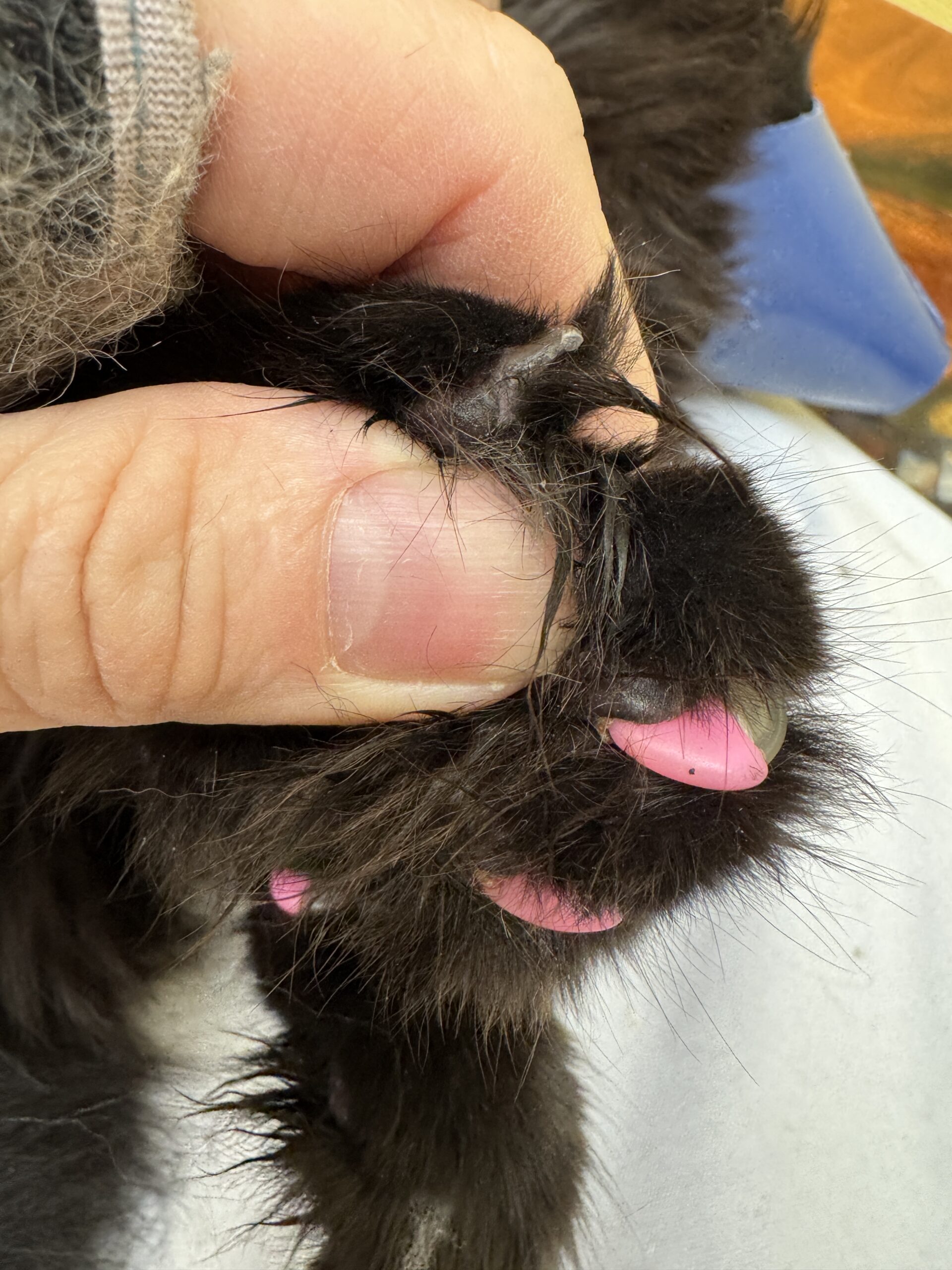
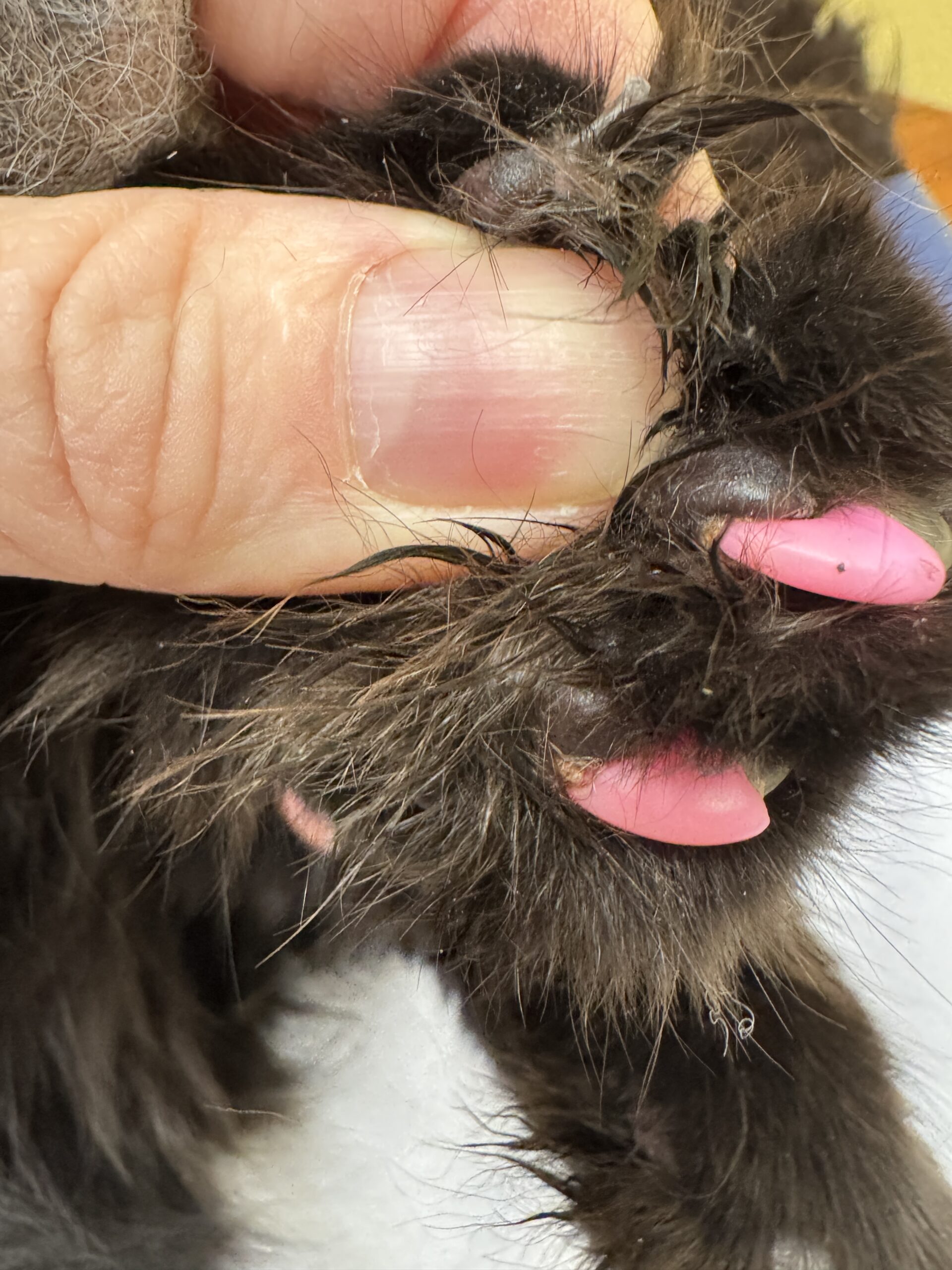
Before Removal: Embedded Claws Hidden Under Nail Caps
Below are examples from this case showing how nail caps can mask progression. The visible cap can look “fine” while the nail beneath has already formed a damaging curve.
Mechanism: How Nail Caps Turn Overgrowth Into Penetration
An embedded claw is a mechanical injury first. The nail grows in a forward arc; when it becomes long enough, the tip contacts the paw pad. With continued growth, the tip breaches skin and creates a puncture tract. Nail caps can accelerate delayed discovery because the cap hides the trajectory.
- Growth continues: nails keep growing even when covered
- Trajectory changes: the nail can rotate slightly within the cap
- Skin contact occurs: pressure increases as the curve tightens
- Penetration occurs: tip enters pad and can carry bacteria inward
- Multiple digits can progress together: especially in low-activity cats
Some cats show almost no behavioral signal until they’re already in the penetration phase. This is why routine claw checks matter.
After Release: Puncture Wounds Need Respect
After release, we often see two different “truths” in the paw pad: (1) a smaller, clean puncture site that still needs monitoring, and (2) deeper tracts that can look dramatic once the nail is no longer acting like a plug. Both are managed with sterile flushing, clear home monitoring instructions, and referral when appropriate.

Important Monitoring Instructions
Please monitor paws closely over the next 3–7 days for:
- Swelling
- Heat
- Persistent bleeding
- Discharge or odor
- Limping or guarding
If any of these occur, a veterinary evaluation is recommended, as puncture wounds can seal and trap bacteria internally.
Prevention: Nail Caps Require a Non-Negotiable Schedule
Nail caps should never be treated as a “set it and forget it” product. If caps are used, they must be paired with strict maintenance. Cats who are older, arthritic, low-activity, overweight, or less engaged in scratching behavior often need more frequent checks.
- Claw trims every 4–6 weeks (many cats need 3–5 weeks)
- Remove and reassess nail caps at each trim
- Look for curvature toward the pad, especially on “disc claw” digits
- Schedule maintenance rather than waiting for visible overgrowth
Need a Claw Check?
If your cat is wearing nail caps, limping, licking paws, or you suspect overgrowth, we can assess the safest next step. Some cases are appropriate for non-sedated relief; others require veterinary involvement. Our job is to match the plan to the cat in front of us.
TANDEM Cat® is a registered trademark. TANDEM Touch™ is a trademark. © 2026 Cats in the City. All rights reserved. Educational content only.
Embedded Claw Trim (Hub)
Start here: what embedded claws are, what they look like, and which page matches your cat’s situation.
Open the hub →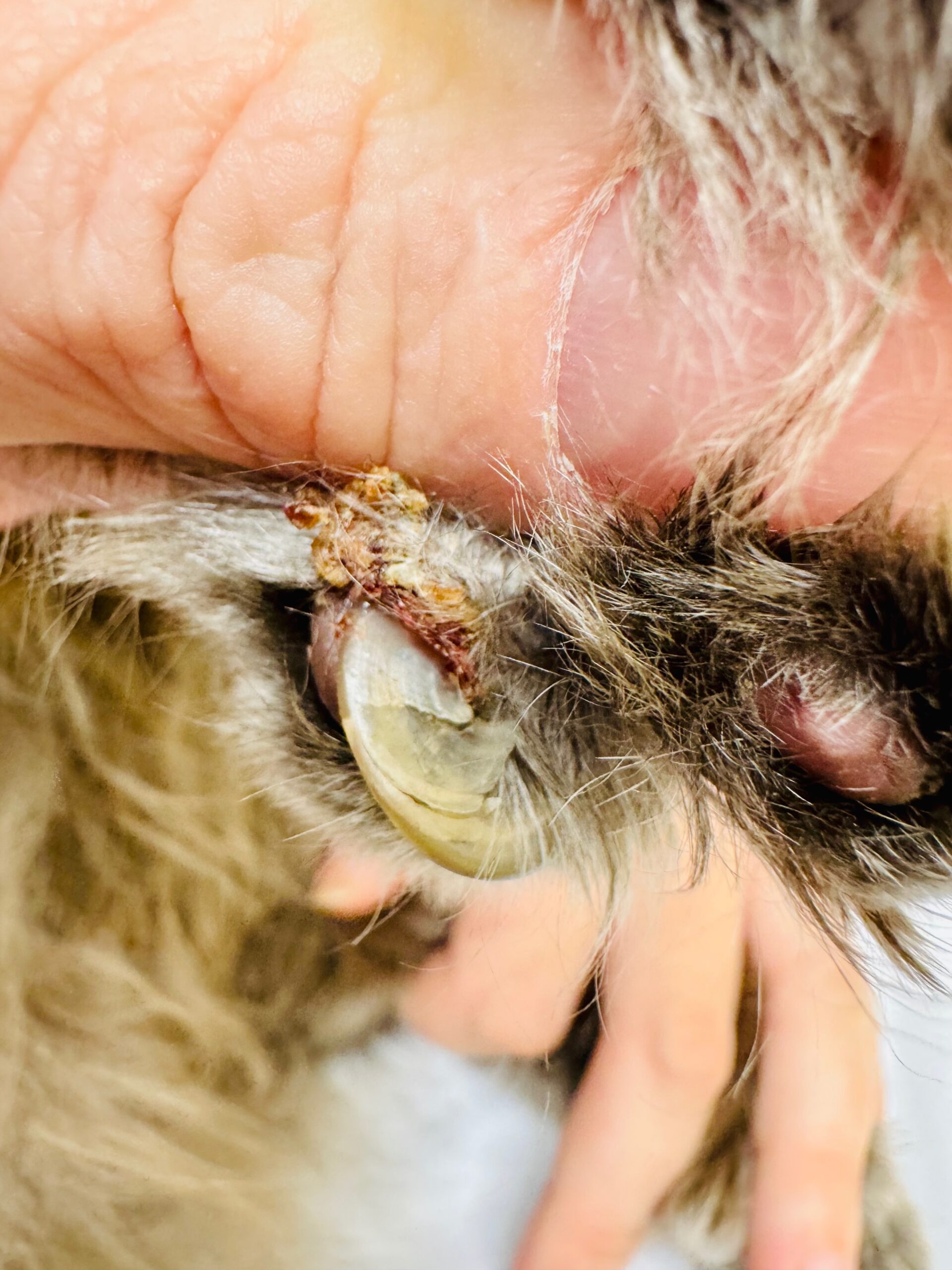
Ingrown Cat Nails: Early Detection
How to catch pressure, curling, and paw guarding before the nail punctures the pad.
Read early detection →
Embedded Claw Removal (Non-Sedated)
What we assess, when non-sedated is appropriate, sterile flushing, aftercare, and referral triggers.
See removal approach →
Paw Pad Ulcers From Overgrown Nails
Why pad ulcers form, how they present, and why puncture wounds need respectful monitoring.
Learn about pad ulcers →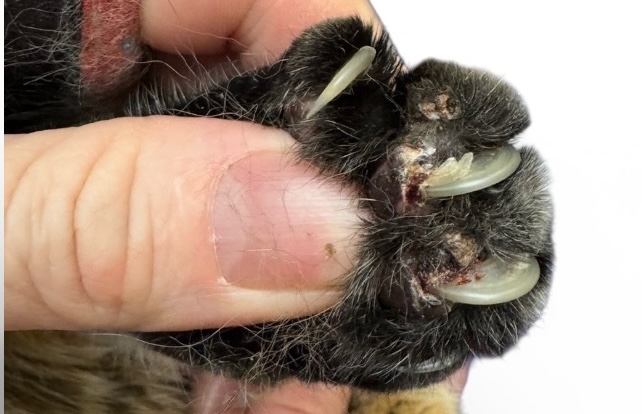
Senior Cat Overgrown Claws & Arthritis Correlation
Why reduced mobility leads to curling/embedding, and how routine trims prevent “walking on claws.”
Read senior-claw guide →
Soft Paws™ & Ingrown Claws
How nail caps can hide overgrowth, what to watch for, and safer scheduling if you reapply.
Read Soft Paws guidance →Educational content only. If you see swelling, discharge/odor, persistent limping, or significant pain, contact your veterinarian urgently.