
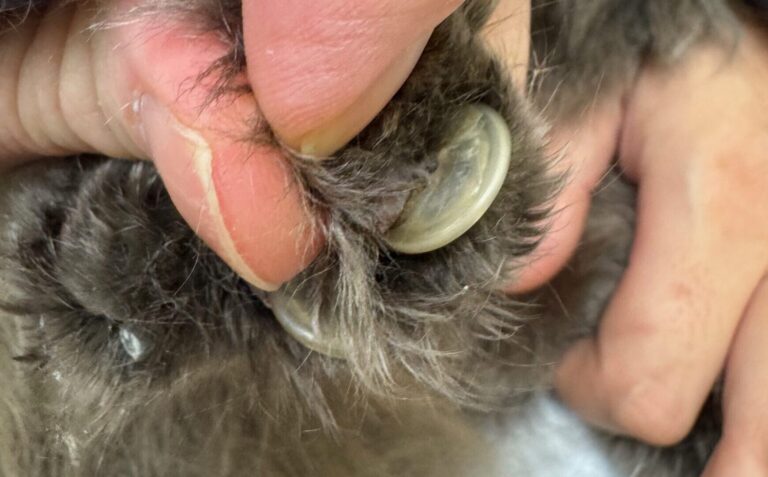
Senior Cat Claw Neglect & Arthritis Correlation
In older cats, overgrown claws are rarely simple oversight. They are frequently a biomechanical consequence of arthritis, reduced mobility, and diminished self-maintenance capacity.
What Defines a Senior Cat?
A senior cat is generally considered 11 years and older. Subtle joint degeneration often begins earlier, with clinically significant arthritis common by 12–14 years.
Feline arthritis is underdiagnosed because cats adapt quietly. They jump less. Stretch less. Scratch less. And one of the first secondary consequences is reduced natural nail wear.
Scratching behavior and full limb extension are critical to keeping claws properly shed and blunted. When joint range decreases, claw curvature increases.
From Arthritis to Disc Claw Formation
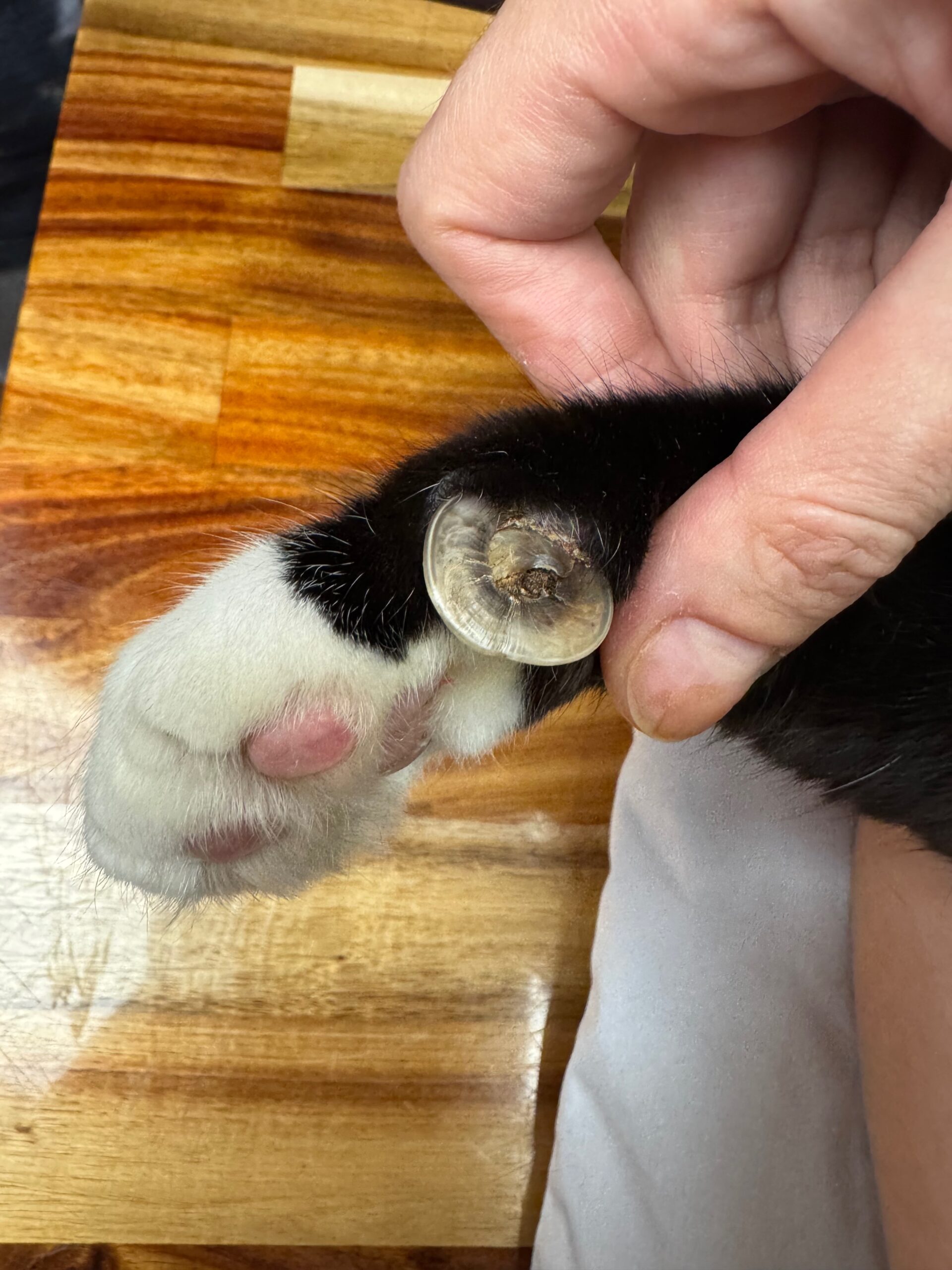
As flexion in the wrist and toe joints decreases, claws fail to make normal contact with scratching surfaces. Without consistent shedding and mechanical abrasion, nails elongate.
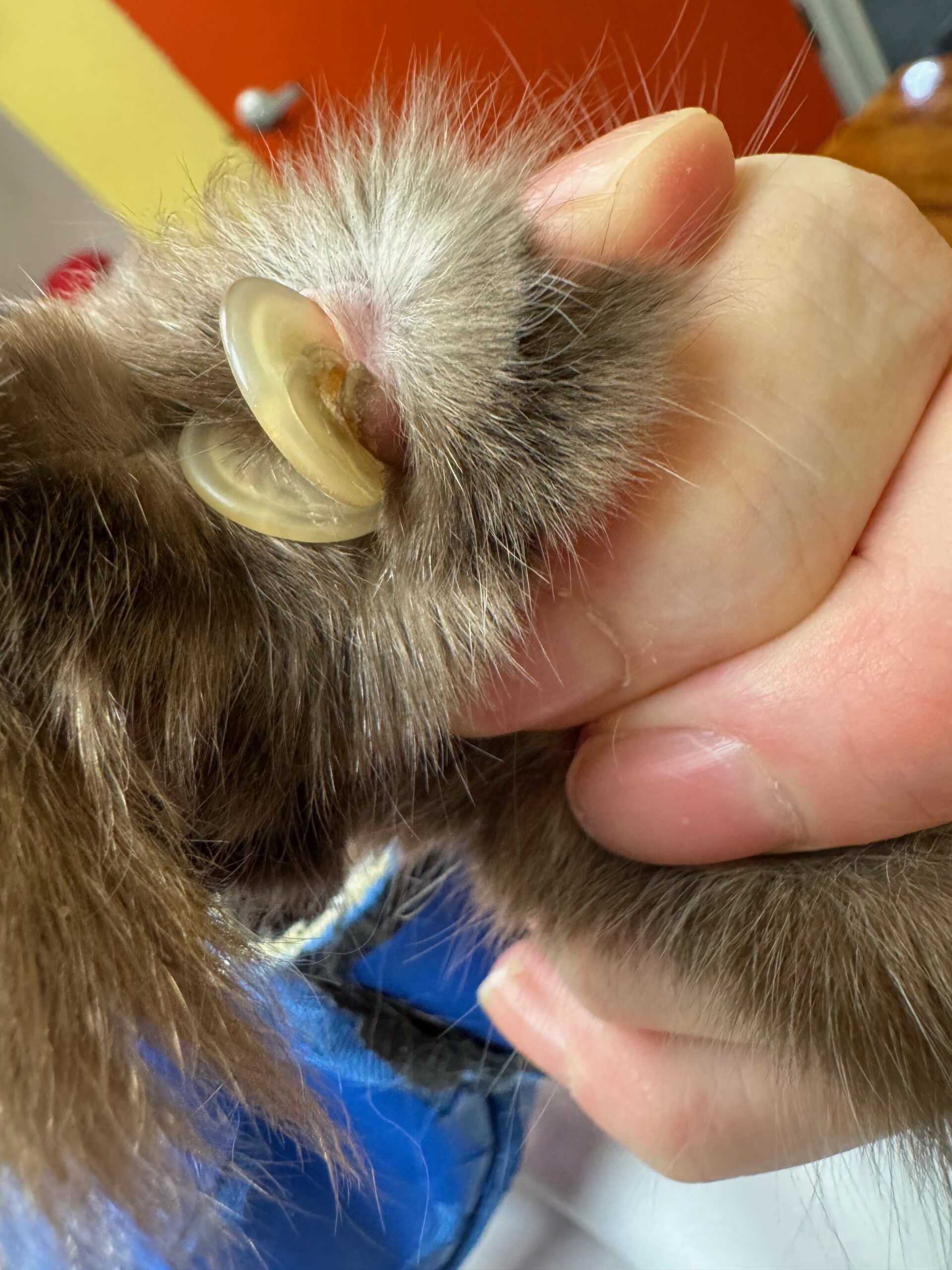
Over time, they curve inward, forming what we call a “disc claw” — a circular loop that eventually presses into the paw pad.
This is not neglect. It is progression. And it can happen quickly once mobility declines.

Gait Alteration: Walking on Claws Instead of Pads
When claws grow excessively long, the foot’s contact plane changes. Instead of landing squarely on the digital pads, the cat may partially weight-bear through the nail tips.
This alters biomechanics:
- Increased joint torque
- Reduced shock absorption
- Further arthritic strain
- Higher risk of pad penetration
Claw overgrowth does not just reflect arthritis — it worsens it.
Severe Presentations in Advanced Seniors
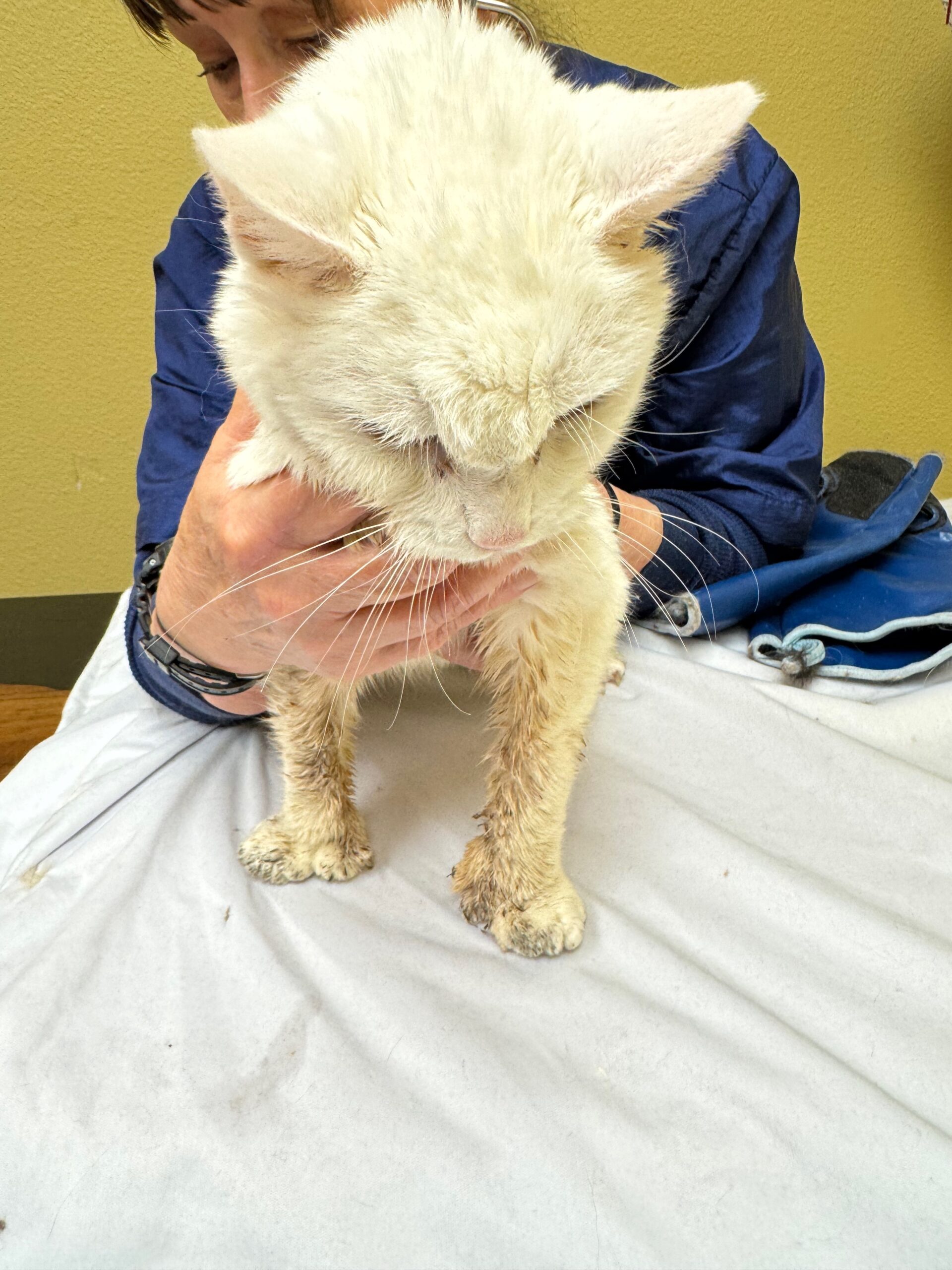
In late-stage arthritis, cats may stop retracting claws effectively. Nails can embed deeply into soft tissue, creating ulcer tracts and infection.
These cases often coincide with:
- Muscle wasting
- Reduced grooming
- Dehydration
- Overall frailty
The claw injury is rarely isolated — it is part of systemic aging.
Early Intervention Prevents Cascade Injury
Routine claw assessment every 2–3 weeks in cats over 12 dramatically reduces risk.
When we intervene early, we prevent:
- Paw pad ulcers
- Embedded claw infections
- Altered gait mechanics
- Compounding arthritic pain
Senior claw care is not cosmetic maintenance. It is mobility preservation.
Schedule Senior Claw AssessmentEducational content only. If your senior cat is limping, swollen, or reluctant to bear weight, consult your veterinarian promptly. Explore the full category at Embedded Cat Claws Hub.
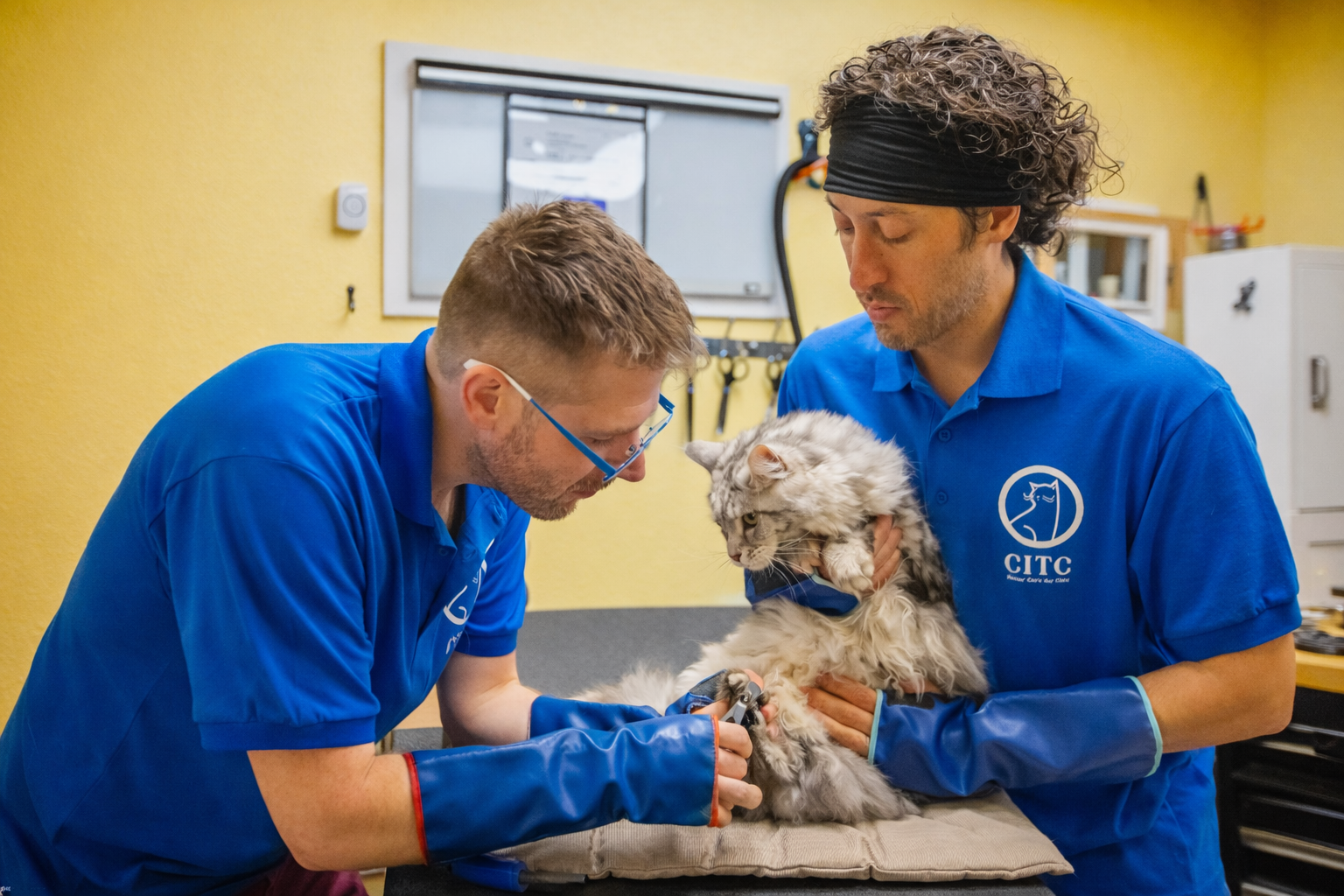
Embedded Claw Trim (Hub)
Start here: what embedded claws are, what they look like, and which page matches your cat’s situation.
Open the hub →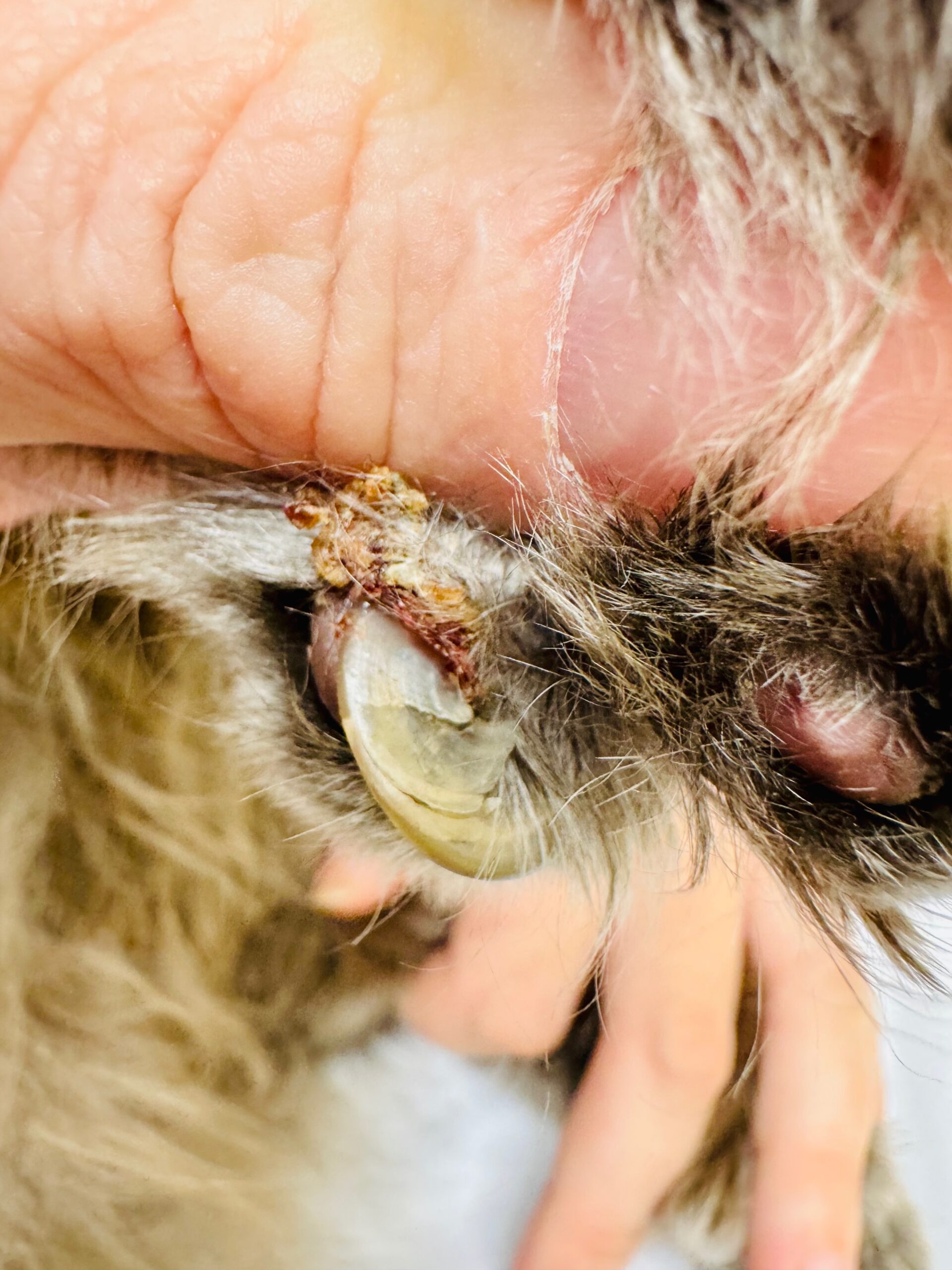
Ingrown Cat Nails: Early Detection
How to catch pressure, curling, and paw guarding before the nail punctures the pad.
Read early detection →
Embedded Claw Removal (Non-Sedated)
What we assess, when non-sedated is appropriate, sterile flushing, aftercare, and referral triggers.
See removal approach →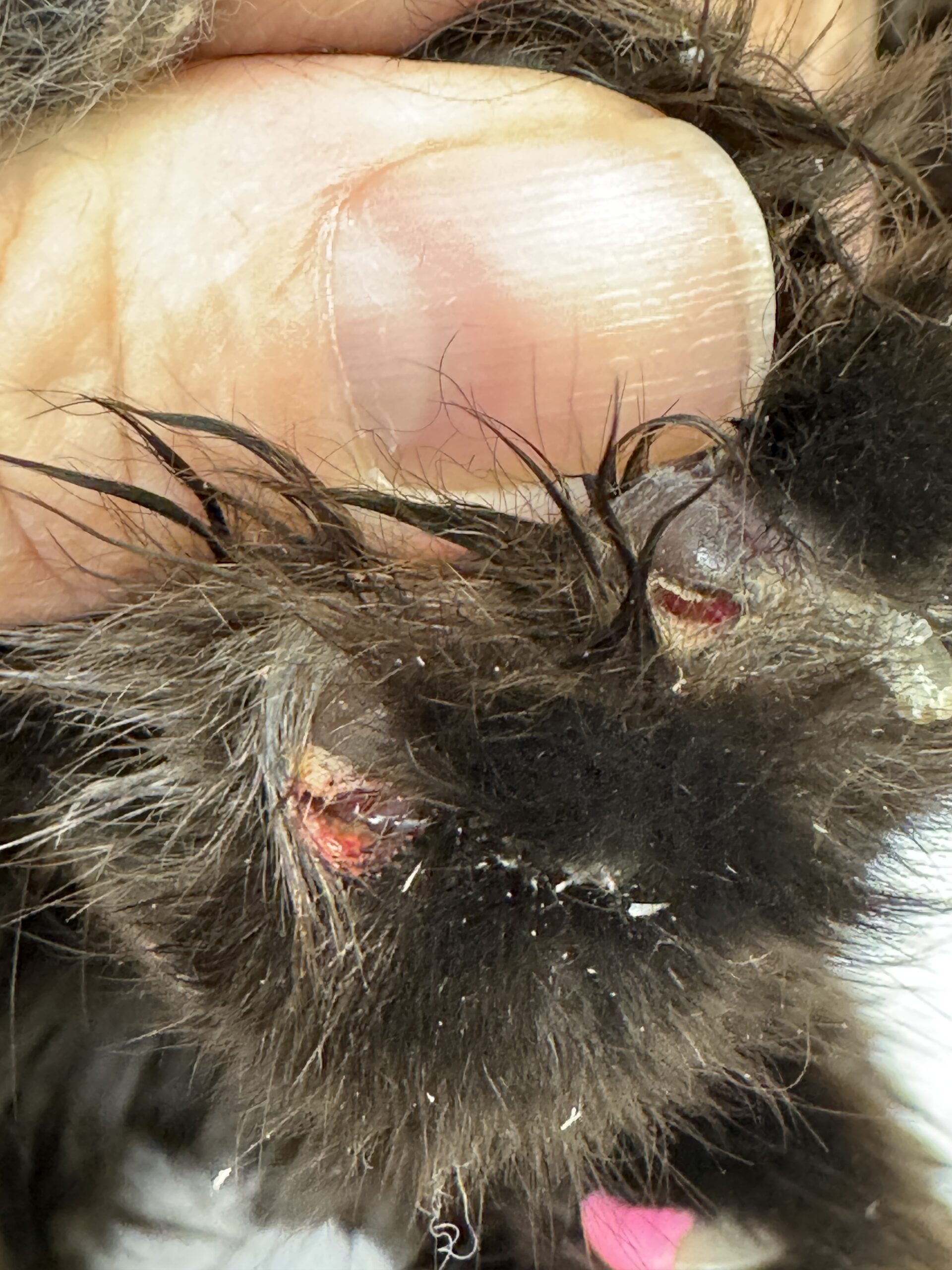
Paw Pad Ulcers From Overgrown Nails
Why pad ulcers form, how they present, and why puncture wounds need respectful monitoring.
Learn about pad ulcers →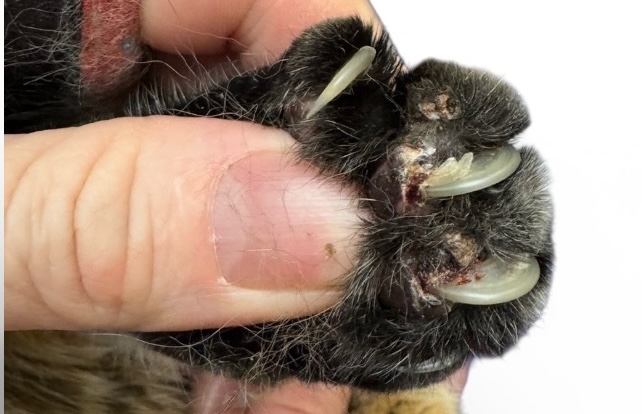
Senior Cat Overgrown Claws & Arthritis Correlation
Why reduced mobility leads to curling/embedding, and how routine trims prevent “walking on claws.”
Read senior-claw guide →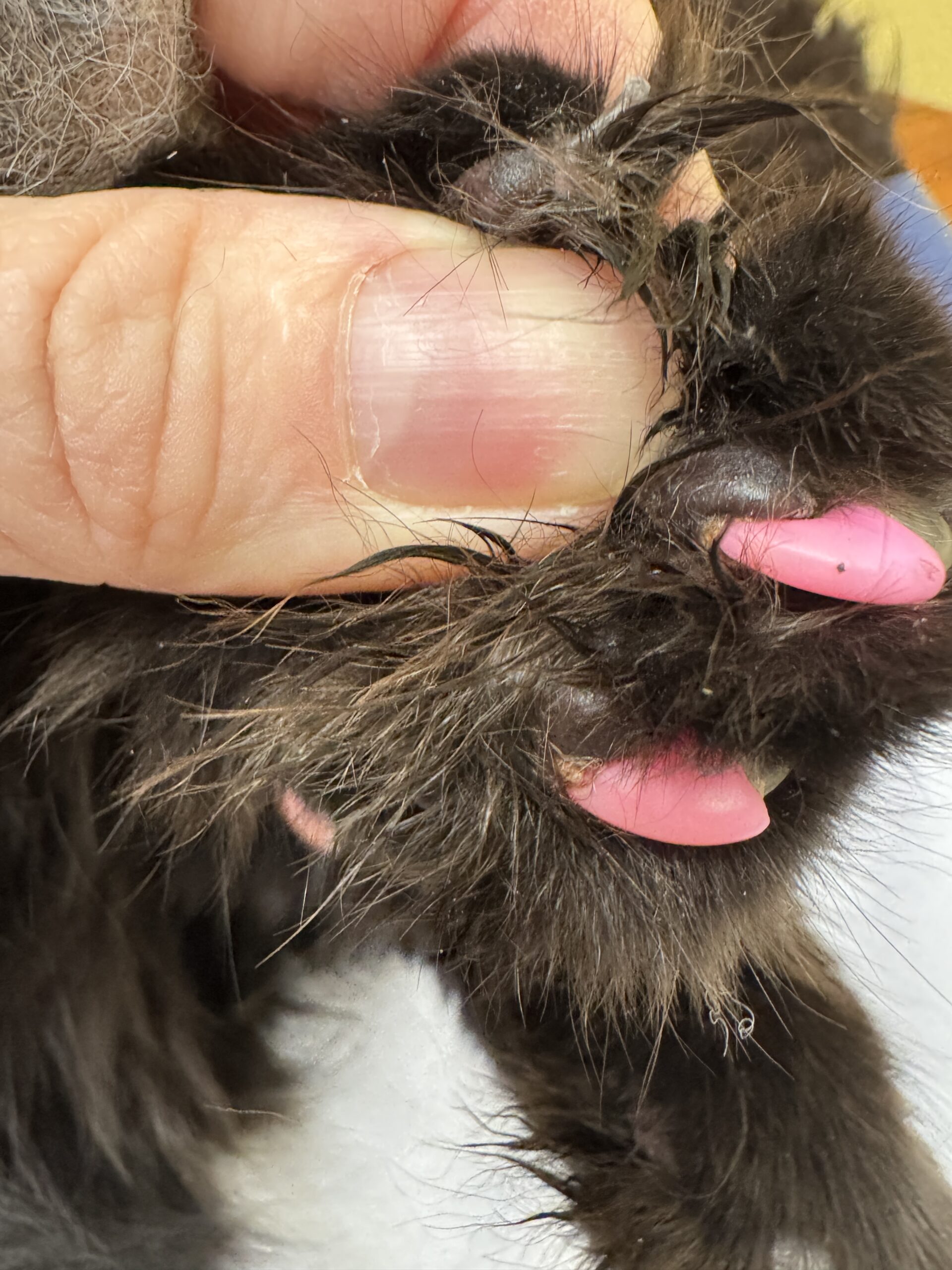
Soft Paws™ & Ingrown Claws
How nail caps can hide overgrowth, what to watch for, and safer scheduling if you reapply.
Read Soft Paws guidance →Educational content only. If you see swelling, discharge/odor, persistent limping, or significant pain, contact your veterinarian urgently.