
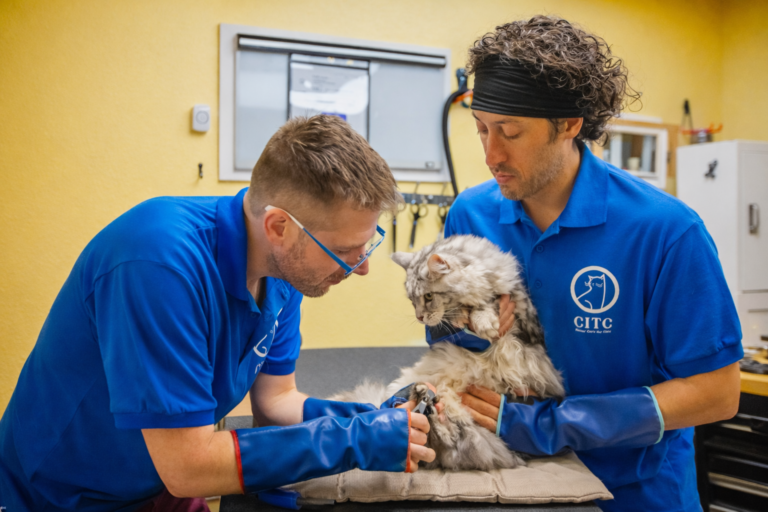
Embedded Cat Claw Removal (Non-Sedated)
Embedded claws are not “overgrown nails.” They are a paw pad injury that can become infected, painful, and mobility-limiting—often hidden until the cat begins limping, avoiding jumping, or guarding a paw. This page shows what embedded claws look like, how we approach non-sedated relief when clinically appropriate, and how we handle flushing, aftercare, and referral when needed.
Educational content only, not medical advice. If your cat has swelling, discharge, odor, limping, fever, or severe pain, contact your veterinarian urgently.
What “Embedded Claw” Means
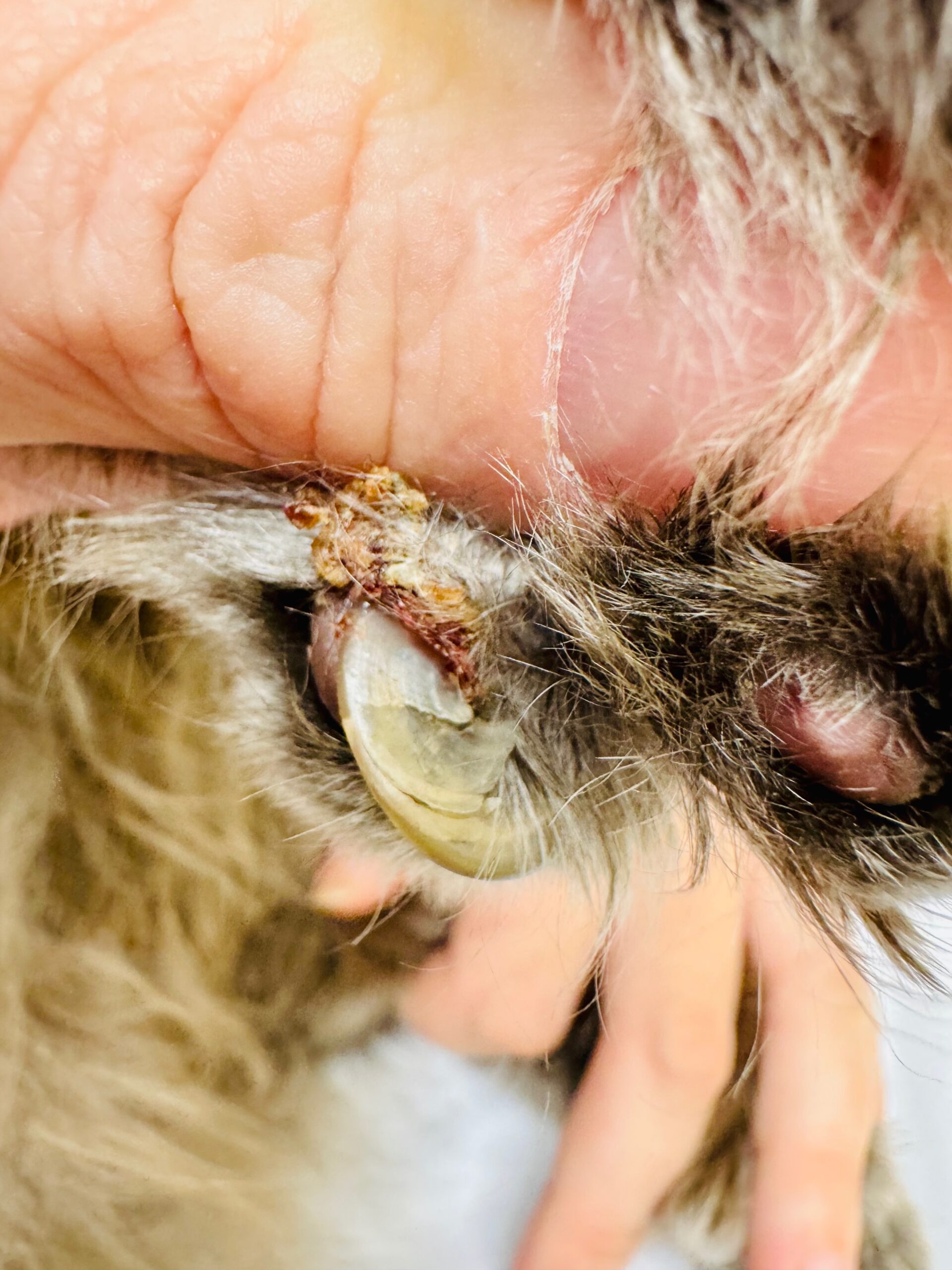
An embedded claw occurs when a nail grows long enough to press into and then puncture the paw pad. The nail can form a circular arc (especially in older cats or cats who are less active) until the tip contacts the pad, then penetrates. Once the skin barrier is breached, bacteria and debris can enter—turning a mechanical problem into an inflammatory or infectious one.
- Early phase: pressure indentation, sensitivity, paw guarding
- Penetration: the nail tip enters the pad (puncture wound)
- Embedded/infected: swelling, crusting, discharge, odor, limping

Early Signs Families Can Catch
Many embedded claws are discovered late because cats compensate quietly. These are the signs we want families to recognize early—before penetration:
- Hesitation to jump, or “jumping down” instead of up
- Licking or chewing a paw more than usual
- Flinching when paws are touched, or pulling away
- Limping that comes and goes (especially after rest)
- A visible “hook” curve when the claw is extended
- A nail that appears to be forming a circle toward the pad
A quick, calm nail check every 2–4 weeks (depending on age/activity) can prevent a high-pain emergency later.
Overgrown vs. Embedded: Why the Difference Matters
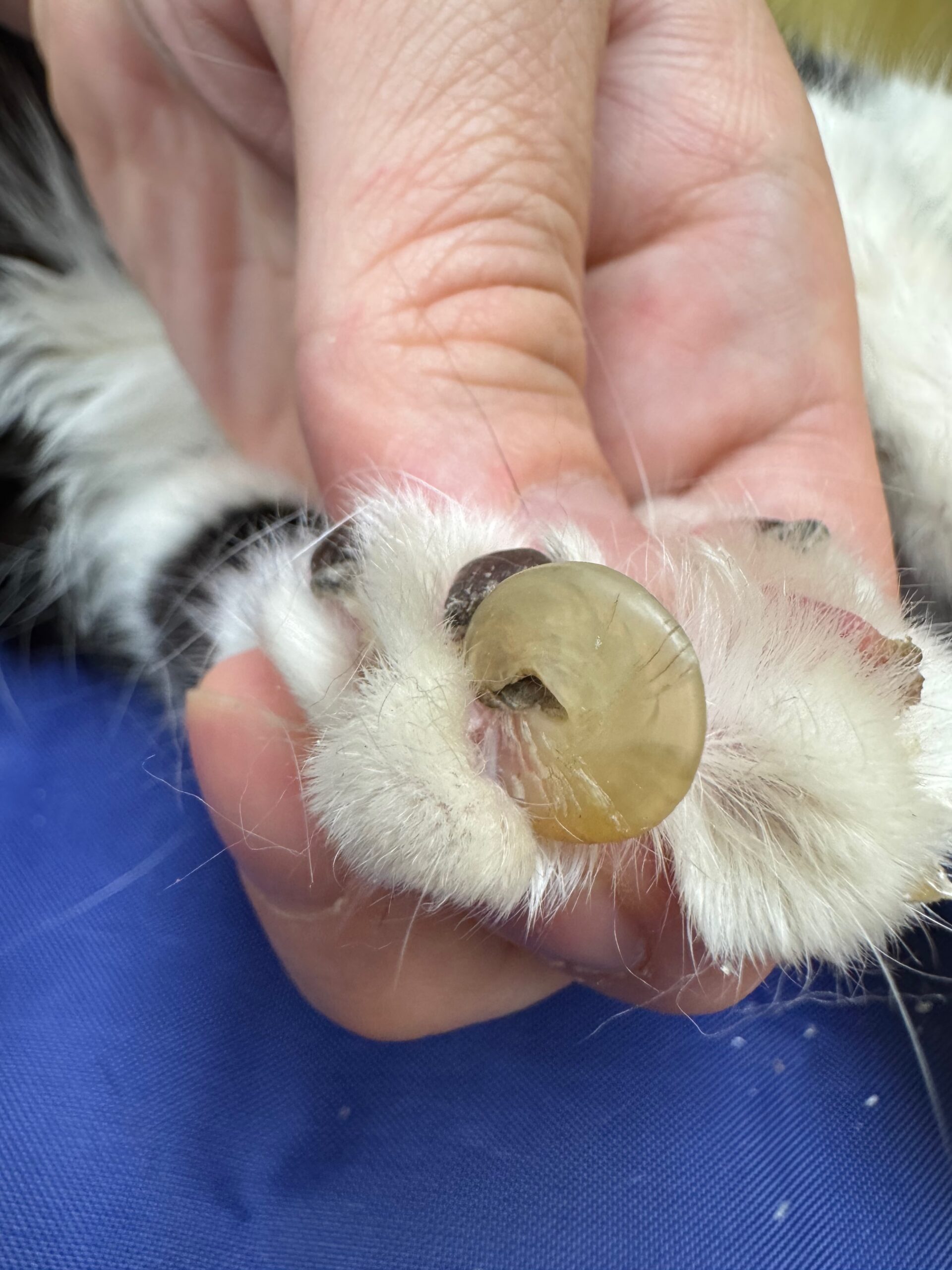
Why we don’t treat this like a routine nail trim
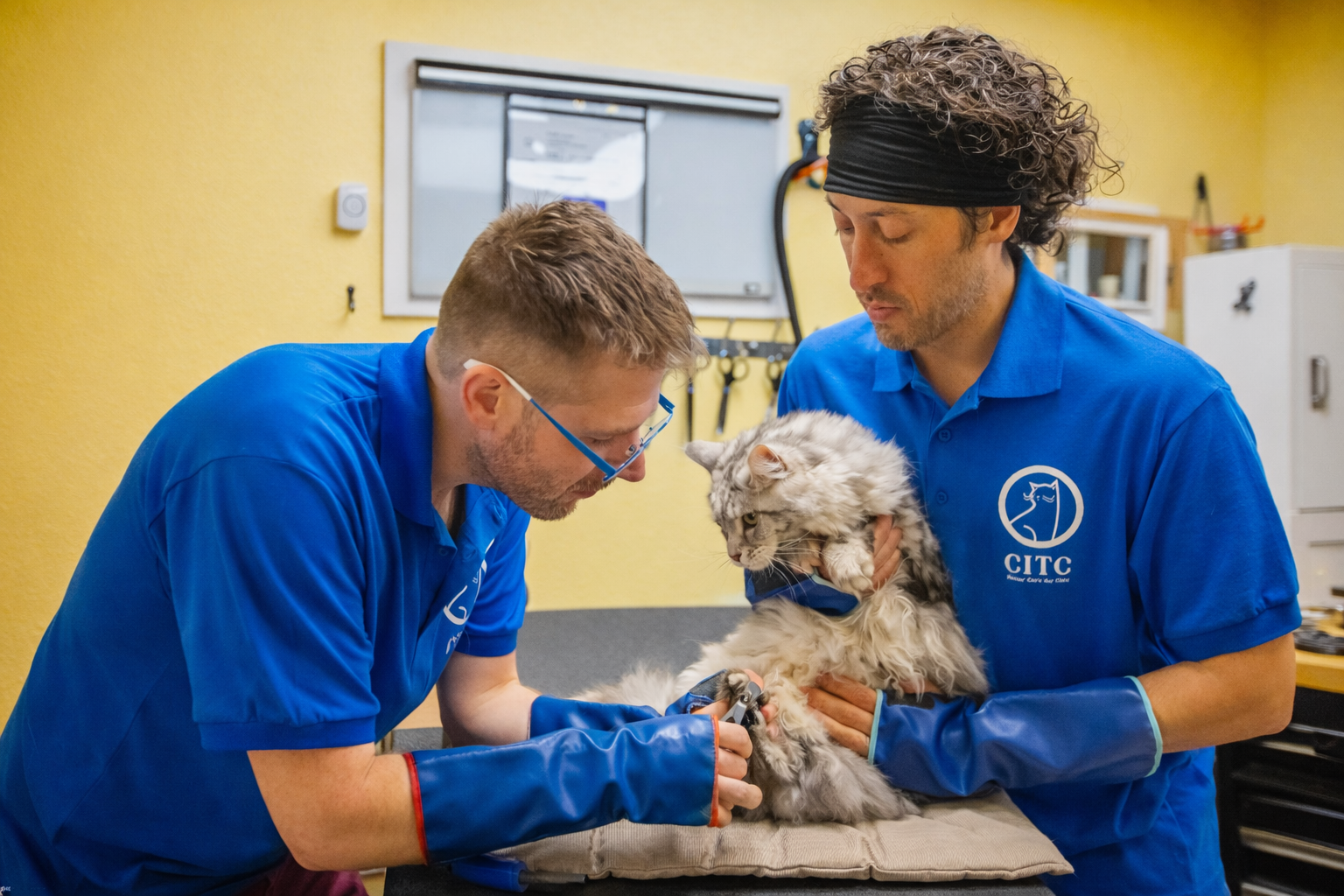
In these cases, the paw is already under stress. The cat may be guarding, sensitive, or in pain. A “quick clip” approach can escalate fear or resistance and increase risk.
- We slow the environment (sound, touch pressure, pacing)
- We stabilize the paw to reduce torque and reflex pulling
- We prioritize control and clarity over speed
- We stop if the cat reaches threshold and choose the safest next step
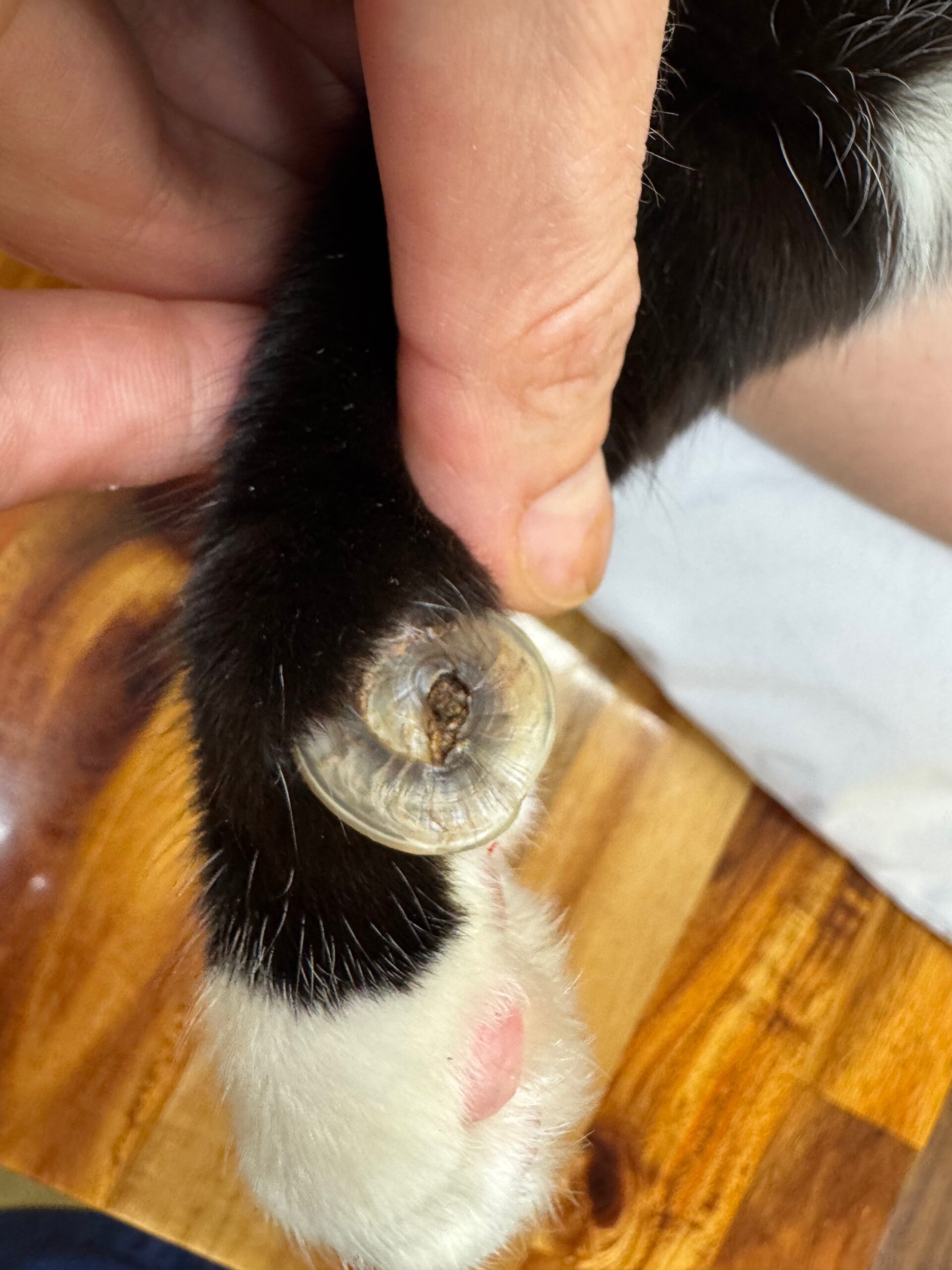
Disc Claw Penetration: A Common High-Risk Pattern
“Disc claw” cases are often the ones that shock families because the claw can curl so far that it appears to loop into itself. The pressure can be constant, and penetration can be deeper than expected.
What we do in-clinic (non-sedated pathway)
- Assessment first: swelling, odor, discharge, heat, degree of penetration
- Stabilized paw handling: reduced torque, reduced reflex pulling
- Controlled release: safe clip angle to minimize additional tissue damage
- Sterile flushing: all puncture wounds are flushed in a sterile environment
- Aftercare guidance: home monitoring, cleanliness, and protection steps
- Referral when appropriate: veterinary escalation for antibiotics, pain control, deeper infection, or systemic signs
After Removal: Puncture Wounds Need Respect
Once a claw is removed from the pad, it can reveal the true size of the puncture tract. This is normal: the nail has been acting like a plug. Our job is to reduce contamination risk and set the family up with clear monitoring steps.


Aftercare: what we typically instruct
- Monitor for swelling, redness, heat, discharge, or odor (worsening = contact your veterinarian)
- Watch mobility: limping that increases or persists is a medical flag
- Prevent licking/chewing when possible (licking can re-open tissue and introduce bacteria)
- Keep litter clean and consider low-dust options while healing
- Follow veterinary guidance for pain control or antibiotics if referred
We tailor aftercare instructions to the cat’s presentation. Some cases require immediate veterinary follow-up; others require careful home monitoring and a re-check window.
When This Is “Call Now”
If you see any of the following, skip waiting and contact a professional urgently:
- Significant swelling, warmth, or rapidly worsening redness
- Discharge, odor, or bleeding that doesn’t resolve
- Severe limping, refusal to bear weight, or sudden behavior change
- Fever, lethargy, or reduced appetite
- Multiple paws affected (often seen in older cats with reduced self-maintenance)
TANDEM Cat® is a registered trademark. TANDEM Touch™ is a trademark. © 2026 Cats in the City. All rights reserved. Educational content only.
Embedded Claw Trim (Hub)
Start here: what embedded claws are, what they look like, and which page matches your cat’s situation.
Open the hub →
Ingrown Cat Nails: Early Detection
How to catch pressure, curling, and paw guarding before the nail punctures the pad.
Read early detection →
Embedded Claw Removal (Non-Sedated)
What we assess, when non-sedated is appropriate, sterile flushing, aftercare, and referral triggers.
See removal approach →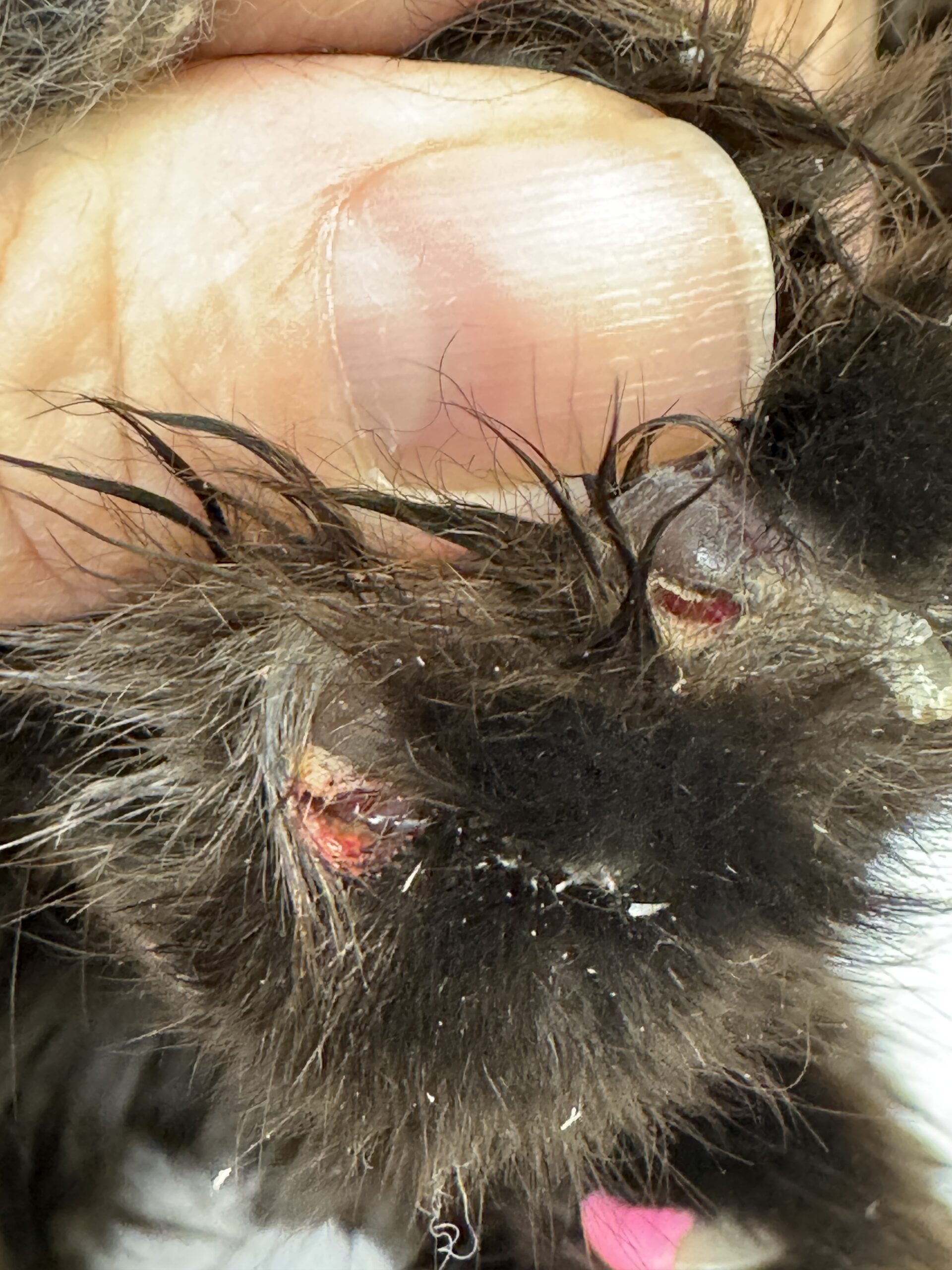
Paw Pad Ulcers From Overgrown Nails
Why pad ulcers form, how they present, and why puncture wounds need respectful monitoring.
Learn about pad ulcers →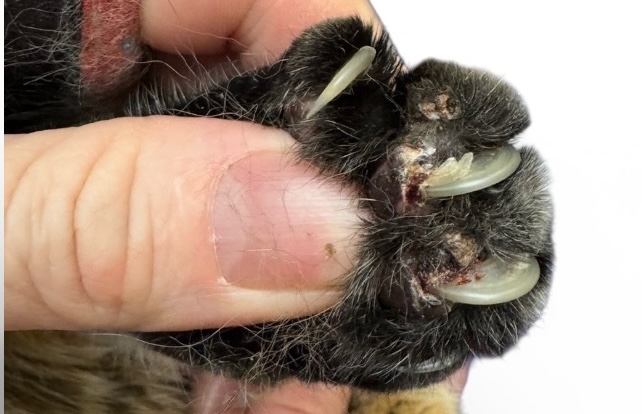
Senior Cat Overgrown Claws & Arthritis Correlation
Why reduced mobility leads to curling/embedding, and how routine trims prevent “walking on claws.”
Read senior-claw guide →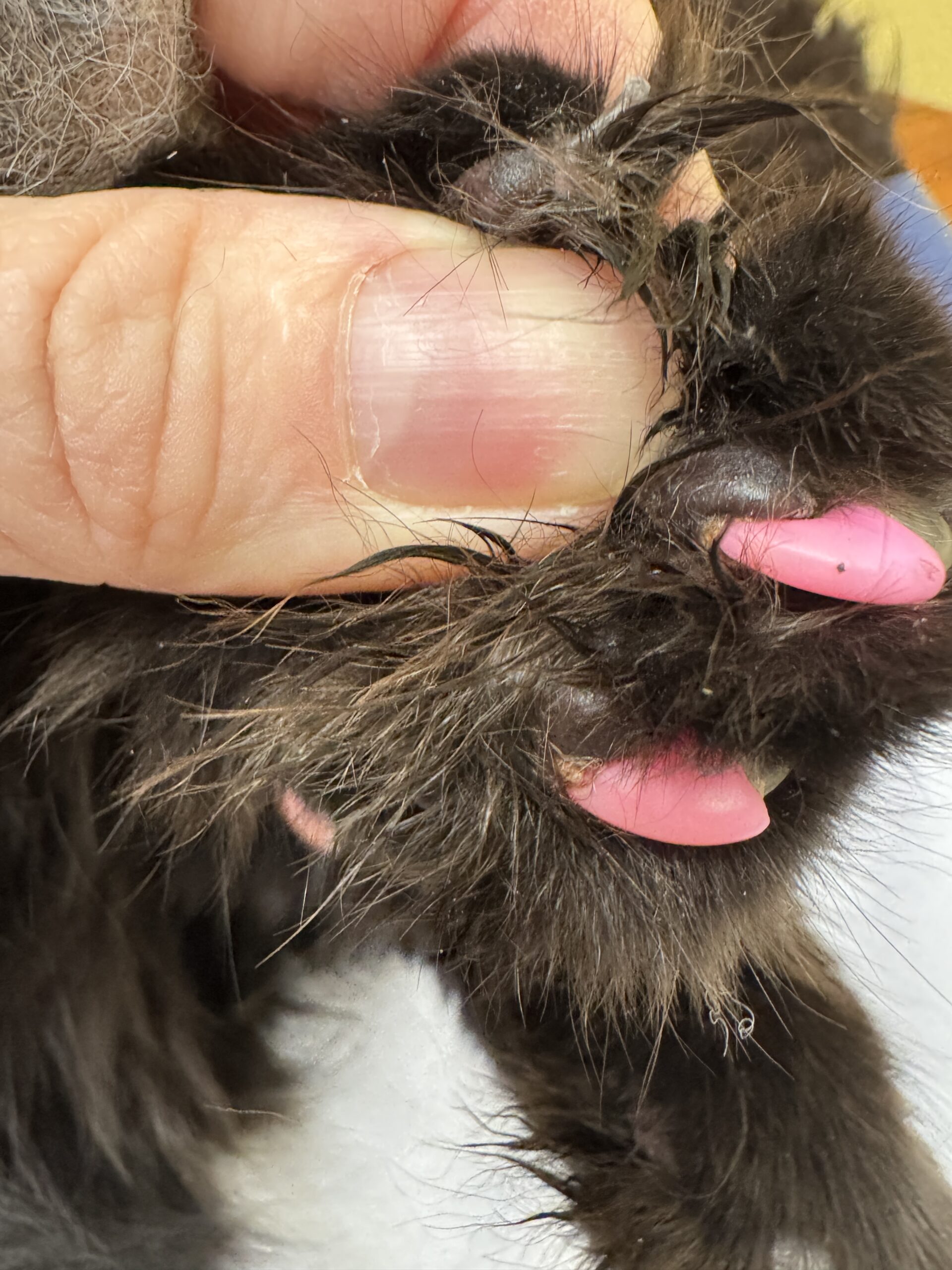
Soft Paws™ & Ingrown Claws
How nail caps can hide overgrowth, what to watch for, and safer scheduling if you reapply.
Read Soft Paws guidance →Educational content only. If you see swelling, discharge/odor, persistent limping, or significant pain, contact your veterinarian urgently.