
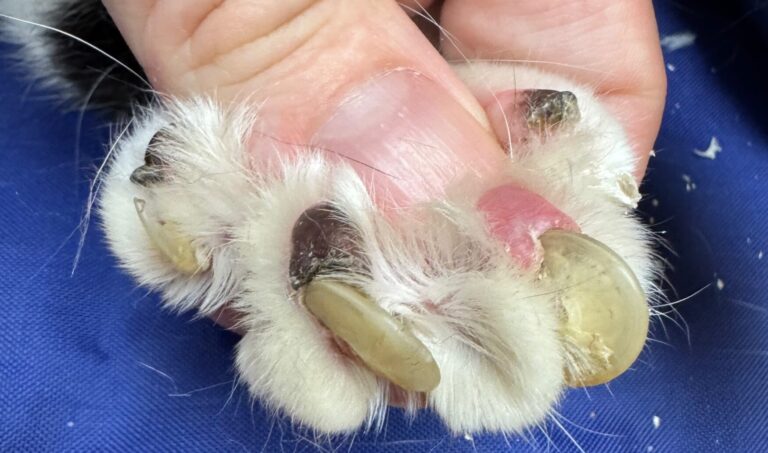
Ingrown Cat Nails: Early Detection (Before Paw Pad Injury)
Most embedded claw injuries start quietly: a claw grows long, curves tighter, and begins pressing into the paw pad. If you can catch the loop stage early, you can often prevent puncture, infection, and the deeper “embedded” phase. This page shows what early ingrown nails look like and when to escalate.
Educational content. Not medical advice. If your cat is limping, painful, has swelling/discharge, or won’t bear weight, contact your veterinarian promptly.
What “ingrown” means in cats
In cats, an “ingrown nail” usually means the claw has overgrown into a tight curve and is now contacting the paw pad. Pressure becomes irritation. Irritation can become puncture. And puncture can become infection or an embedded claw.
- Stage 1: claw length increases and curvature tightens
- Stage 2: the loop touches the pad (pressure/compression)
- Stage 3: the tip punctures the pad (pre-embedding)
- Stage 4: deeper embedment, swelling, infection risk
Early detection photo atlas (what to look for)
Click any image to open full size.

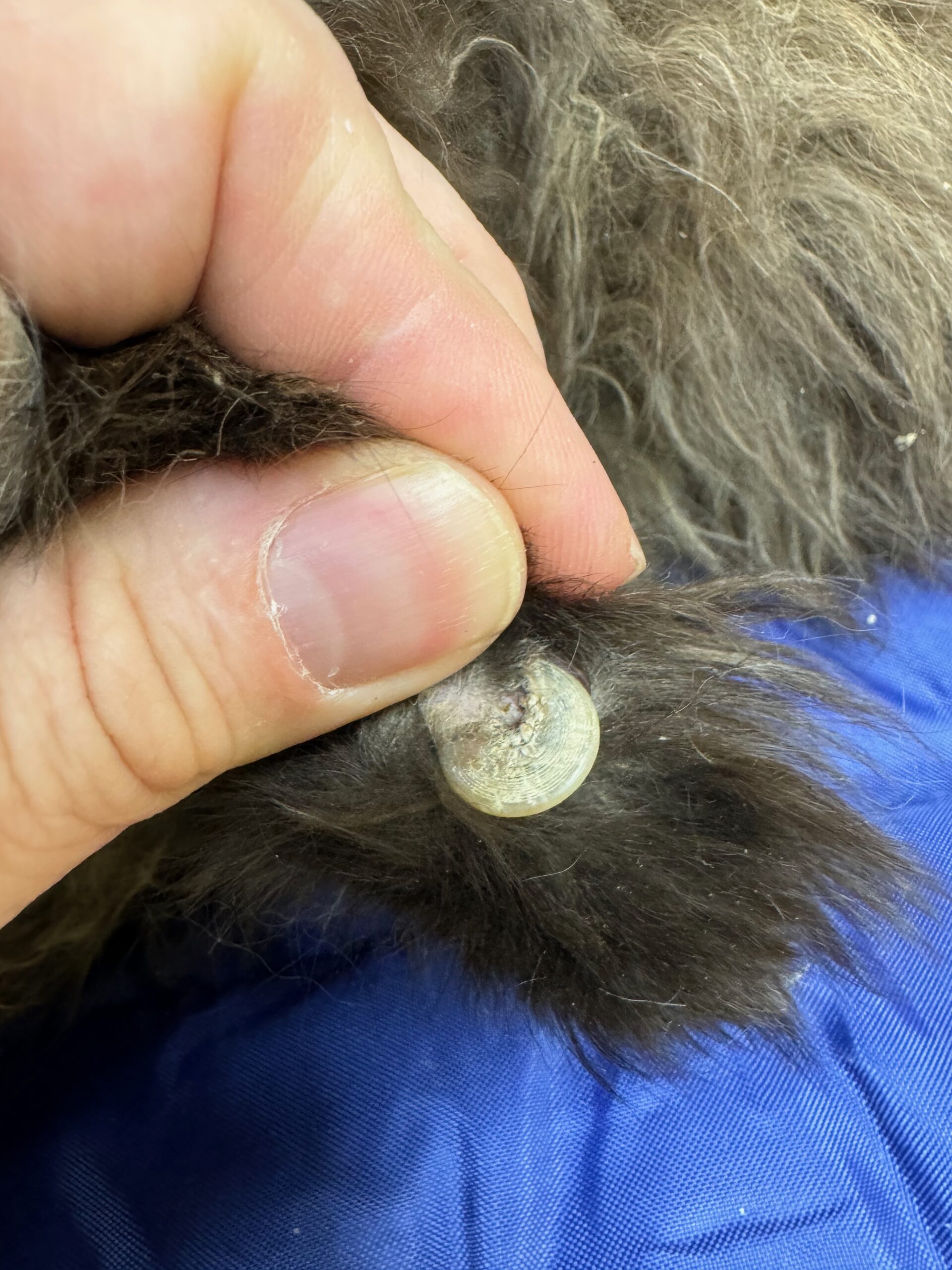
Progression examples (when early detection is missed)
These images show more advanced circular overgrowth and pad involvement. If your cat looks similar, it’s time for a prompt evaluation.
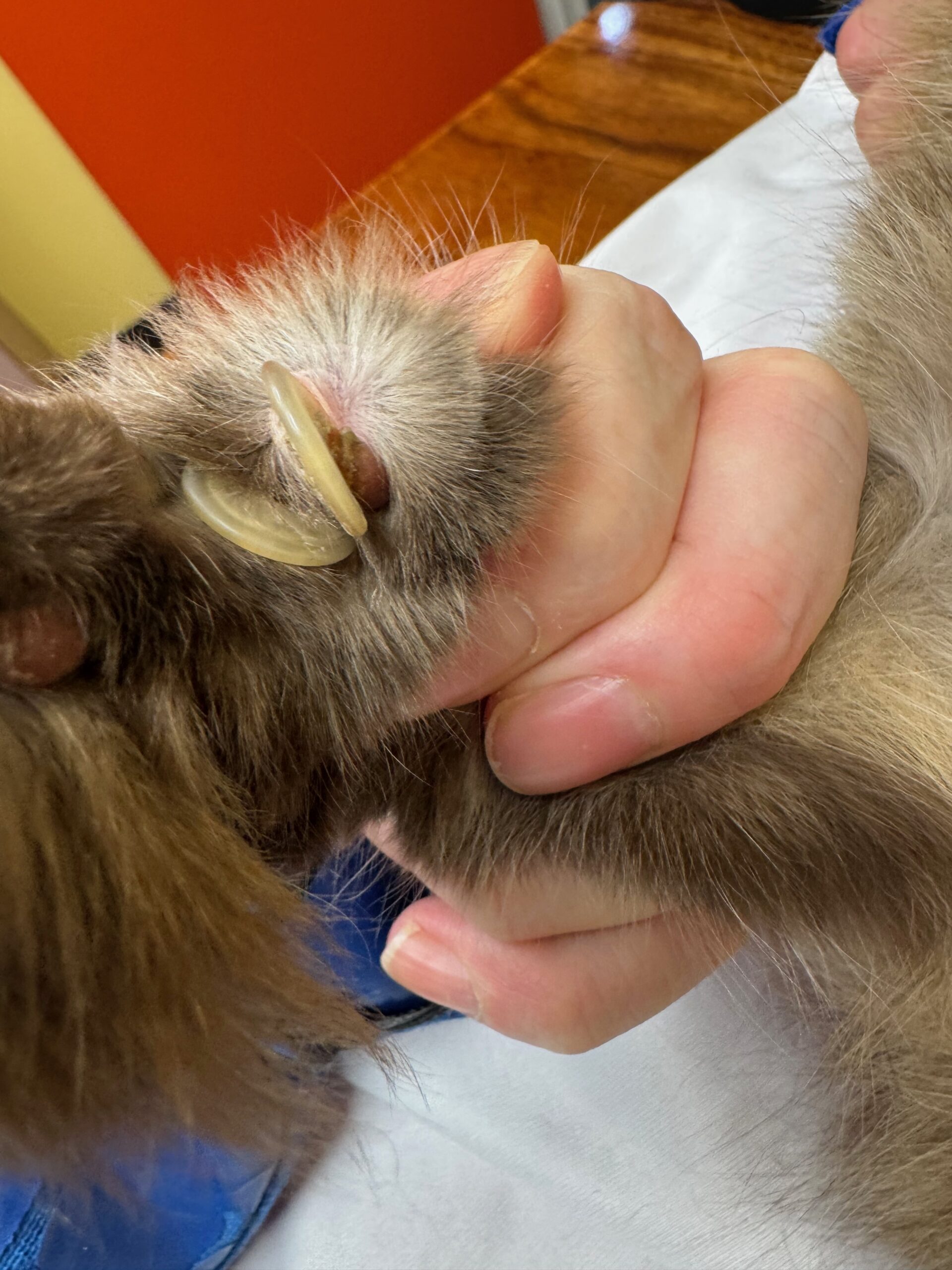
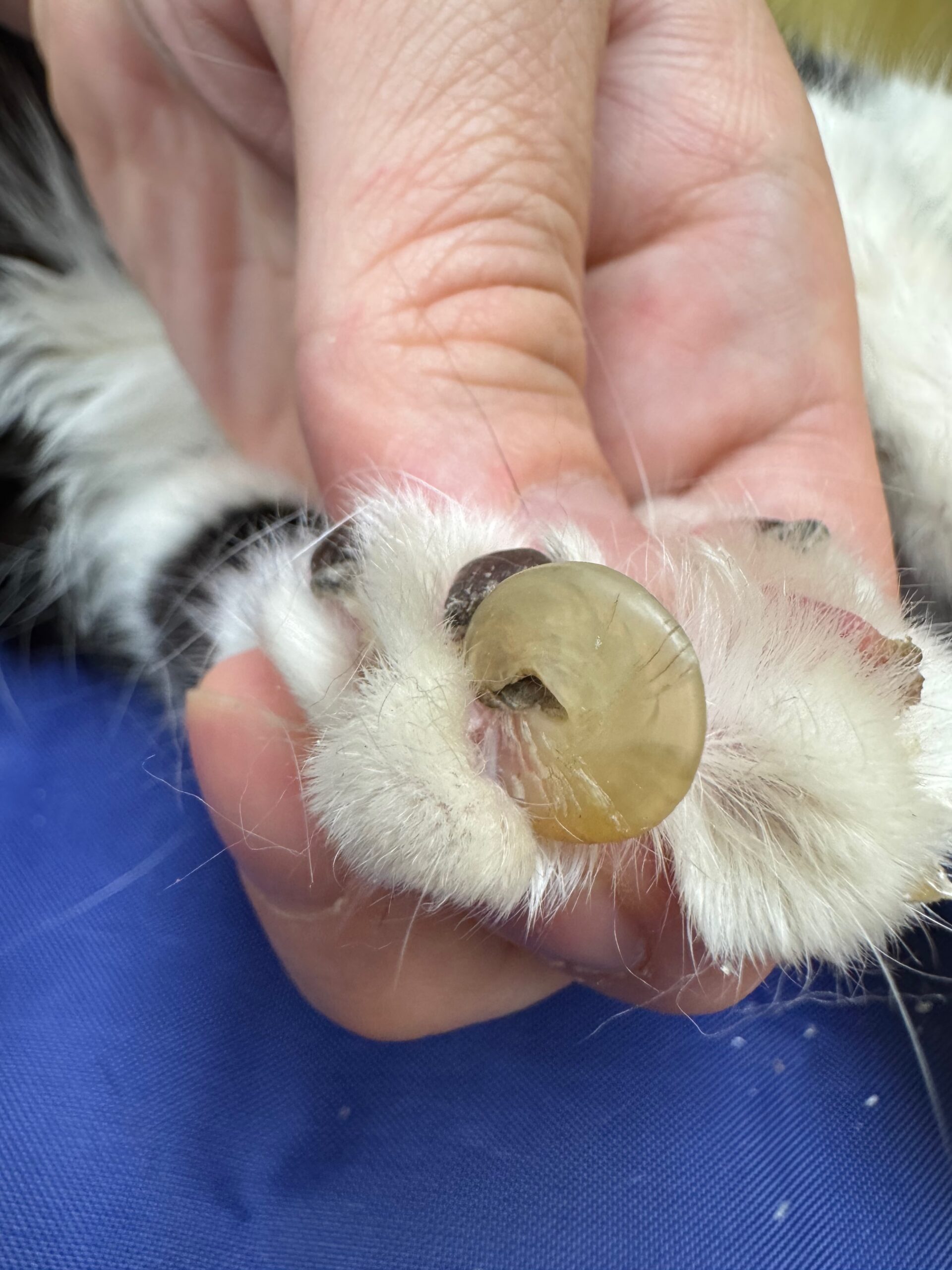
If you’re tempted to cut at home: please don’t. In advanced loops, the claw tip can be near irritated tissue, and a sudden movement can cause a tear or deeper puncture.
What to do if you suspect an ingrown nail
If you can safely check the paws
- Look at dewclaws first (front “thumb” claws)
- Check for a loop shape and whether the tip is aiming toward the pad
- If you see pad contact or a puncture, stop and escalate
Escalate immediately if you see any of the following
- Blood, discharge, odor, swelling, or heat
- Limping, reluctance to bear weight, or sudden hiding
- A claw tip disappearing into tissue
Return to the hub for the full claw-injury category: Embedded Cat Claws.
FAQ: Ingrown cat nails
How fast can an ingrown nail become an embedded claw?
It varies by cat, activity level, and claw type (dewclaws often progress faster because they don’t wear down). If the claw is already contacting the pad, don’t wait—schedule a prompt evaluation.
My cat hates paw handling. What should I do?
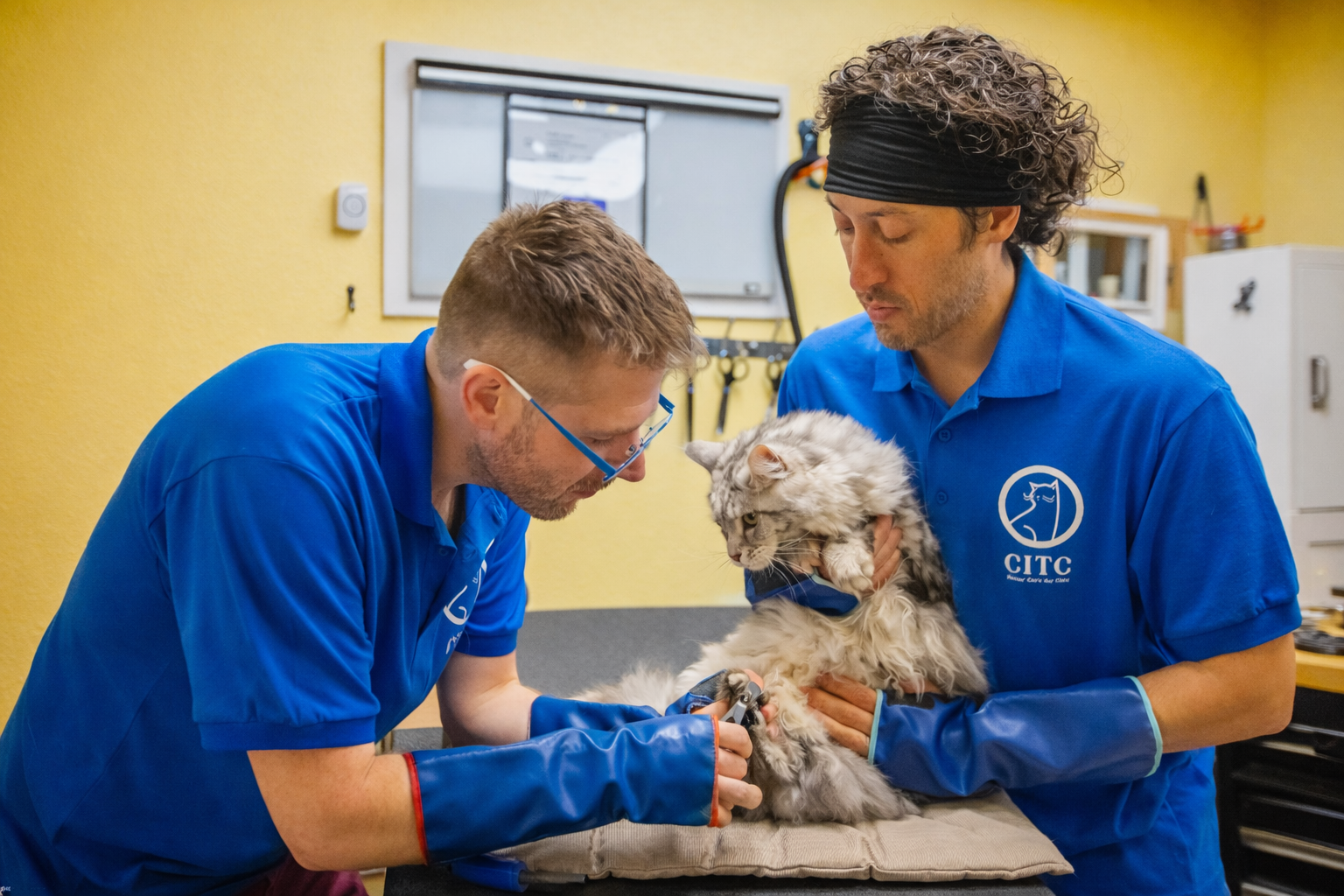
Don’t force it. Forced restraint can raise risk for bites and can make future care harder. Use a trained team that works within feline thresholds and has a clear escalation plan.
Does this always require a vet?
Not always. Early-stage overgrowth may be resolved with safe trimming and a maintenance plan. But if there is puncture, infection, severe swelling, or deep embedment, veterinary assessment is often appropriate.
Related: Embedded Cat Claws hub
TANDEM Cat® is a registered trademark. TANDEM Touch™ is a trademark. © 2026 Cats in the City. All rights reserved.
Embedded Claw Trim (Hub)
Start here: what embedded claws are, what they look like, and which page matches your cat’s situation.
Open the hub →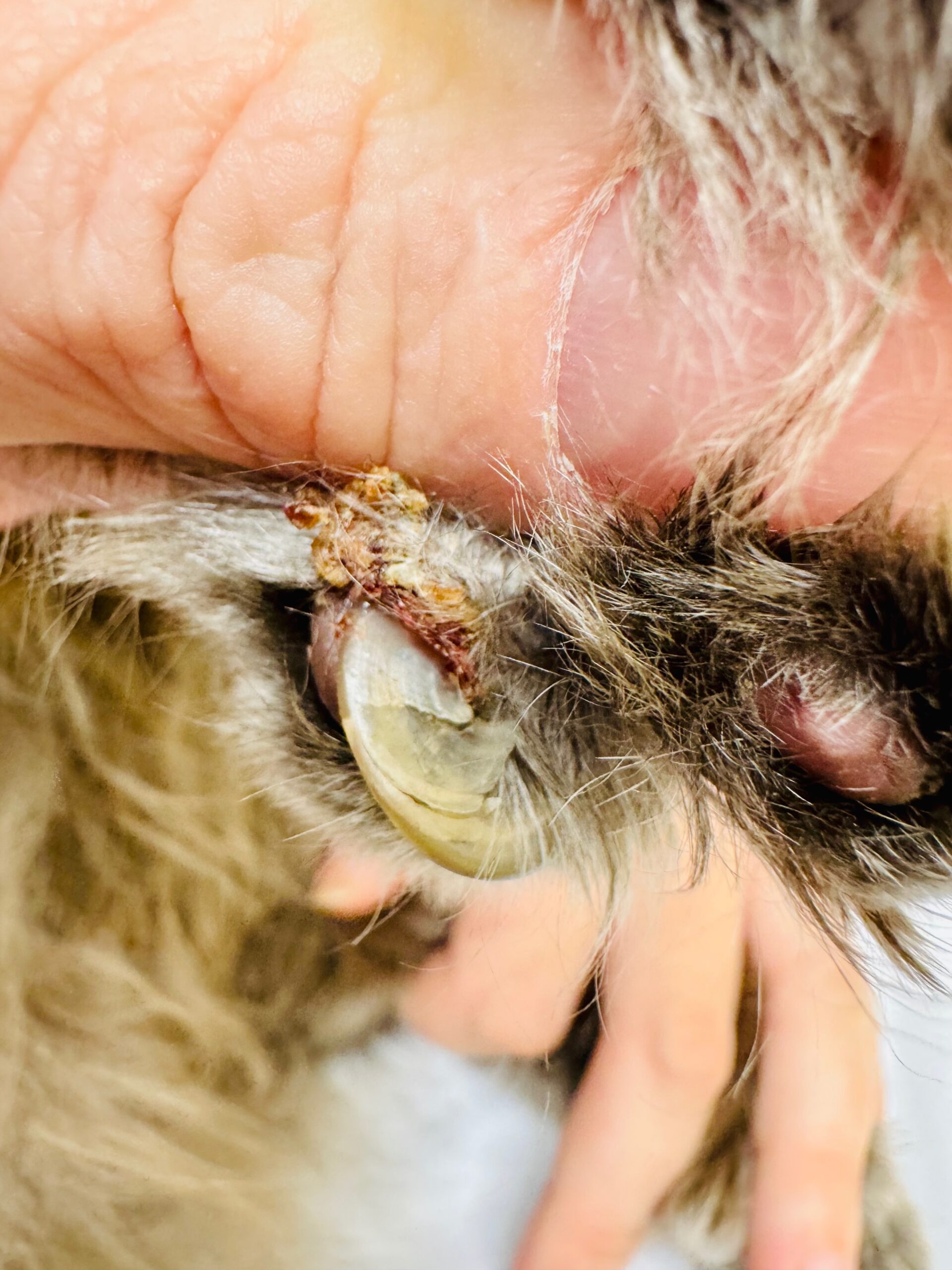
Ingrown Cat Nails: Early Detection
How to catch pressure, curling, and paw guarding before the nail punctures the pad.
Read early detection →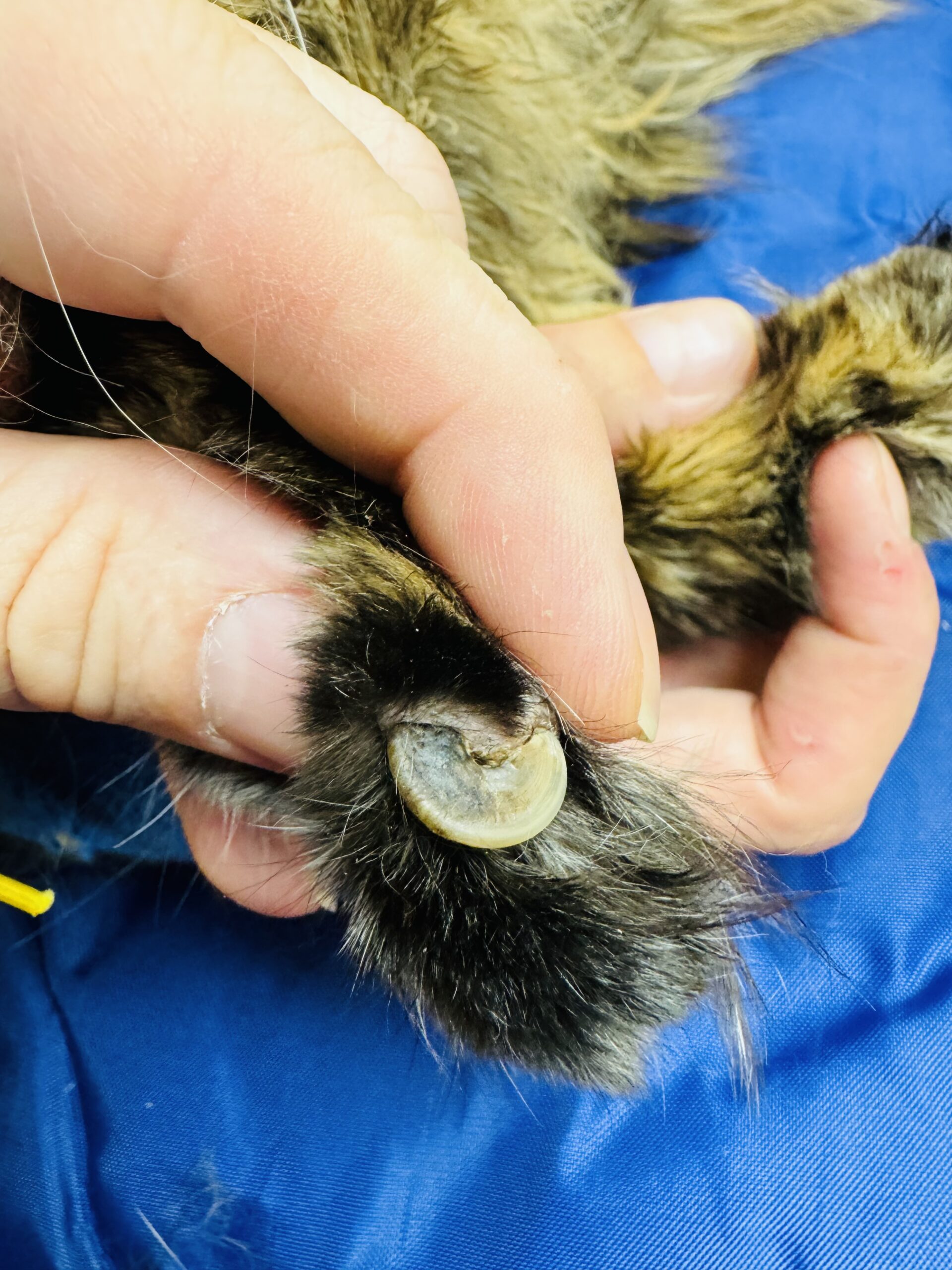
Embedded Claw Removal (Non-Sedated)
What we assess, when non-sedated is appropriate, sterile flushing, aftercare, and referral triggers.
See removal approach →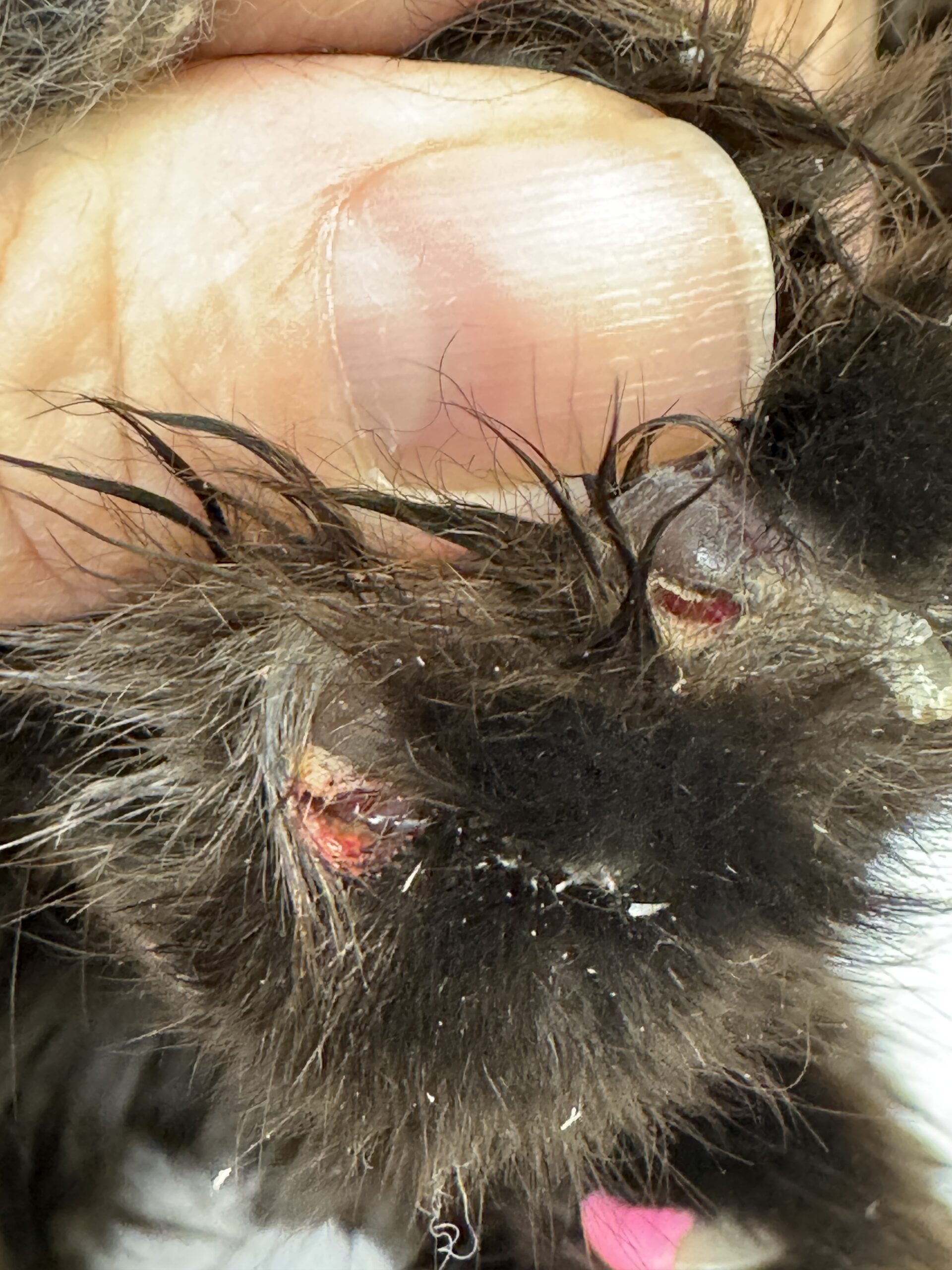
Paw Pad Ulcers From Overgrown Nails
Why pad ulcers form, how they present, and why puncture wounds need respectful monitoring.
Learn about pad ulcers →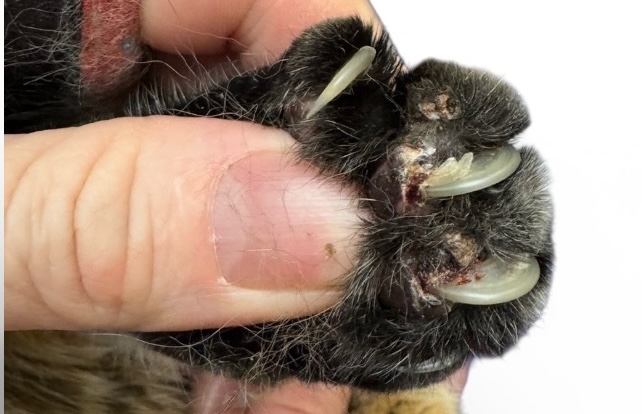
Senior Cat Overgrown Claws & Arthritis Correlation
Why reduced mobility leads to curling/embedding, and how routine trims prevent “walking on claws.”
Read senior-claw guide →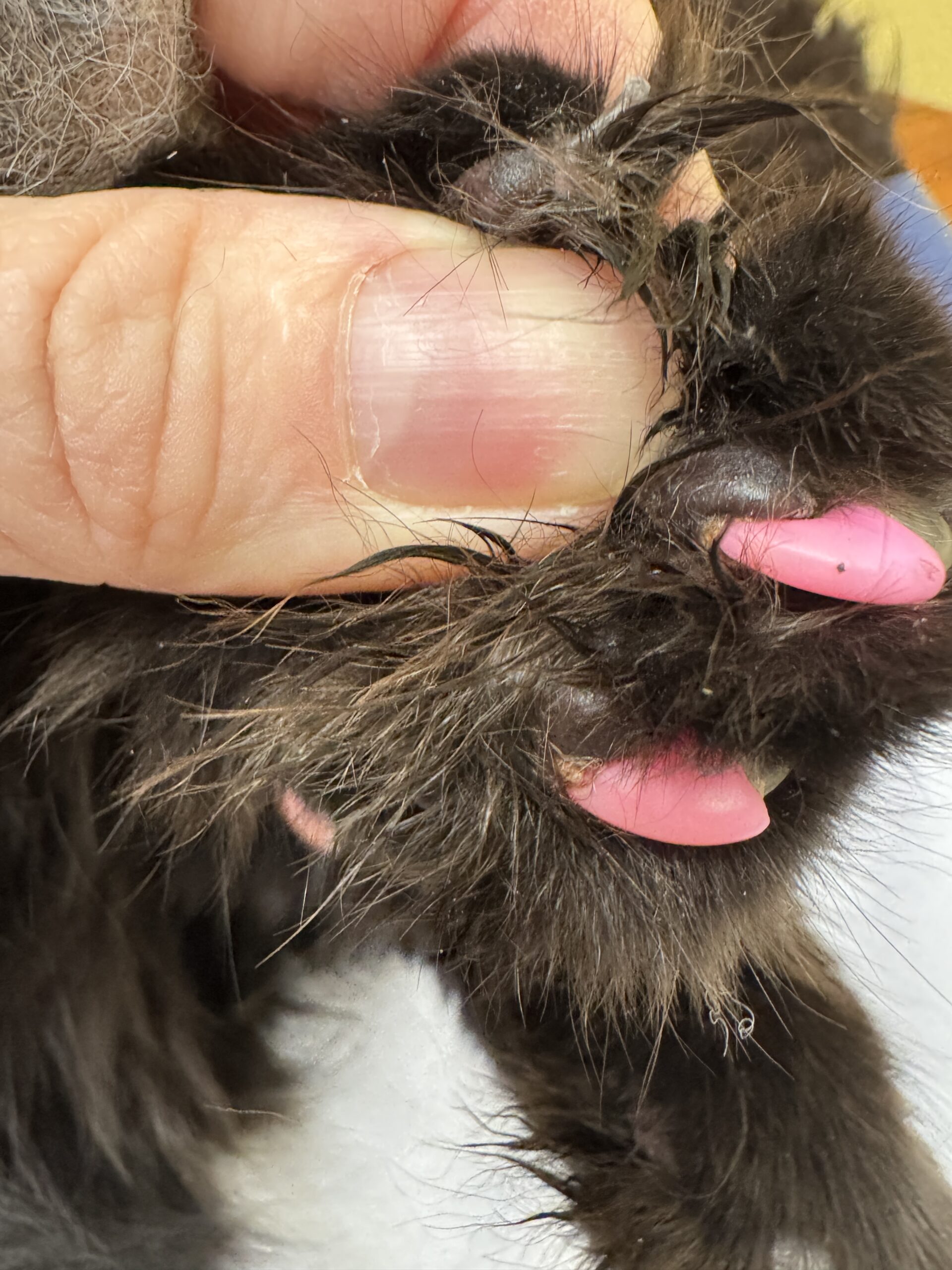
Soft Paws™ & Ingrown Claws
How nail caps can hide overgrowth, what to watch for, and safer scheduling if you reapply.
Read Soft Paws guidance →Educational content only. If you see swelling, discharge/odor, persistent limping, or significant pain, contact your veterinarian urgently.