
How We Groom Cats with Arthritis, Knee, Hip, or Back Pain
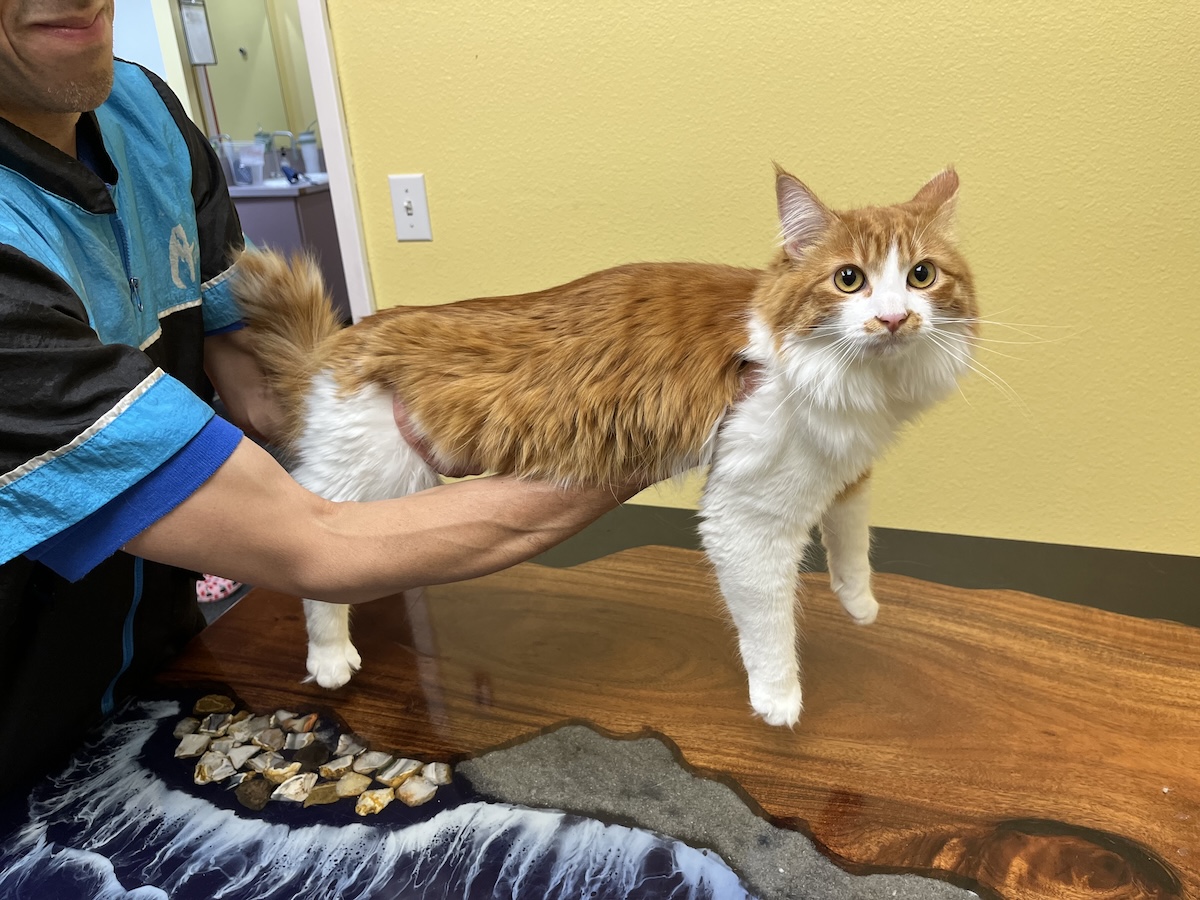
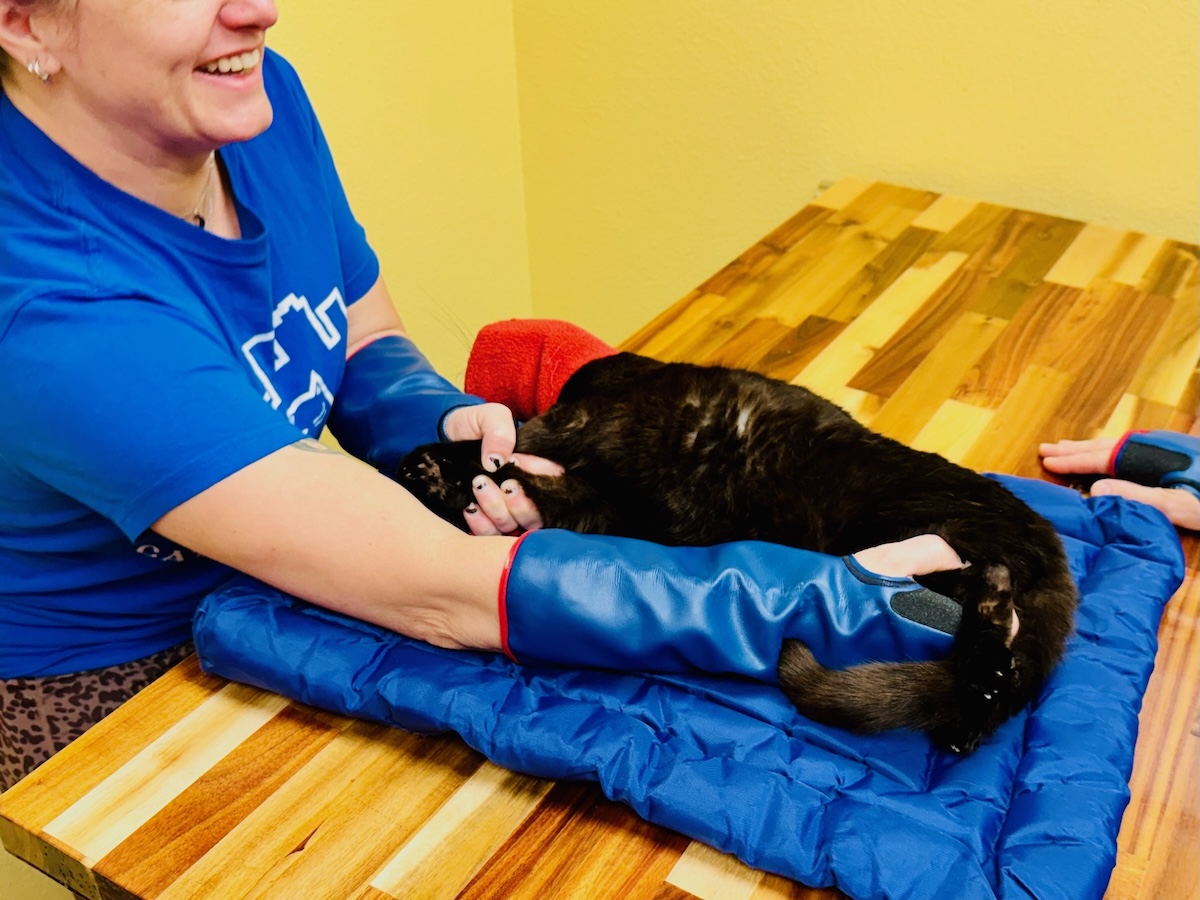
When a cat has arthritis, hip dysplasia, prior injury, spinal sensitivity, or reduced mobility, grooming can become painful fast— not because the cat is “difficult,” but because positioning hurts. Our standard is restraint-light, posture-protective grooming: we keep cats in natural body positions and use TANDEM touch™ supports to stabilize joints, protect the spine, and extend comfort windows.
Educational content only, not medical advice. If your cat has severe pain, sudden lameness, swelling, open wounds, fever, or appetite changes, contact your veterinarian.
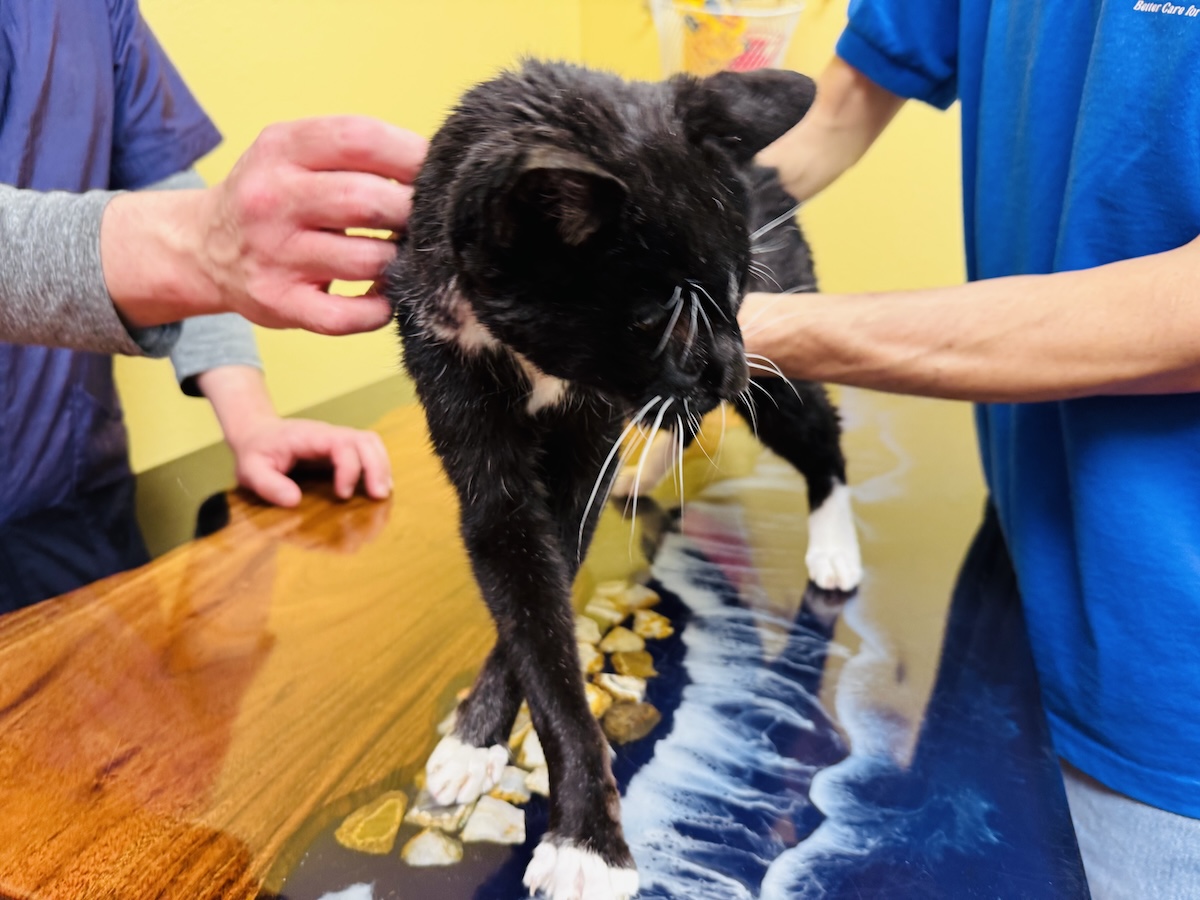
Why Grooming Can Hurt (Even When the Coat “Isn’t That Bad”)
Many orthopedic cats tolerate touch until a limb is extended, a hip is opened, or the spine is subtly torqued. Traditional “fast access” handling can turn grooming into a pain event—then the cat learns to resist the whole process.
What we protect
- Hips: no wide abduction, no forced hind-leg extension
- Knees: no levering the lower limb for access
- Back: neutral spine with trunk/pelvis support to prevent twist
- Balance: stable positions so the cat doesn’t fight to stay upright
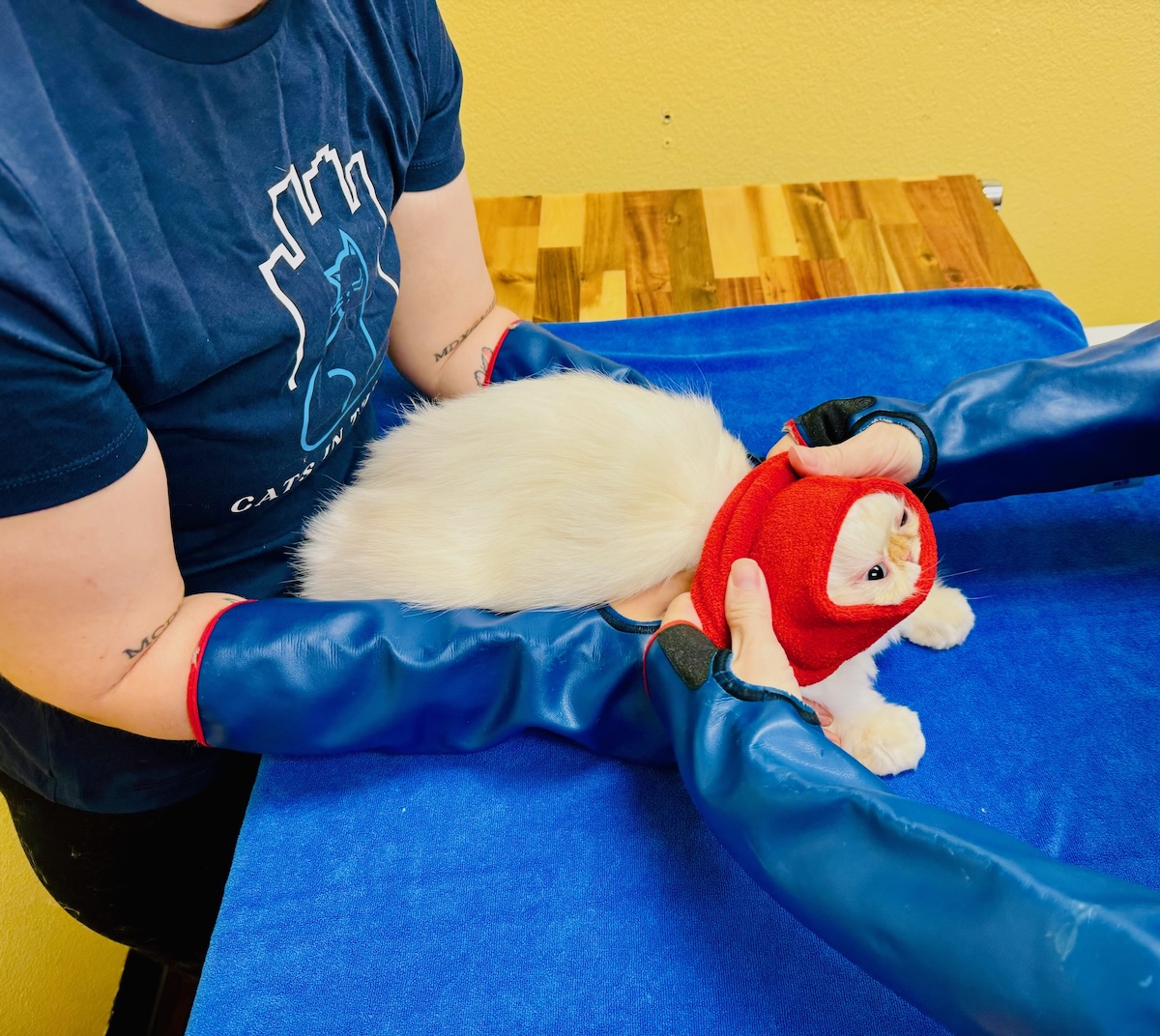
Comfort Hoodie: The First Step for Many Sensitive, Pain-Prone Cats
For cats with orthopedic discomfort, the problem isn’t only the joints—it’s the stress load that builds when the body feels unstable. The Comfort Hoodie helps many cats regulate by lowering startle input and creating a softer “sound and sensation envelope” during care. We use it to widen the window where gentle grooming can happen without forcing.
How we use it
- Early: often applied before any precision work begins
- With support holds: paired with TANDEM touch™ supports to keep posture stable
- With micro-pauses: we check breath, tension, and recovery—then proceed
What it replaces
- Replacing restraint escalation with regulation support
- Replacing “push through it” with nervous-system pacing
- Replacing speed-first handling with comfort-first sequencing
What Changes in Our Suite for an Orthopedic Cat
Restraint-light handling decisions
- No twisting / no torque: trunk and pelvis are supported together
- No overextension: we avoid “holding a limb out” for access
- Micro-pauses: frequent short breaks prevent stress accumulation
- Sequencing by tolerance: we do the hard parts inside the cat’s best windows
- Two-person choreography: one protects posture/emotion, one performs precision work
We can’t diagnose pain conditions, but we can groom in a way that reduces mechanical stress and protects trust.
What families often notice afterward
- Easier movement after coat/paw relief
- Less “post-groom shutdown” from overwhelm
- Improved willingness for future handling
- Better day-to-day hygiene in hard-to-reach zones
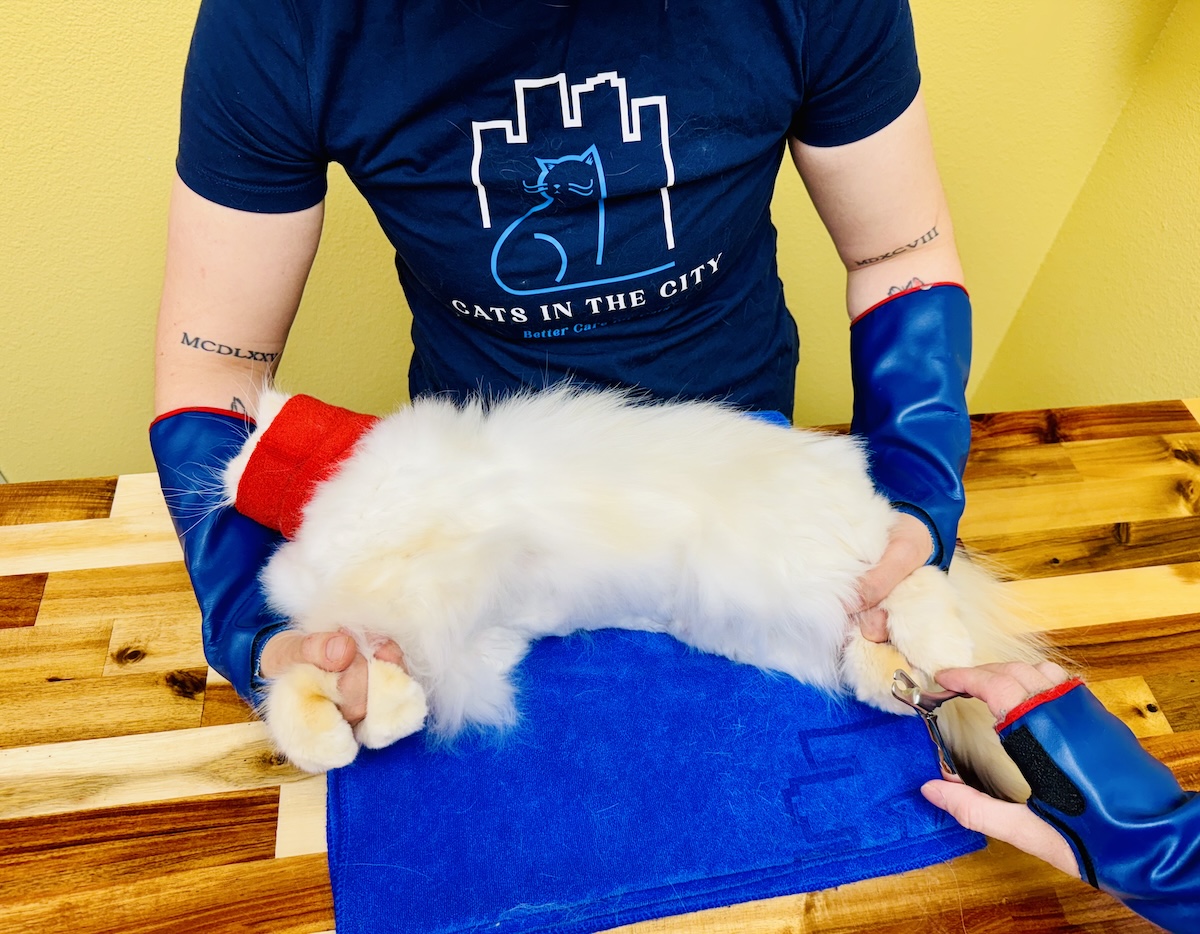
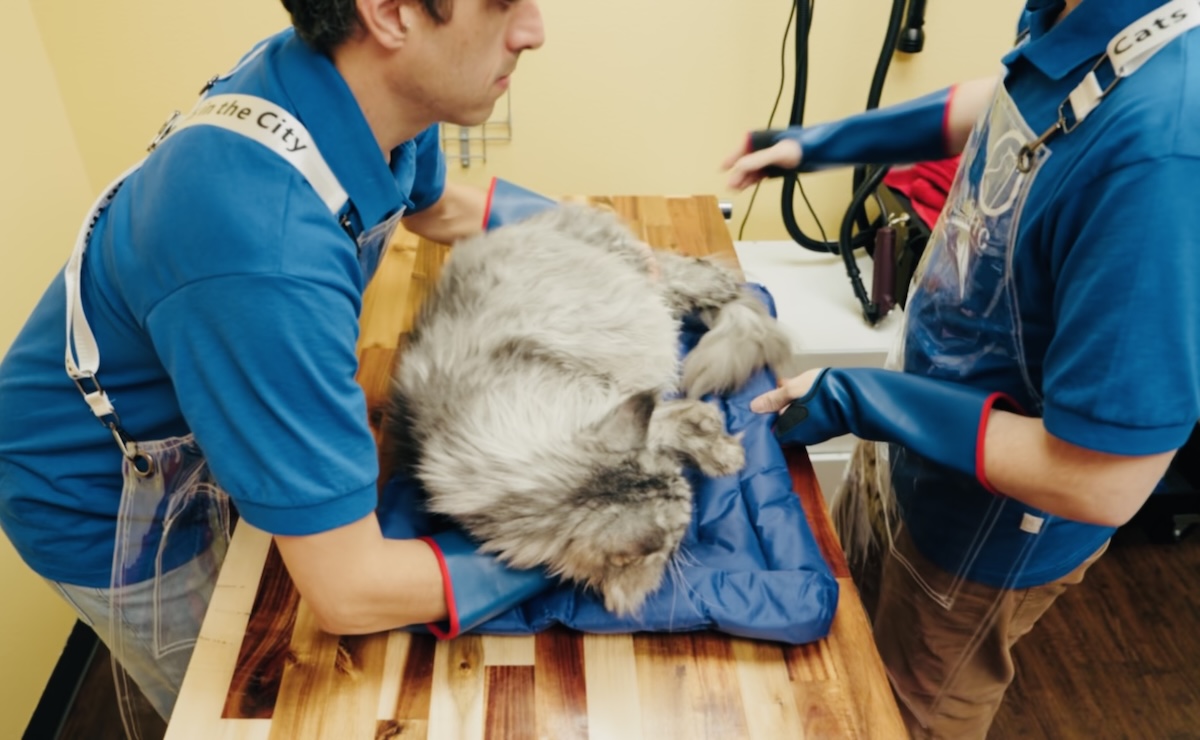
TANDEM touch™ Supports We Use to Protect Knees, Hips, and Spines
These supports stabilize the body, reduce balance strain, and keep joints within normal range-of-motion.

Common Questions
Does a cat with arthritis automatically need sedation for grooming?
Not automatically. Some cats truly do best with medication support or veterinary sedation. Others can do well awake when handling and pacing are built for orthopedic comfort. If we believe sedation or veterinary coordination is the safest path, we’ll say so.
My cat can’t tolerate leg handling. How do you work safely?
We avoid pulling limbs outward for access. Instead, we stabilize the trunk and work in short windows while keeping range-of-motion normal. The goal is calm, controlled access—not forced compliance.
What if you discover paw pain or embedded claws?
Paw pain and mobility issues often overlap. If we identify an embedded/ingrown claw pattern, we shift to a paw-first plan and provide aftercare guidance and referral when appropriate.
What should I monitor after a groom if my cat has mobility issues?
Watch for persistent limping, reluctance to jump, unusual hiding, reduced appetite, or “don’t touch me” behavior that increases over 24–48 hours. If those appear, contact your veterinarian.
Explore Connected Hubs
These pages connect naturally with orthopedic-friendly grooming because coat restriction, paw pain, and stress thresholds often stack.
TANDEM Cat® and TANDEM® are registered trademarks. TANDEM touch™ is a trademark (pending registration). © 2026 Cats in the City. All rights reserved. Educational content only.
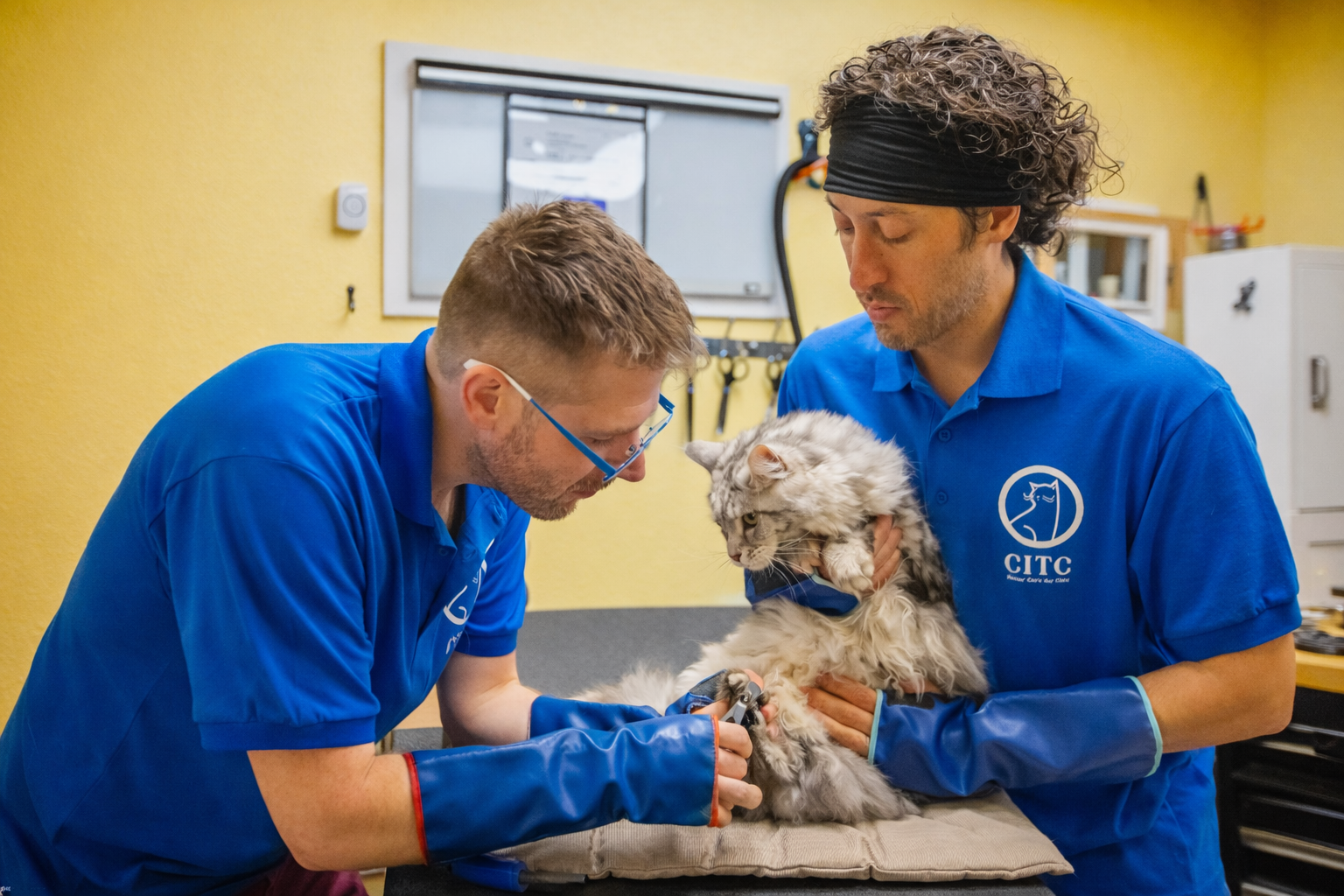
Embedded Claw Trim (Hub)
Start here: what embedded claws are, what they look like, and which page matches your cat’s situation.
Open the hub →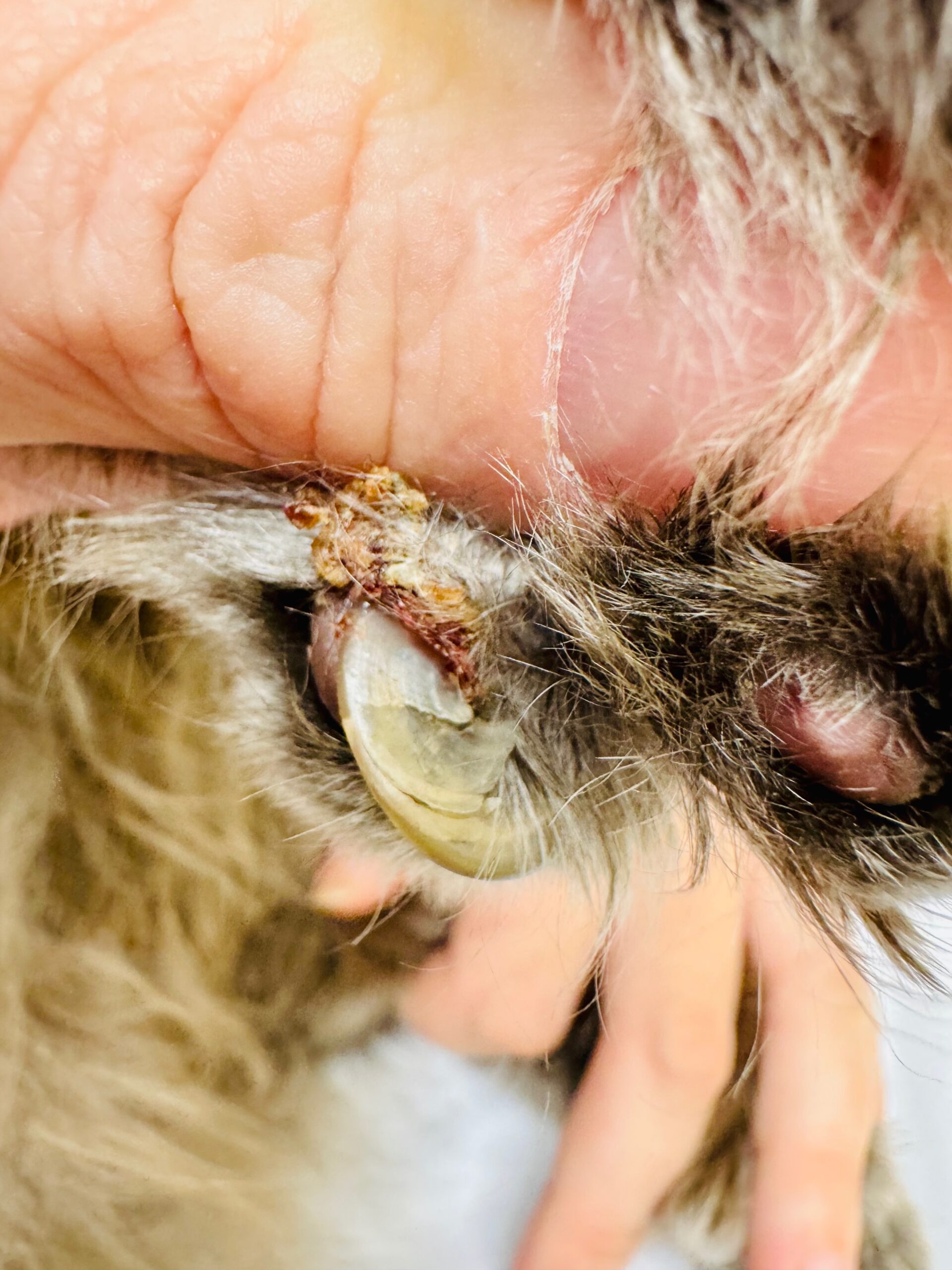
Ingrown Cat Nails: Early Detection
How to catch pressure, curling, and paw guarding before the nail punctures the pad.
Read early detection →
Embedded Claw Removal (Non-Sedated)
What we assess, when non-sedated is appropriate, sterile flushing, aftercare, and referral triggers.
See removal approach →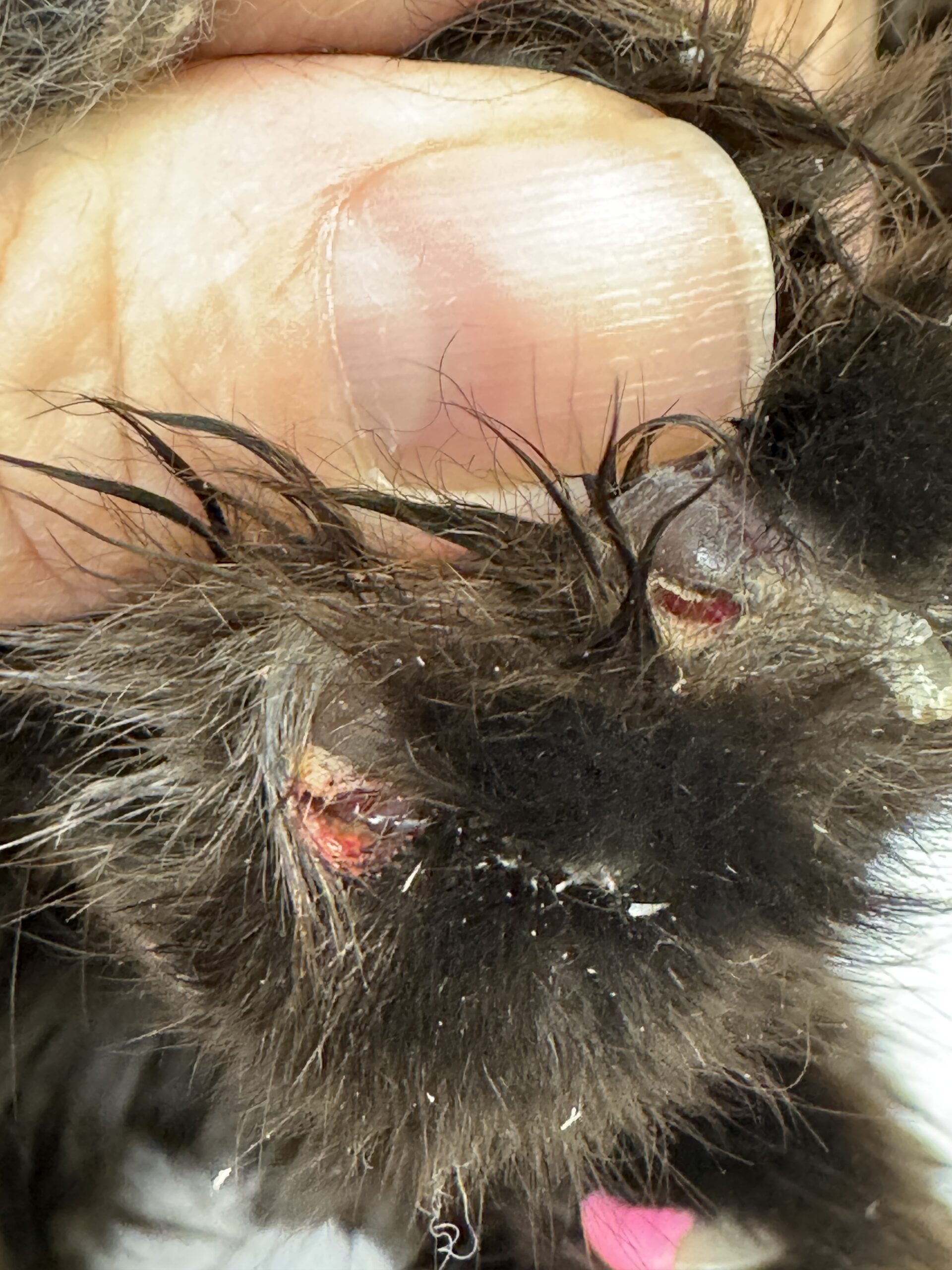
Paw Pad Ulcers From Overgrown Nails
Why pad ulcers form, how they present, and why puncture wounds need respectful monitoring.
Learn about pad ulcers →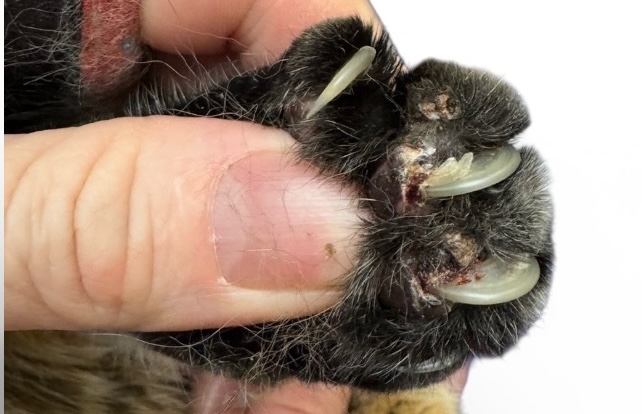
Senior Cat Overgrown Claws & Arthritis Correlation
Why reduced mobility leads to curling/embedding, and how routine trims prevent “walking on claws.”
Read senior-claw guide →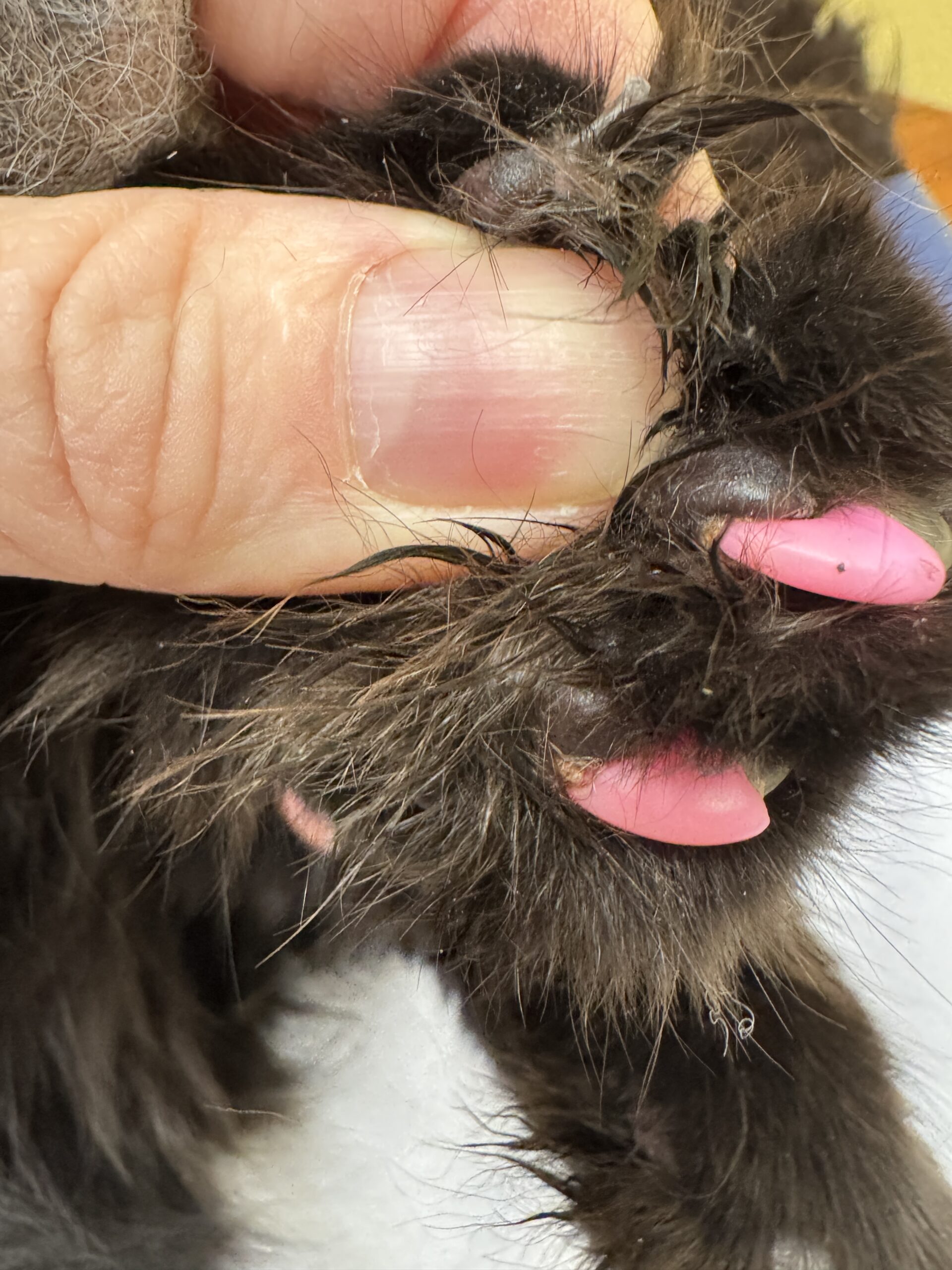
Soft Paws™ & Ingrown Claws
How nail caps can hide overgrowth, what to watch for, and safer scheduling if you reapply.
Read Soft Paws guidance →Educational content only. If you see swelling, discharge/odor, persistent limping, or significant pain, contact your veterinarian urgently.