Boarding Diabetic Cats: Safe Protocols, Calm Care, Real-Time Monitoring
Diabetic cats need steadiness, data-driven insulin decisions, and vigilant feeding support. We never inject insulin without a current blood glucose reading—and we build each day around stable intake, low stress, and clear communication.
Our diabetic boarding program is designed for cats who need more than standard boarding routines. It combines glucose monitoring, intake support, documentation, and behavior-aware care so decisions are made from the cat’s real condition, not just from the home schedule.
Territory, Stress & Food Restriction
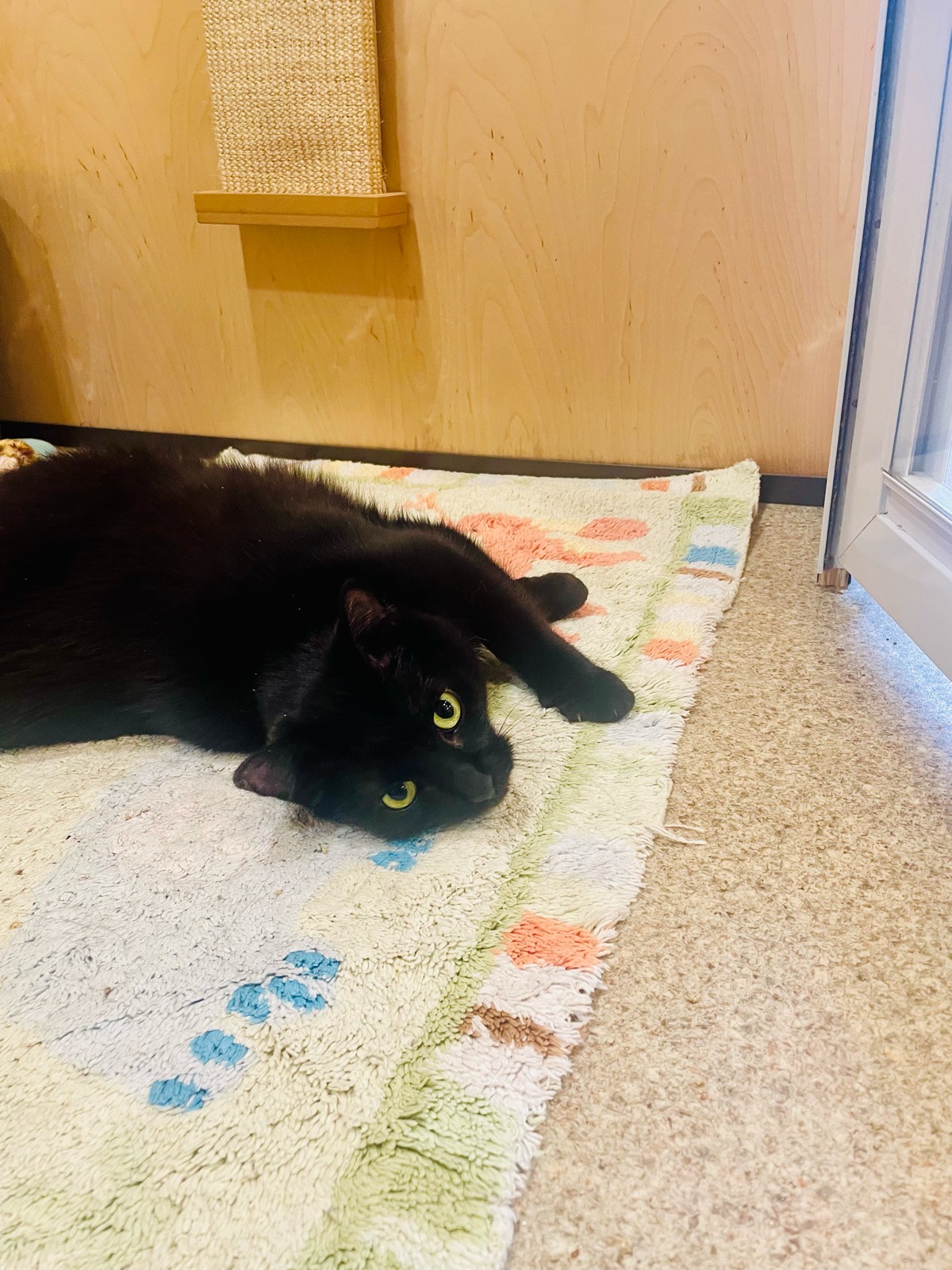
Cats are territorial. Displacement can suppress appetite and water intake. For diabetic cats, reduced intake can destabilize blood glucose and strain the body—exactly when stability matters most.
Our enriched-yet-calm environment, predictable schedule, and early appetite support help maintain intake and smooth out physiological swings.
Why Food Matters for the Liver
When cats under-eat, their bodies mobilize fat faster than they can process, stressing the liver. We intervene early with measured feed support, hydration strategies, and close observation to keep intake on track.
For diabetic cats, supporting intake is not separate from glucose safety. It is part of it.
Glucose-First Insulin Decisions
- No blind injections: insulin only after a current blood glucose reading
- Intake-aware dosing: decisions consider food consumed, time since meal, and activity
- Hypo prevention: staff trained to identify and respond to low trends promptly
- Escalation-ready: rapid veterinary coordination when indicated

Real-Time Monitoring & Documentation
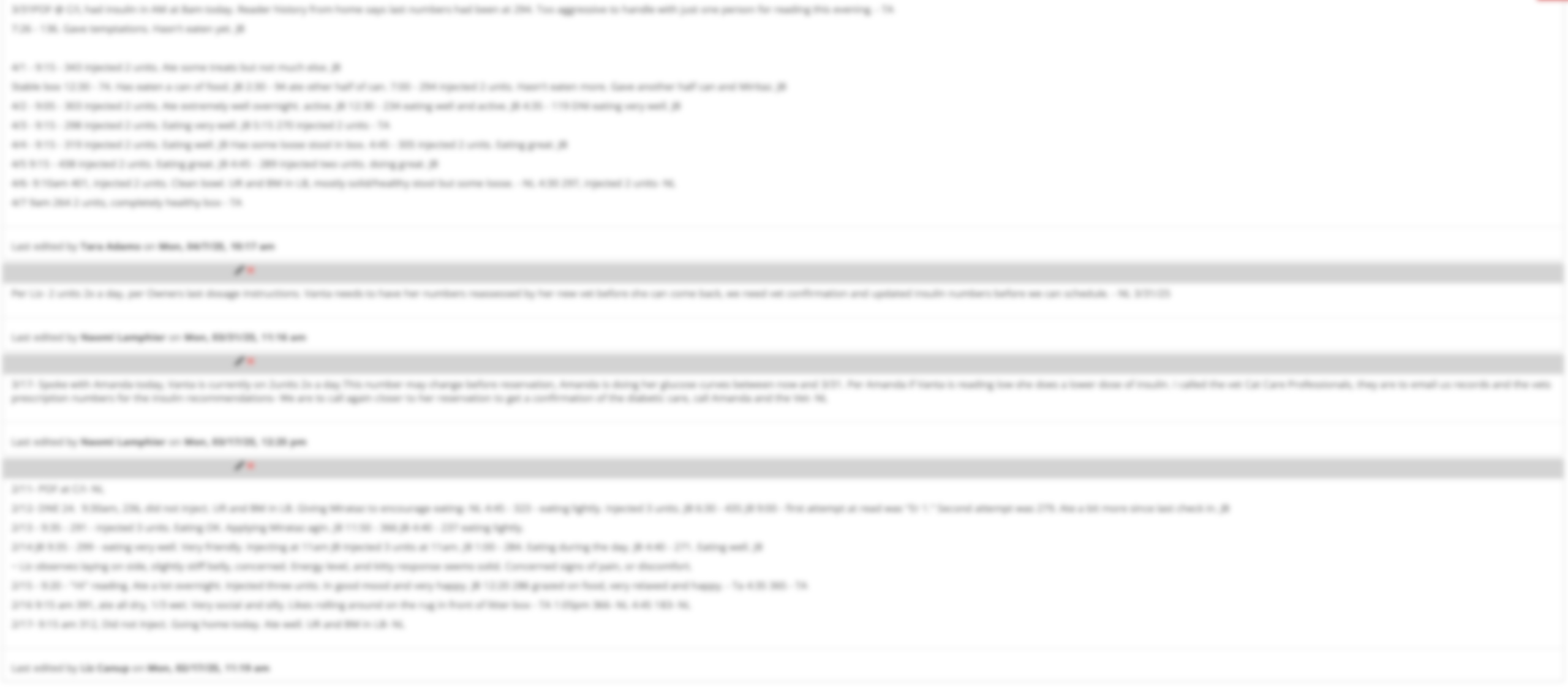
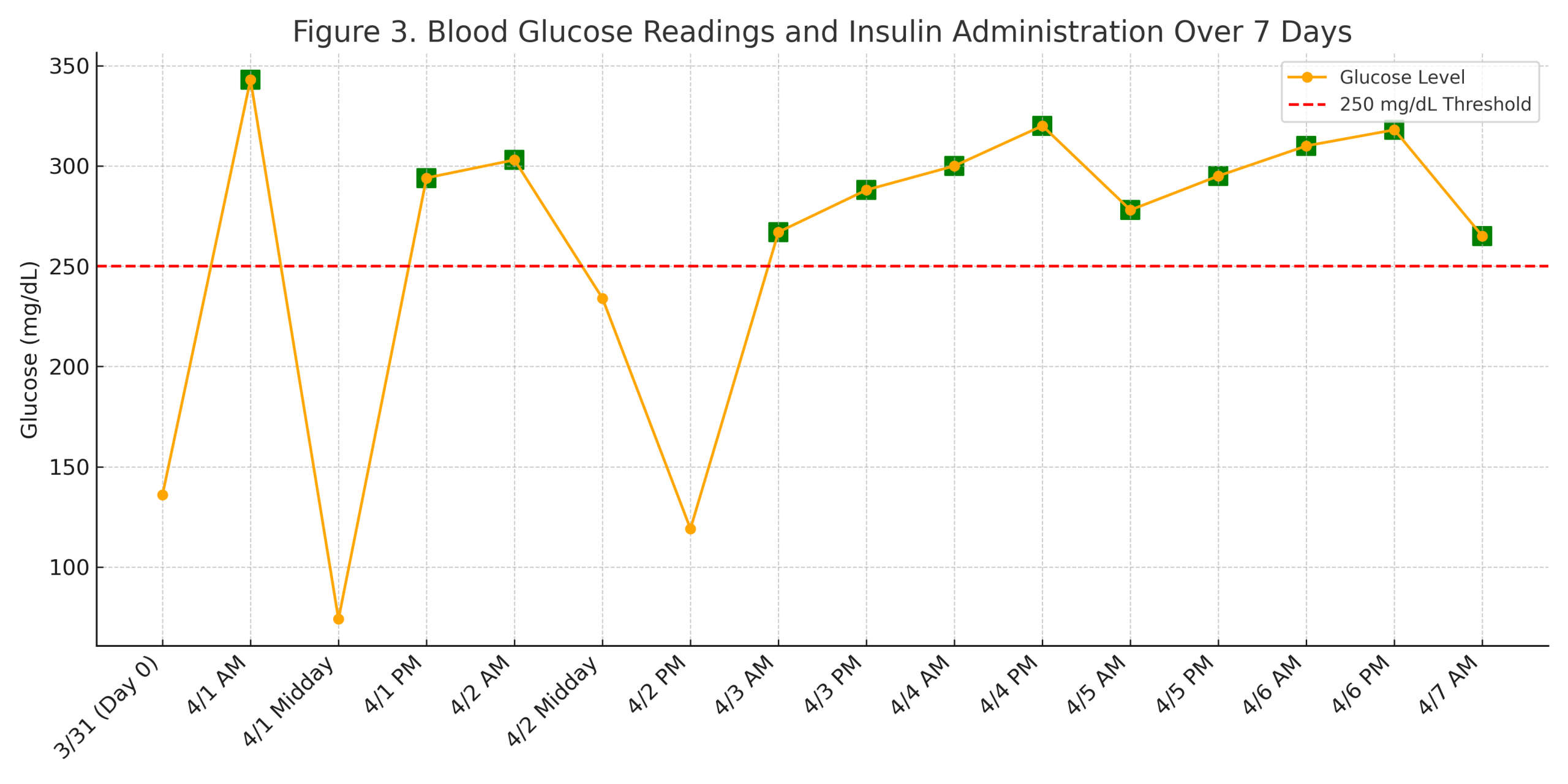
We use glucose meters and structured logs to trend values, correlate them with meals and activity, and support safer dosing decisions. Subtle changes prompt timely re-checks and, when needed, veterinary consultation.
- Timestamped glucose logs linked to meals and behavior
- Trend awareness to avoid over-correction
- Guardian updates with plain-language summaries
See the Protocol in a Real Boarding Case
This guide explains how diabetic boarding works at Cats in the City. The companion case study shows what that looks like in practice.
TANDEM Cat® Diabetic Boarding Protocol: Real-Time Titration, Safe Withholding, and Remission Recognition follows a representative diabetic boarder through a full stay and explains how glucose readings, safe withholds, food intake, and somatic observation shaped insulin decisions.
It also presents the broader 14-cat cohort behind the protocol, showing that this is not just a one-cat success story—it is a repeatable model.

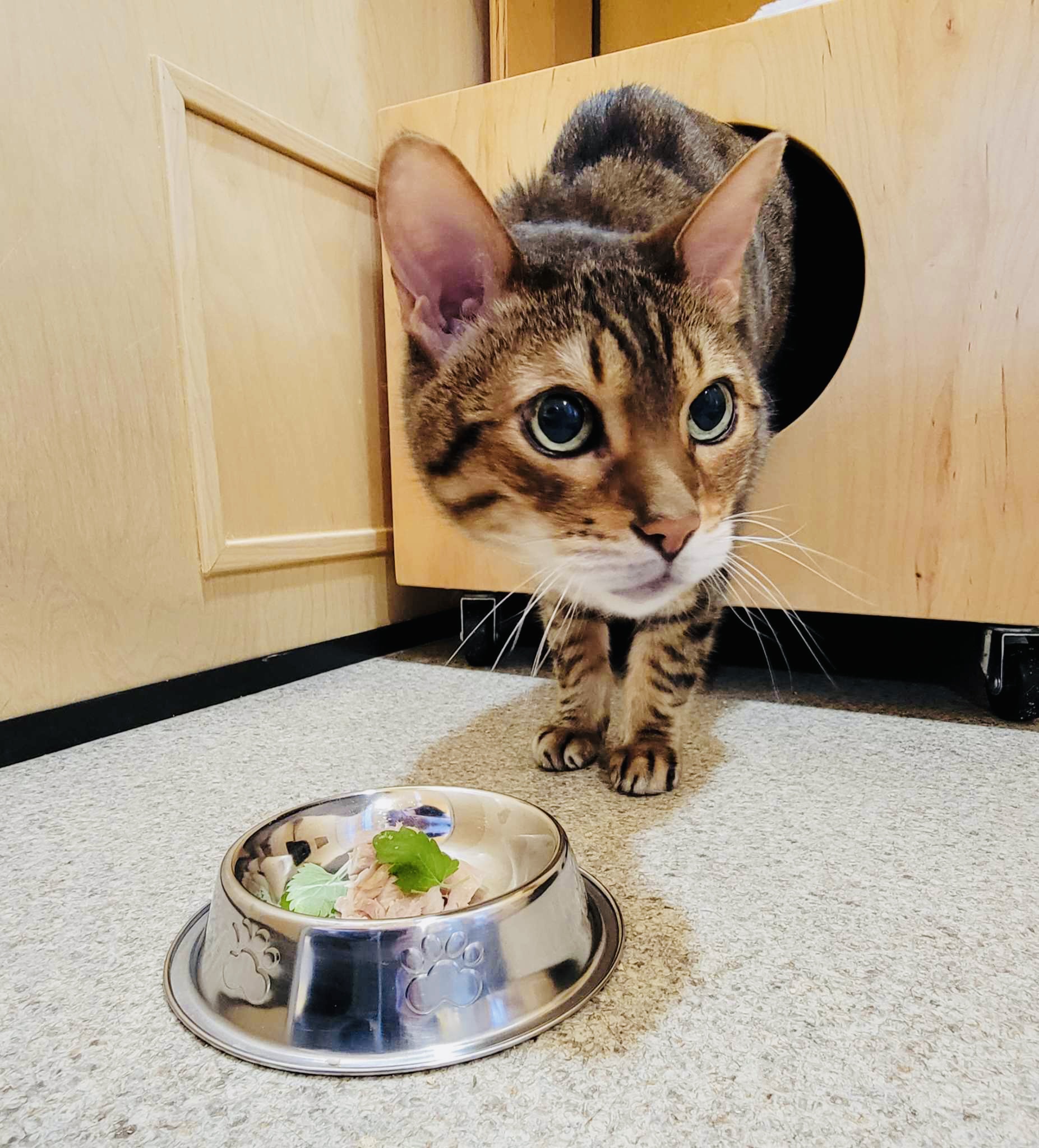
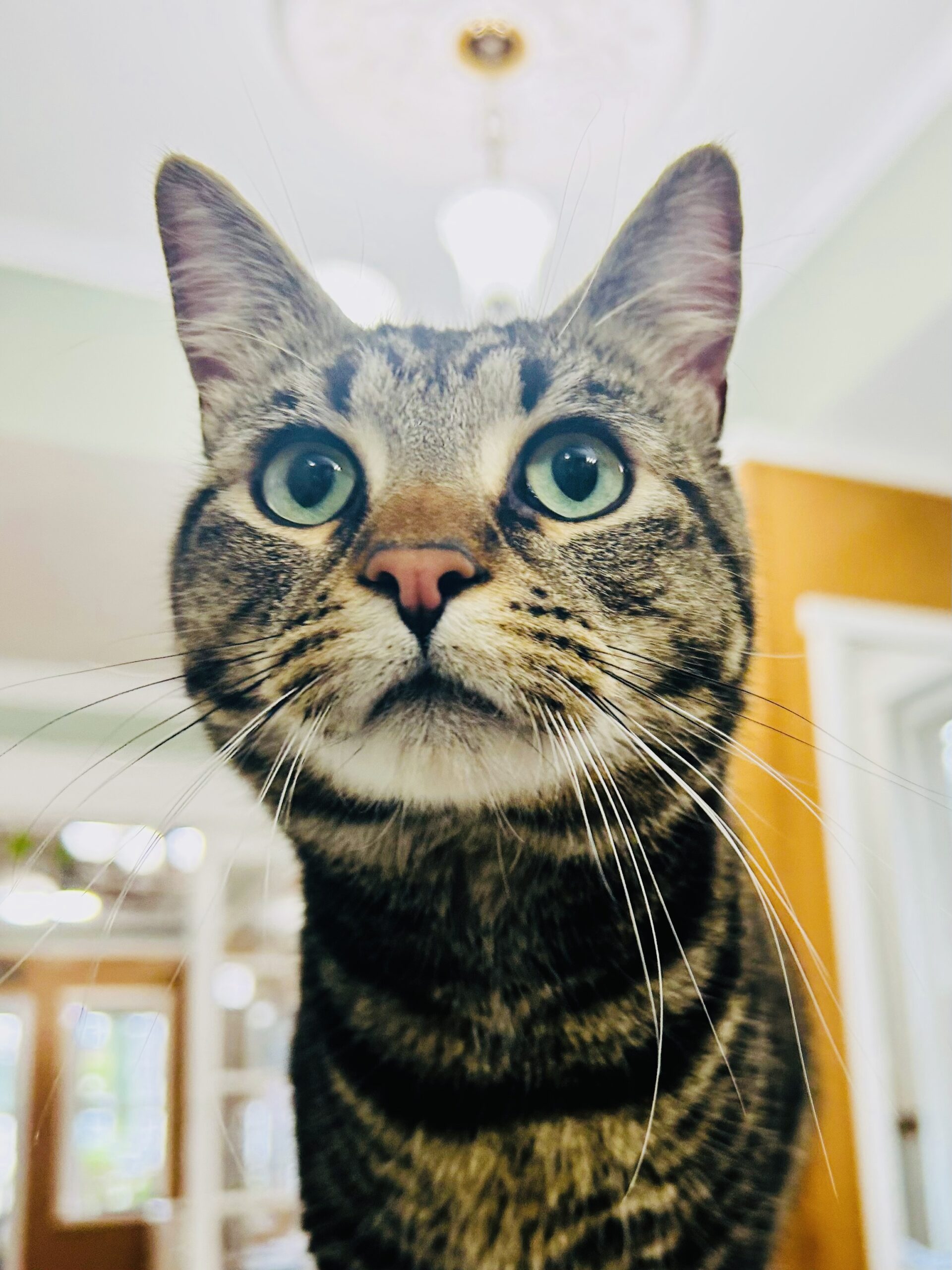
What the Diabetic Care Fee Covers
This service goes far beyond an injection. It includes skilled handling, blood sampling, meter operation, intake support when appetite dips, re-checks, documentation, and after-hours escalations when needed.
- Hands-on time for testing, feeding support, and decisions
- Care team training and competency upkeep
- On-call coordination with veterinary partners
Our goal isn’t to minimize inputs—it’s to provide the right ones. That’s how diabetic cats stay safer away from home.
What to Bring for Diabetic Boarding
- Current insulin, syringes or pen, and written dosing plan
- Primary glucose meter if preferred, plus testing supplies
- Diet your cat is currently eating in the same formula or texture
- Recent glucose curve or vet notes, if available
- Any appetite stimulants or vet-approved supplements
Reserve a Medical Suite
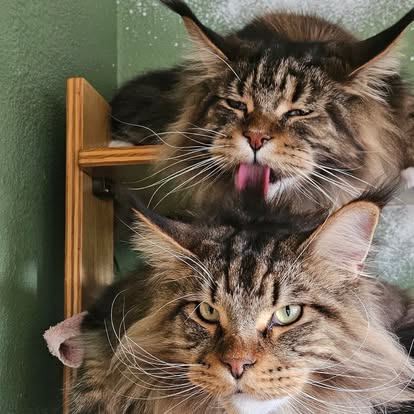
We specialize in complex care and welcome referrals. Tell us about your cat’s current insulin routine, food habits, glucose history, and anything you already know about stress or boarding sensitivity.
We’ll use that information to plan for safer monitoring, steadier intake, and clearer communication throughout the stay.
© 2026 Cats in the City. All rights reserved. This page is educational and not a substitute for veterinary diagnosis or treatment.