
Caring for Cats Who Refuse to Eat While Boarding
Food restriction (feline anorexia) is a stress response to environmental change. We don’t wait and hope—our team follows a structured, step-up plan to restore appetite while keeping your cat calm, safe, and comfortable.

Why Some Cats Stop Eating
Cats are territorial; displacement can blunt appetite and thirst. Left unchecked, reduced intake stresses the body and can affect metabolic stability and liver comfort. We intervene early to prevent a slide into bigger problems.
Common signs of nausea
- Vomiting, gagging, or dry heaving
- Hiding or covering food
- Approaching food but not eating
- General lack of appetite
Calm Spaces Support Eating
- Lighting: soft, diffuse or natural light—never harsh glare
- Noise: sound-managed rooms to avoid startle responses
- Temperature: comfort range maintained consistently
- Scents: mild/unscented products; avoid pungent cleaners
- Pheromones: Feliway diffusers to promote safety
Our Intervention Timeline
- ~24 hours: Maintain routine feeding; observe closely.
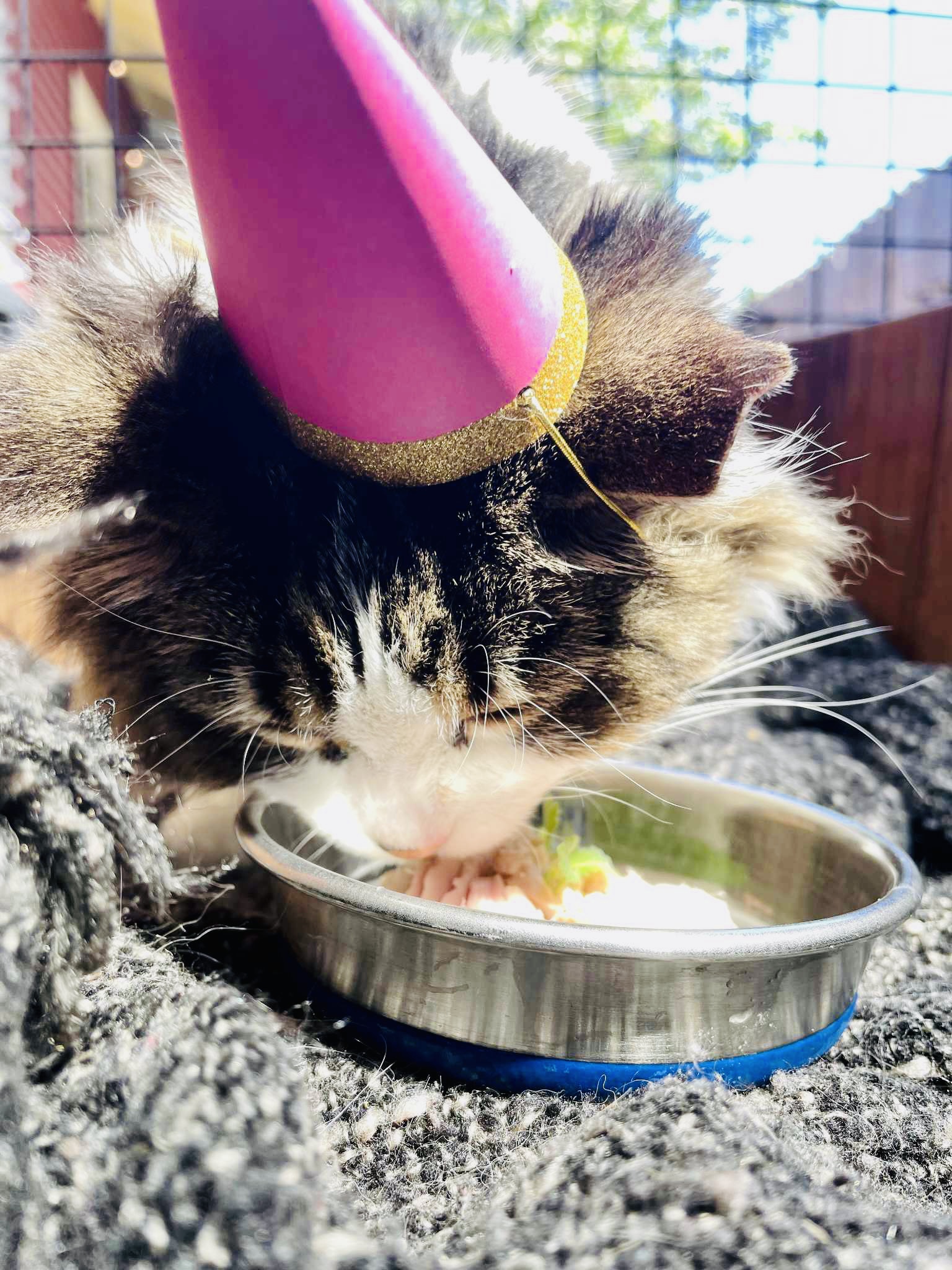
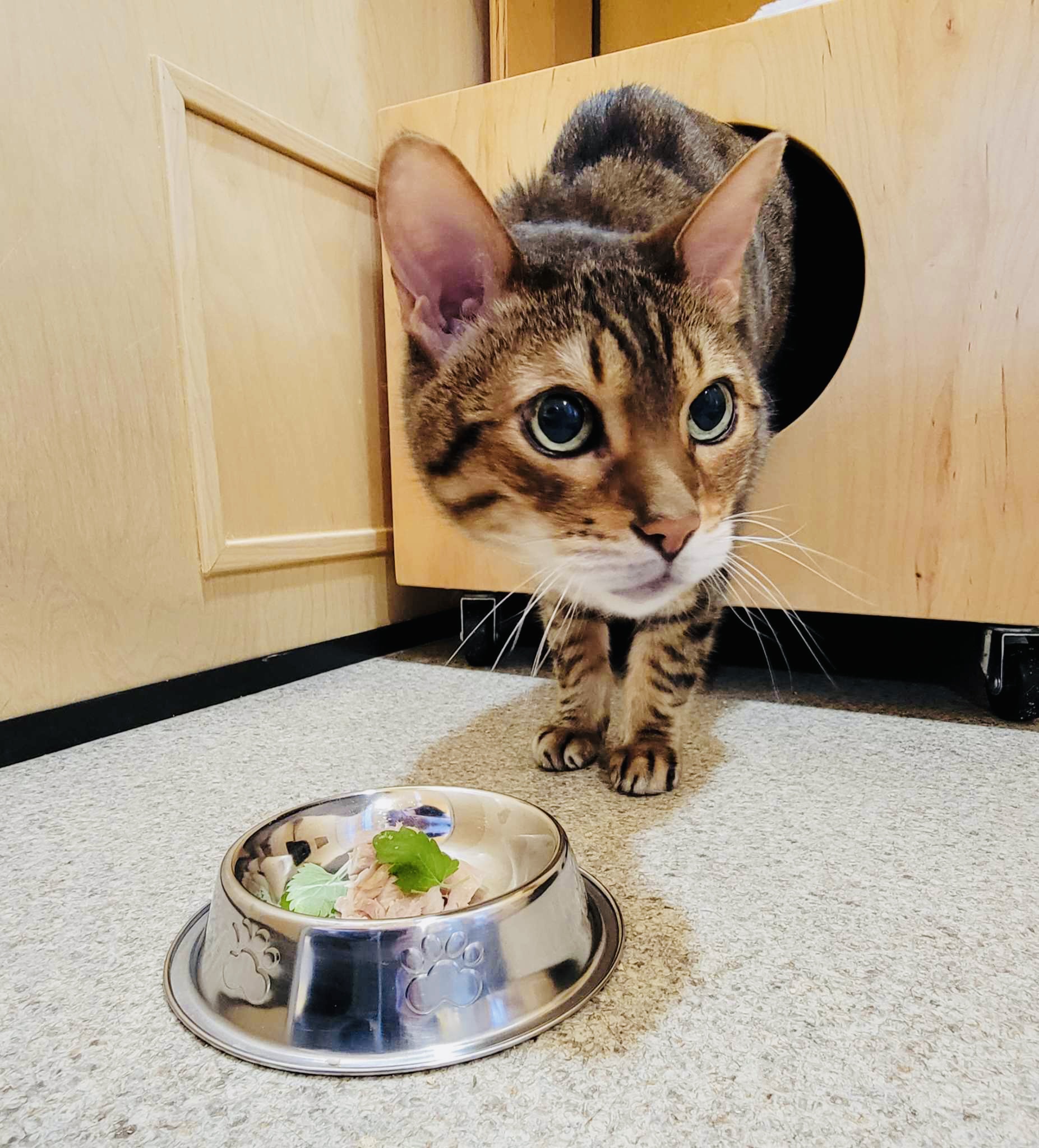
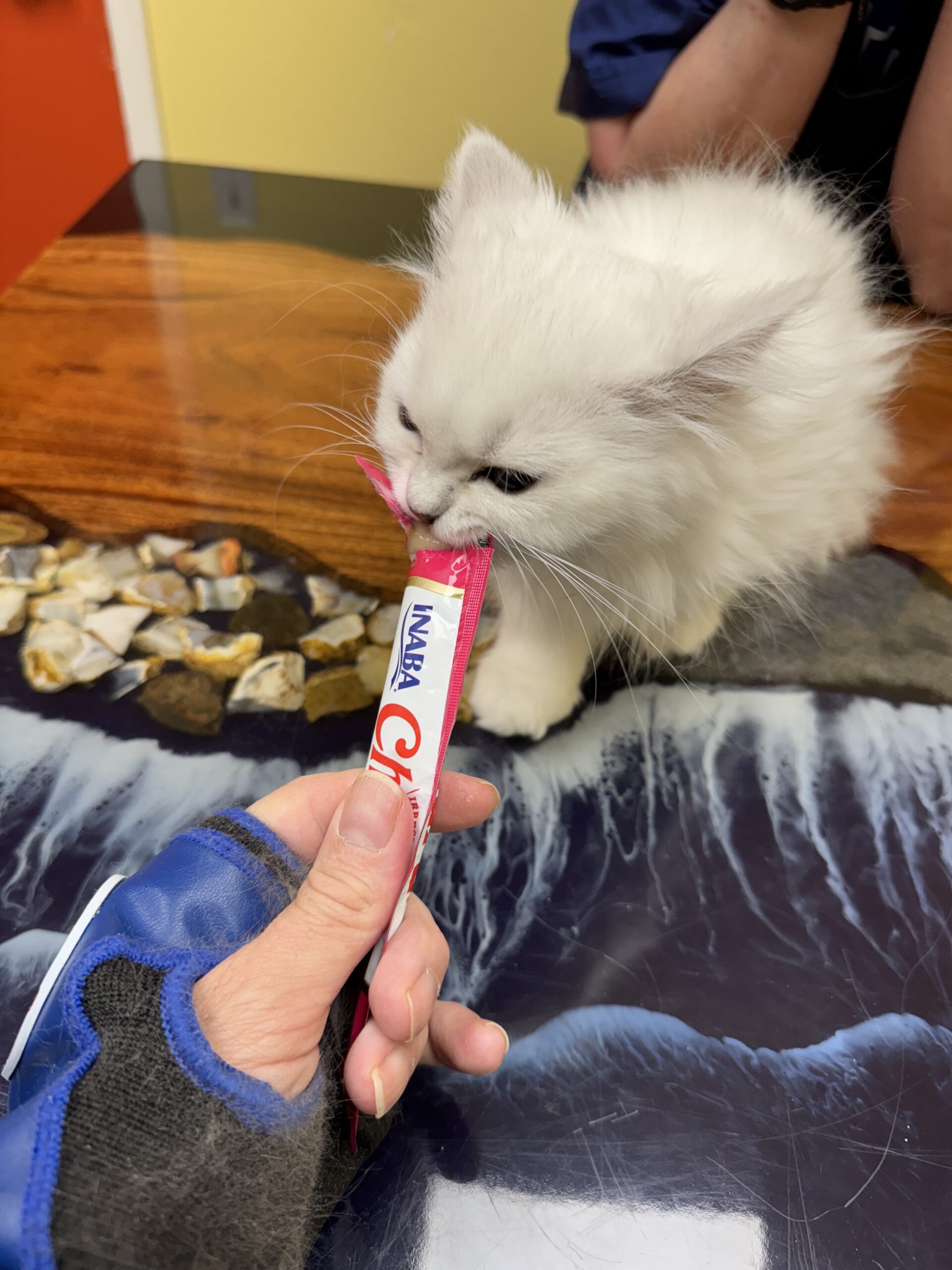
- ~48 hours: Offer vetted alternatives (examples): tuna, baby food, wet/dry options, Hydracare, Churu, dry treats, FortiFlora.
- ~72 hours: Begin gentle hand-feeding with appropriate textures; schedule to allow observation (additional fees may apply).
- ~96 hours: Management + veterinary consult as indicated; may include appetite stimulants (e.g., mirtazapine/Entyce), anti-nausea support (e.g., Cerenia), and anxiety relief when appropriate.
We act early—your cat should not “white-knuckle” through hunger.
Protecting the Body While Appetite Recovers
Appetite dips can affect glucose stability and burden the liver. We pair early intake support with hydration strategies and close observation, escalating to veterinary partners when indicated.
Guardians can help by supplying the exact diet and texture used at home, plus any prescribed appetite aids your veterinarian recommends.
Transitional Stress Response
Some cats show stress signs after returning home, such as low appetite, nausea/vomiting, dehydration, or GI changes. Offer extra one-on-one time and TLC, and contact us and your veterinarian if signs appear—simple interventions often help quickly.
Higher-risk cats
- Kittens; anxious/reactive cats
- Cats with untreated/advanced conditions
- Homes in transition (move, loss, new family routines)
Making Each Stay Better
Every stay teaches us what works best for your cat. Small adjustments (diet timing, lighting, enrichment) improve outcomes. For some, in-home visits are the better fit—we’ll help you choose the right path.
© 2025 Cats in the City. All rights reserved. This page is educational and not a substitute for veterinary diagnosis or treatment.