
Natural Body Position Cat Grooming (Restraint-Light Handling)
Cats tolerate grooming best when their bodies are supported in positions they would choose on their own. Our standard is natural posture + joint protection + calm pacing—so precision work can happen without force, and non-sedated care can be possible when clinically appropriate.
Educational content only. If your cat is painful, limping, not eating, or you suspect infection/dehydration, contact your veterinarian urgently.

Natural Positions Are a Safety Protocol
“Natural body positions” means we keep your cat’s spine, shoulders, hips, and limbs within normal range of motion— the same way a cat would sit, stand, crouch, or lean at home. Instead of forcing a posture to reach a body area, we reposition the work around the cat.
What we avoid
- No twisting or torque: we don’t rotate the spine to “get the job done.”
- No overstretching: limbs stay inside a comfortable, normal arc.
- No leverage holds: we don’t use the cat’s body as a handle.
What we do instead
- Full-body support: trunk and pelvis are stabilized so the spine stays neutral.
- Work in short windows: we sequence tasks to match tolerance.
- Cat-led repositioning: we invite the cat into the next posture rather than forcing it.
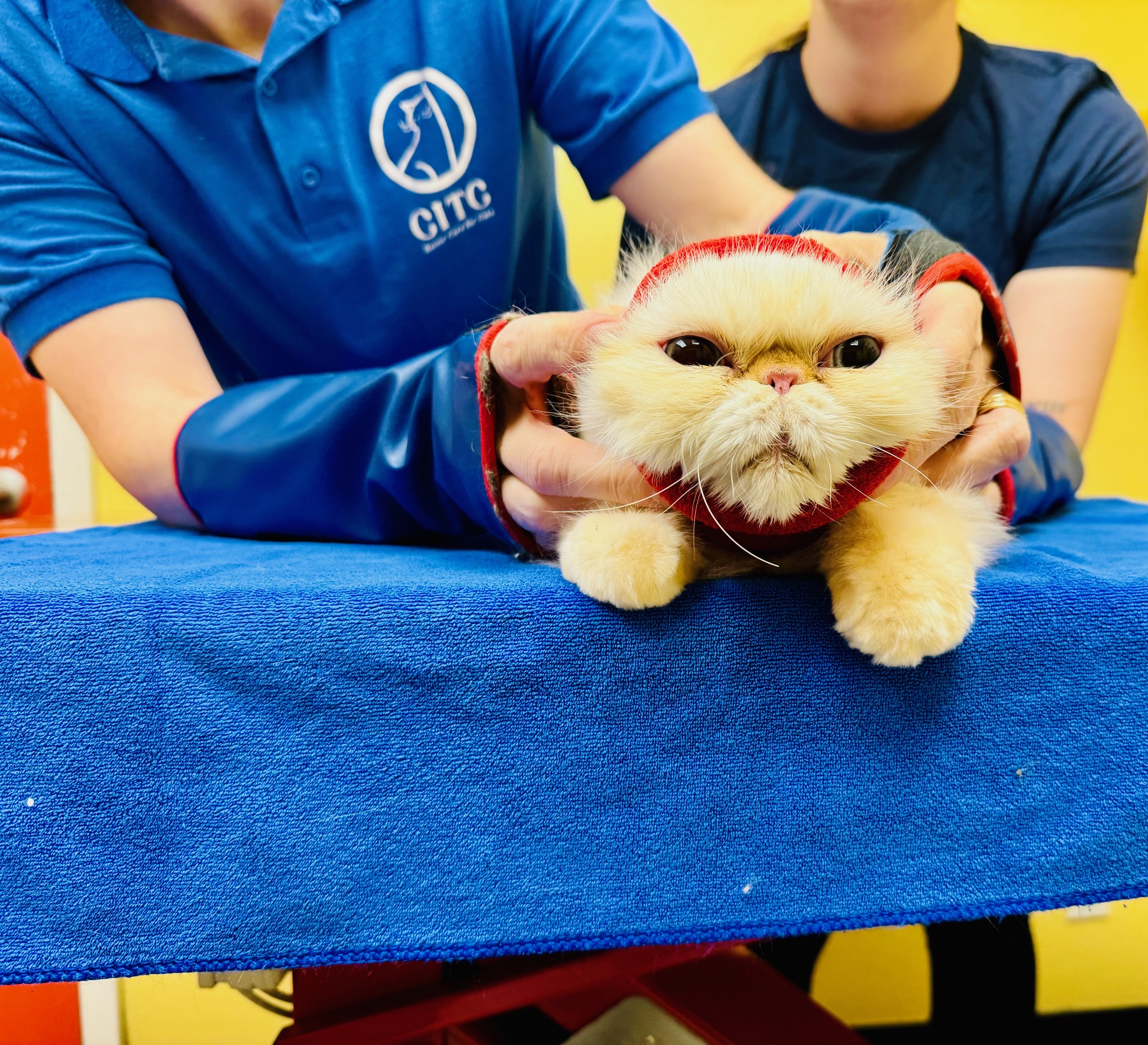
Restraint-Light Handling With TANDEM touch™
Many grooming injuries (and many grooming traumas) come from a simple problem: the cat loses stability, then fights to regain it. Our approach pairs posture support with small, precise adjustments—so the cat can stay organized in their body.
What TANDEM touch™ looks like in practice
- Micro-adjustments to shoulders/hips to keep joints stacked and stable
- Support under the trunk so the cat doesn’t feel like they’re “falling”
- Predictable contact (light, consistent pressure rather than grabby restraint)
- Breath + tension tracking to time the next step when the body softens
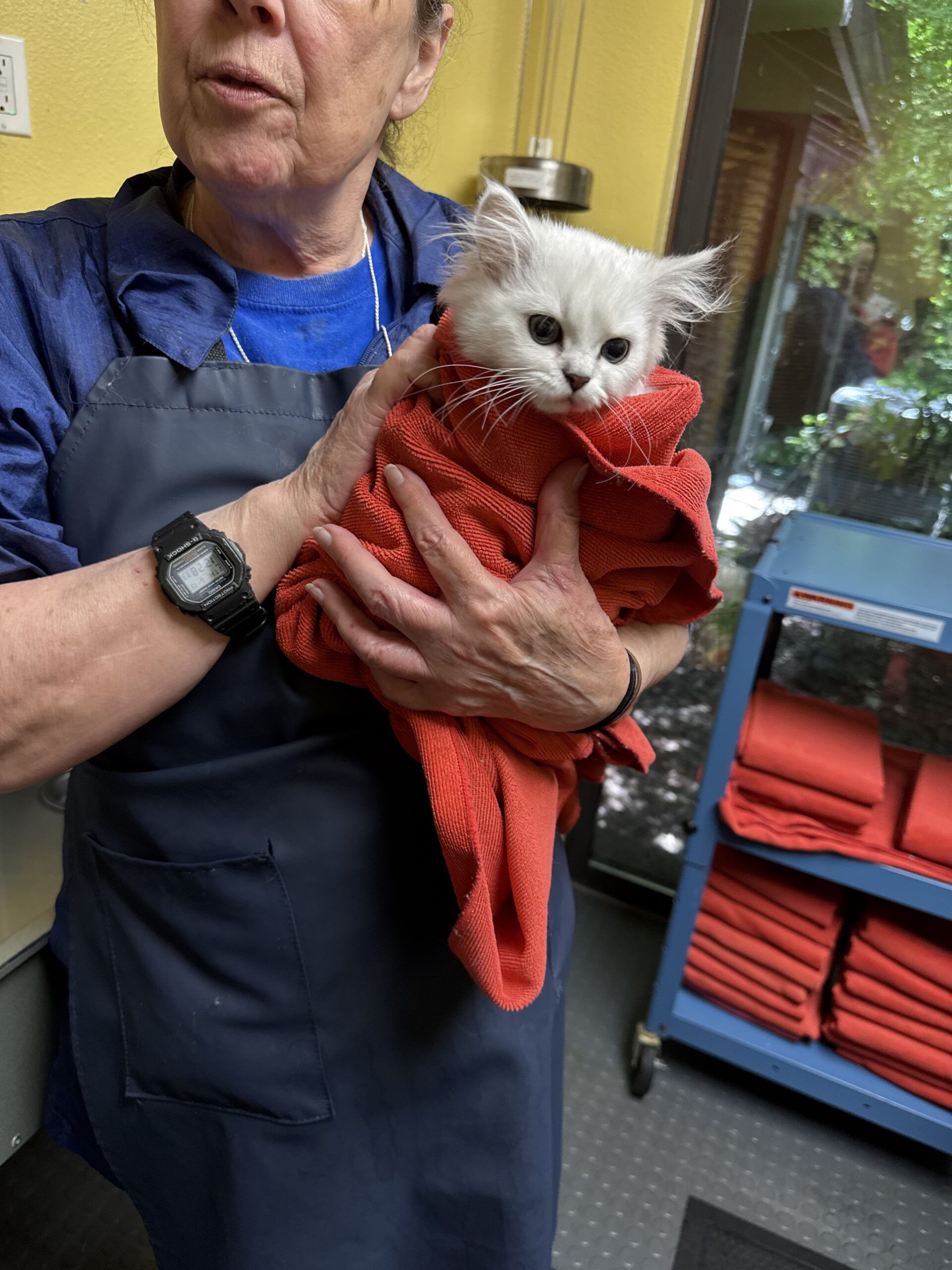
Seniors, Arthritis, Obesity, Medical Fragility, and “Spicy” Cats
Natural positioning matters for every cat—but it becomes essential when the body has limits. We see posture-protection change outcomes for cats who have been labeled “impossible,” “sedation-only,” or “too sensitive.”
Common examples
- Arthritis / stiffness: transitions are slow; joints aren’t leveraged; we shorten sessions when needed.
- Hip dysplasia: hindquarters are supported; we avoid wide abduction and torque.
- Obesity: weight is distributed evenly; positioning prevents sliding and panic.
- Underweight / frail: pressure points are protected; we use extra padding and smaller work windows.
- Fearful or defensive cats: stability reduces the need for escape behaviors.
When clinically appropriate, natural positioning often increases the chance of completing care awake—because it lowers pain signals and reduces nervous-system overload.

Why Natural Positioning Supports Awake Grooming
Many cats escalate during grooming for one primary reason: they feel unstable. When stability returns, the body softens—and the cat can tolerate careful work for longer. Natural positioning is one of the clearest ways we reduce stress load without “pushing through.”
What this changes
- Less panic: fewer sudden thrashes, lunges, or scrambling.
- Less pain signaling: joints aren’t forced; tender areas aren’t torqued.
- Better tolerance: cats stay engaged rather than dissociating or fighting.
- Cleaner work: precision improves when the cat is still and regulated.
When we recommend a different plan
- Severe pain, intense swelling, or suspected infection
- Cat cannot tolerate touch safely despite pacing
- Condition is too advanced for an awake pathway
- Risk of injury rises beyond acceptable threshold
In those cases we coordinate with your veterinarian, and we can help you plan a safer sequence for recovery and maintenance.
Want the full “awake grooming” framework?
Natural positioning is one pillar of our non-sedated pathway. If you want the full explanation of trauma-informed pacing, thresholds, and clinical decision-making, read the main page here:
Natural Body Position Grooming Questions
Is this “hands-off” grooming?
No. It’s skilled support. We use hands to stabilize the body and protect joints—so the cat doesn’t feel the need to fight for stability.
Does natural positioning mean it always takes longer?
Not necessarily. When cats stay regulated, work can become more efficient. The difference is we prioritize safe sequencing and stop before pushing past threshold.
Will you still recommend sedation if needed?
Yes. Safety comes first. If a cat is too painful, too reactive, or the condition is too advanced for an awake pathway, we recommend the safest plan—including veterinary sedation when appropriate.
How often should cats have nails and coat checked?
Many families benefit from a quick check every 4–6 weeks, with shorter windows for seniors, low-mobility cats, or fast-growing nails. We can help you find the rhythm that prevents emergencies.
TANDEM Cat® and TANDEM® are registered trademarks. TANDEM touch™ is a trademark (pending registration). © 2026 Cats in the City. All rights reserved. Educational content only.